Design Trends
Natural Wallcovering Trends 2026: What Designers Are Specifying Now
From restorative luxury to biophilic maximalism — 2026's wallcovering trends are driven by tactile depth, earthy warmth and design that actively supports wellbeing. Here's what's trending and how to source it.
Key Takeaways
- "Restorative Luxury" — design that prioritizes wellbeing and sensory depth.
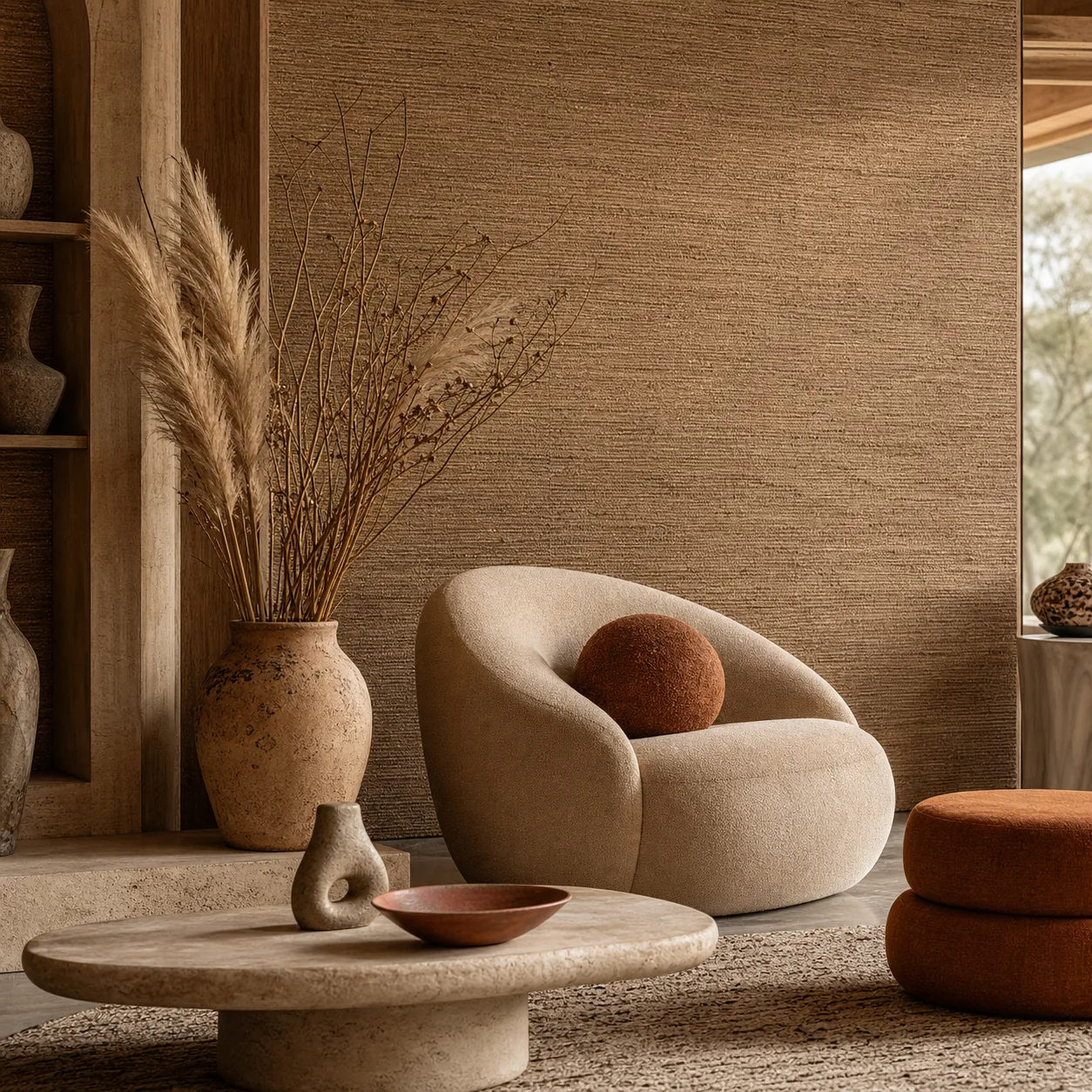
- Texture is king — tactile finishes (grasscloth, linen, raw fiber) replace flat surfaces.
- Earthy palette — clay, terracotta, sage, moss; warm neutrals dominate cool greys.
- Biophilic design moves from niche to mainstream specification.
- Moody drama — deep forest green, burgundy and charcoal for statement walls.
- Sustainability as standard — no longer a differentiator, it's a baseline requirement.
- Natural materials outpacing vinyl in premium specification growth.
What Is "Restorative Luxury" and Why Does It Matter?
"Restorative Luxury" is the defining design philosophy of 2026 — the idea that luxury isn't about excess, it's about restoration. Interiors should actively support wellbeing through sensory richness, natural materials and visual calm.
- Neuro-aesthetic design: Research shows natural textures and organic patterns reduce cortisol and improve occupant wellbeing — designers are specifying with this evidence in mind
- Quiet luxury: Subtlety over statement — tone-on-tone textures, natural fiber depth and material quality speak louder than bold prints
- Sensory richness: Walls that you want to touch — grasscloth, sisal, cork and woven fibers invite physical interaction
For natural wallcovering: This trend is the single biggest demand driver. Natural fiber materials embody restorative luxury by definition — they're tactile, organic, calming and sustainable.
What Are the Top Texture Trends?
| Texture Trend | Materials | Best Application |
|---|---|---|
| Raw woven fiber | Grasscloth, jute | Living rooms, hotel lobbies, restaurants |
| Fine linen weave | Paper weave, textile | Bedrooms, spa environments, powder rooms |
| Organic imperfection | Hand-woven sisal, irregular grasscloth | Feature walls, dining rooms, boutique retail |
| Mineral/stone effect | Mica, metallic mineral | Statement walls, luxury residential, hospitality suites |
| Bark and wood | Cork, wood veneer | Media rooms, offices, wellness spaces |
What Colors Are Trending in 2026?
| Color Direction | Specific Shades | Mood |
|---|---|---|
| Warm earth neutrals | Clay, sand, terracotta, warm taupe | Grounding, organic warmth |
| Nature greens | Sage, moss, olive, muted forest | Calming, biophilic connection |
| Mineral blues | Stone blue, coastal grey-blue | Serene, contemplative |
| Moody drama | Deep green, burgundy, charcoal, plum | Cocooning, atmospheric |
| Warm metals | Burnished gold, aged bronze, copper | Subtle glamour, accent |
Key shift: Cool greys are declining. Warm, earthy tones — the colors of clay, stone, wood and plant life — are the new foundation palette. This aligns perfectly with natural wallcovering's inherent warm, organic character. See our color trends deep dive for more.
How Is Biophilic Design Evolving?
Biophilic design has moved beyond literal botanical prints into a more sophisticated, immersive approach:
- Abstracted nature: Oversized leaf shadows, diffused botanical silhouettes and watercolor organic forms replace obvious florals
- Material authenticity: Real natural textures (grasscloth, sisal, cork) are preferred over printed imitations — authenticity is the point
- Immersive environments: Full-room natural wallcovering rather than accent walls — creating enveloping, nature-connected spaces
- Wellness integration: Biophilic elements now appear in WELL Building Standard specifications — see our biophilic design guide
- Hospitality adoption: Hotels and wellness retreats are the primary commercial driver — grasscloth lobbies, sisal corridors, cork spa rooms
What's Trending in Hospitality and Commercial?
- Hyper-localization: Custom wallcovering reflecting regional landscapes and culture — unique to each property
- Durability + beauty: Specifiers choosing materials that deliver both visual impact and long-term performance
- Instagrammable texture: Wallcovering as a photography backdrop — natural textures photograph beautifully under varied lighting
- Ceiling applications: Grasscloth and cork on ceilings — an emerging trend in hospitality suites and restaurants. See our ceiling guide
- Sustainability reporting: ESG mandates driving specification of natural, low-VOC materials over vinyl
How Do You Source Trending Materials?
If you're specifying 2026 trends, here's how to source effectively:
- Start with the texture: Decide on grasscloth, sisal, cork or paper weave — each creates a different mood
- Match to the trending palette: Our custom color development can match any Pantone or paint reference
- Request samples: Texture must be experienced physically — start with our digital sample kit, then order physical swatches
- Consider volume: Trending materials move fast — secure your production slot early, especially for custom colors
- Source direct: Factory-direct pricing means you can specify premium natural materials within budget
Frequently Asked Questions
Is grasscloth still trending or is it oversaturated?
Still growing. Grasscloth has been a design staple for decades, but the current wave of biophilic and texture-forward design has expanded its application — from accent walls to full-room installations, from residential to hospitality. What's shifted is how it's used: less as a statement, more as a foundational texture that defines the space's character.
Are bold prints dead?
Not dead, but evolving. Large-scale botanical murals and abstracted nature prints are strong in hospitality. But the dominant residential trend is texture-first — the pattern comes from the material itself (weave, fiber, grain) rather than a printed graphic. This is where natural wallcovering excels.
How do sustainability requirements affect specification?
Sustainability is now a baseline, not a bonus. LEED, WELL and BREEAM certifications actively reward natural, low-VOC materials. For commercial projects, natural wallcovering often scores better than vinyl alternatives on material health criteria. See our sustainability guide.
Related Guides
Color Trends
2026 palette forecast.
Biophilic Design
Nature-connected interiors.
Feature Walls
Impact wall design.
Japandi Style
Japanese + Nordic fusion.
Wabi-Sabi Walls
Imperfect beauty.
Dark vs Light
Tone selection guide.
Source the Trends
Get direct-source access to every trending texture and color — grasscloth, sisal, cork and custom colorways in the 2026 palette.
Request Trend Samples