Design Style
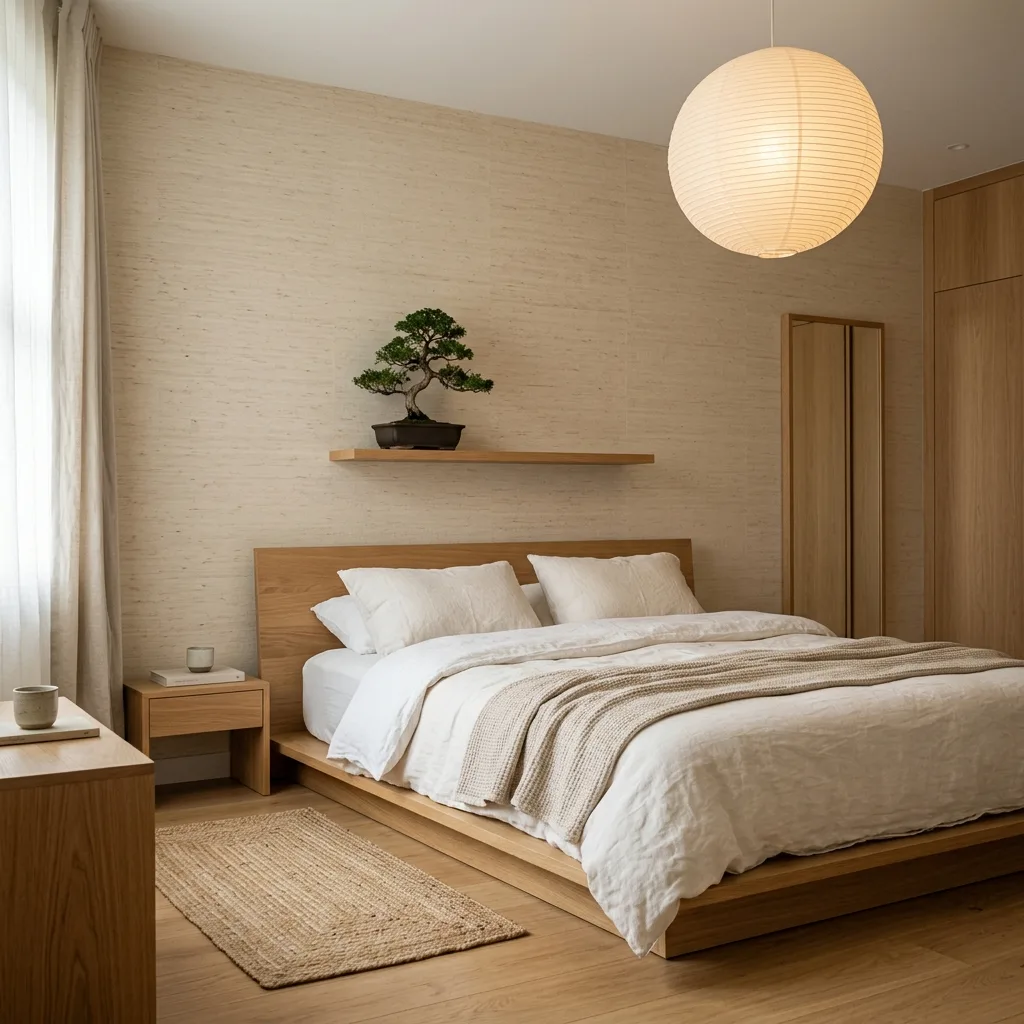
Japandi Interiors with Natural Grasscloth Wallcovering
Where Japanese minimalism meets Nordic warmth — and why natural grasscloth is the defining wall treatment for this enduring design philosophy. Material selection, color palettes and room-by-room guidance.
Key Takeaways
- Japandi = Japanese + Scandinavian — minimalism with warmth.
- Grasscloth's organic irregularity is the essence of wabi-sabi.
- Warm neutrals only — sand, oatmeal, sage, clay. No cool greys.
- Texture IS the decoration — no busy patterns.
- Paper weave for delicate, refined Japandi; grasscloth for bold, tactile Japandi.
- Pair with natural wood, linen textiles, ceramic and stone.
- Less is more — let the wall texture speak, keep furnishings minimal.
What Makes Japandi Design Different from Minimalism?
Standard minimalism can feel cold and austere. Japandi adds warmth through natural materials and intentional imperfection:
| Element | Standard Minimalism | Japandi |
|---|---|---|
| Walls | Flat white paint | Natural textured wallcovering |
| Palette | Monochrome, cool | Warm neutrals, earth tones |
| Materials | Synthetic, uniform | Natural, imperfect, handcrafted |
| Aesthetic | Precision, perfection | Organic beauty, wabi-sabi |
| Mood | Clean but potentially sterile | Warm, grounding, restorative |
Which Natural Materials Work Best for Japandi?
| Material | Japandi Expression | Best Rooms |
|---|---|---|
| Paper weave | Refined, delicate — closest to Japanese shoji screen aesthetic | Bedrooms, tea rooms, meditation spaces |
| Grasscloth | Bold organic texture — Scandinavian warmth meets Japanese craft | Living rooms, dining rooms, entryways |
| Jute | Rustic, raw — strong wabi-sabi character | Casual living, home offices |
What Colors Define Japandi Wallcovering?
- Warm sand / oatmeal: The foundation — warm without being yellow, creating a serene backdrop
- Soft sage: Nature connection without overpowering — the Japandi green
- Muted clay: Warm, grounding — echoes Japanese earthenware
- Natural undyed: Raw grasscloth in its natural golden tone — the purest Japandi expression
- Charcoal: Used sparingly for contrast — dark grasscloth behind light wood furniture
See our color trends guide and custom color development for exact Pantone matching.
How Do You Style Japandi Grasscloth Rooms?
- One texture per surface: Grasscloth walls + wood floor + linen curtains — each surface a different natural texture
- Furniture: minimal and natural: Light oak, walnut or ash pieces with clean lines and visible joinery
- Art: restrained: One or two pieces — ink drawings, ceramic vessels or a single ikebana arrangement
- Lighting: warm and indirect: Paper lanterns, warm-toned fixtures, avoid overhead fluorescent
- Plants: few but intentional: A single bonsai, a branch in a vase, dried pampas — not a jungle
What Should You Avoid in Japandi Spaces?
- Bold patterns: Printed wallpaper contradicts the "texture as decoration" principle
- Cool greys: Japandi is warm, not clinical — see dark vs. light guide
- Over-decorating: Every object should earn its place — negative space is intentional
- Shiny finishes: Matte and satin only — high-gloss surfaces break the organic feel
Frequently Asked Questions
Is Japandi still relevant in 2026?
More than ever. Japandi isn't a trend — it's a design philosophy rooted in centuries-old Japanese and Scandinavian traditions. The 2026 "restorative luxury" movement (see trends guide) is essentially Japandi's principles applied at scale. Its emphasis on natural materials, warmth and intentional simplicity grows stronger as people seek calmer interiors.
Can I mix Japandi with other styles?
Yes, carefully. Japandi pairs well with mid-century modern (shared clean lines) and coastal (shared natural materials). It conflicts with maximalist, industrial or high-contrast contemporary styles. The rule: if the addition makes the space busier, it doesn't belong.
Is grasscloth too textured for Japandi?
It depends on the weave. Fine-weave grasscloth and paper weave are quintessentially Japandi. Bold, chunky sisal might lean too rustic. Choose the weave weight to match your Japandi expression — refined or grounded.
Related Guides
Wabi-Sabi Walls
Imperfect beauty.
Trends 2026
Full trend forecast.
Color Trends
2026 palette.
Feature Walls
Impact wall design.
Paper Weave
Delicate texture guide.
Grasscloth Guide
Material deep-dive.
Source Japandi Materials
Request samples in warm sand, sage and natural — the Japandi palette on grasscloth and paper weave.
Request Japandi Samples