Design Guide
Dark vs Light Grasscloth: Choosing the Right Tone
Charcoal or sand? Forest green or natural? The tone of your grasscloth changes everything — room size perception, mood, light behavior and maintenance. Here is the complete comparison.
Key Takeaways
- See article sections below for detailed guidance.
How Do Dark and Light Grasscloth Compare?
| Factor | Light Tones | Dark Tones |
|---|---|---|
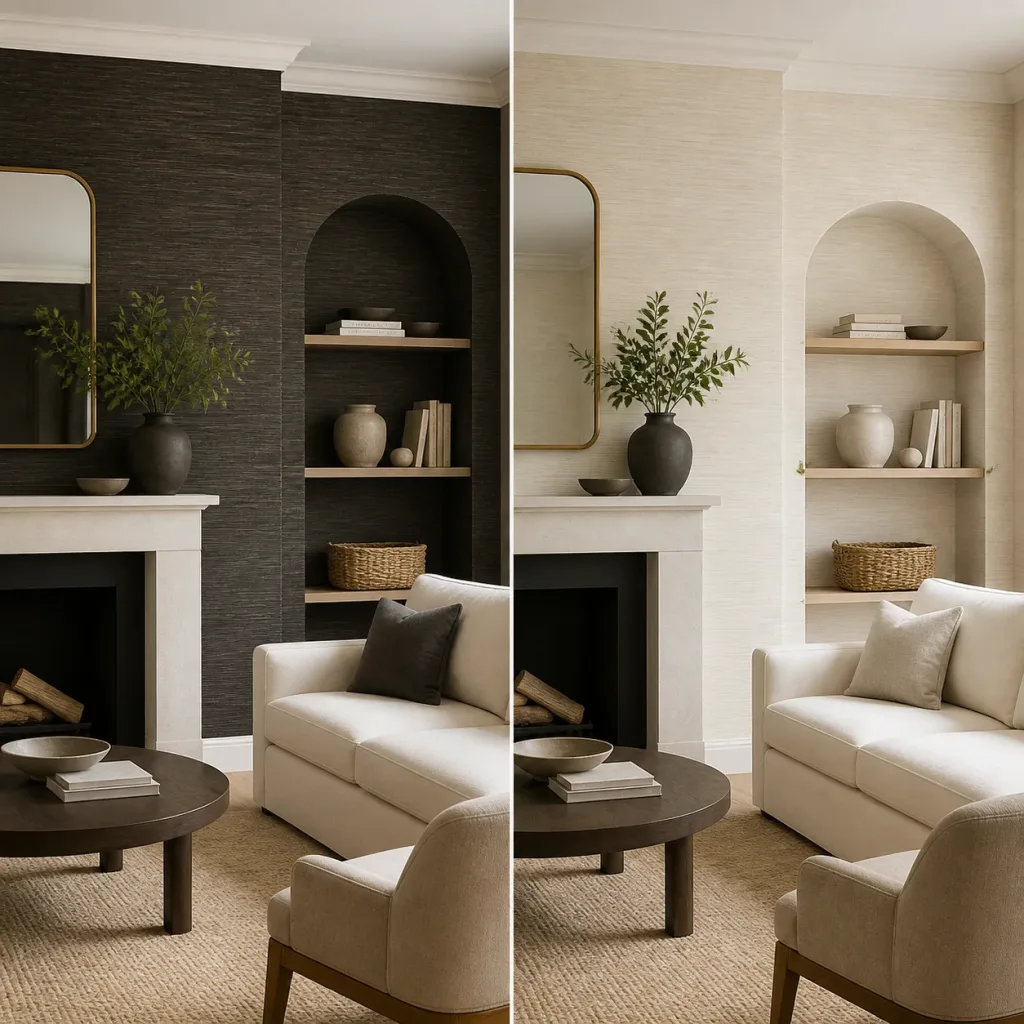
| Room size feel | Expansive, airy | Intimate, cocooning |
| Mood | Calm, fresh, open | Dramatic, sophisticated |
| Light needs | Works in any light | Needs good natural or accent light |
| Texture visibility | Subtle — weave is gentle | High — weave catches light dramatically |
| Stain visibility | Higher — marks show | Lower — marks hide |
| Dust visibility | Lower | Higher — dust settles visibly |
| Best rooms | Bedrooms, open plans, small rooms | Dining, library, feature walls |
Which Rooms Work Best for Each Tone?
| Room | Light Recommended | Dark Recommended |
|---|---|---|
| Living room | Open plan, casual | Formal, entertainment-focused |
| Bedroom | Airy, relaxing | Cocooning, sleep-optimized |
| Dining room | Casual, family dining | Formal dinner parties |
| Home office | Bright, productive | Video call backdrop |
| Powder room | Clean, spa-like | Dramatic jewel box |
| Hallway | Opens up narrow space | Use cautiously — can feel closed |
How Does Light Direction Affect Your Choice?
- North-facing rooms: Receive cool, indirect light — warm light tones (sand, clay) add warmth. Dark tones risk feeling cold
- South-facing rooms: Abundant warm light — dark tones work beautifully, gaining rich depth throughout the day
- East-facing rooms: Morning light, afternoon shadow — medium tones balance both conditions best
- West-facing rooms: Dramatic afternoon light — dark tones glow warmly at golden hour
What Are the Trending Tones for 2026?
- Light trending: Warm sand, oatmeal, soft clay — replacing cool greys
- Dark trending: Forest green, chocolate, charcoal — replacing navy and black
- The sweet spot: Mid-tones like sage, mocha and warm taupe — versatile and forgiving
See our color trends guide for the full 2026 palette forecast.
How Do You Decide?
- Assess the light: Spend a full day noting how light moves through the room
- Define the mood: Calm and airy = light. Dramatic and intimate = dark
- Consider the room size: Under 150 sq ft with low ceilings? Light is safer. Over 200 sq ft? Dark creates warmth
- Sample both: Request light and dark samples of the same material — see them in the actual room
- Trust your instinct: If you keep being drawn to the dark sample, go dark. Hesitation usually means you want bold but are afraid to commit
Frequently Asked Questions
Does dark grasscloth make rooms look smaller?
It can, but not always negatively. Dark grasscloth creates intimacy and cocooning — dining rooms, bedrooms and libraries benefit from this effect. Use it in rooms with good natural light for best results.
Is light grasscloth easier to maintain?
Slightly — light colors show less dust but more stains. Dark colors show dust more but hide marks better. Both clean the same way. Natural undyed grasscloth is the most forgiving overall.
Can I mix dark and light in the same space?
Yes — dark feature wall with light adjacent walls is a classic combination. Keep the same material family for cohesion; only change the tone.