Design Philosophy
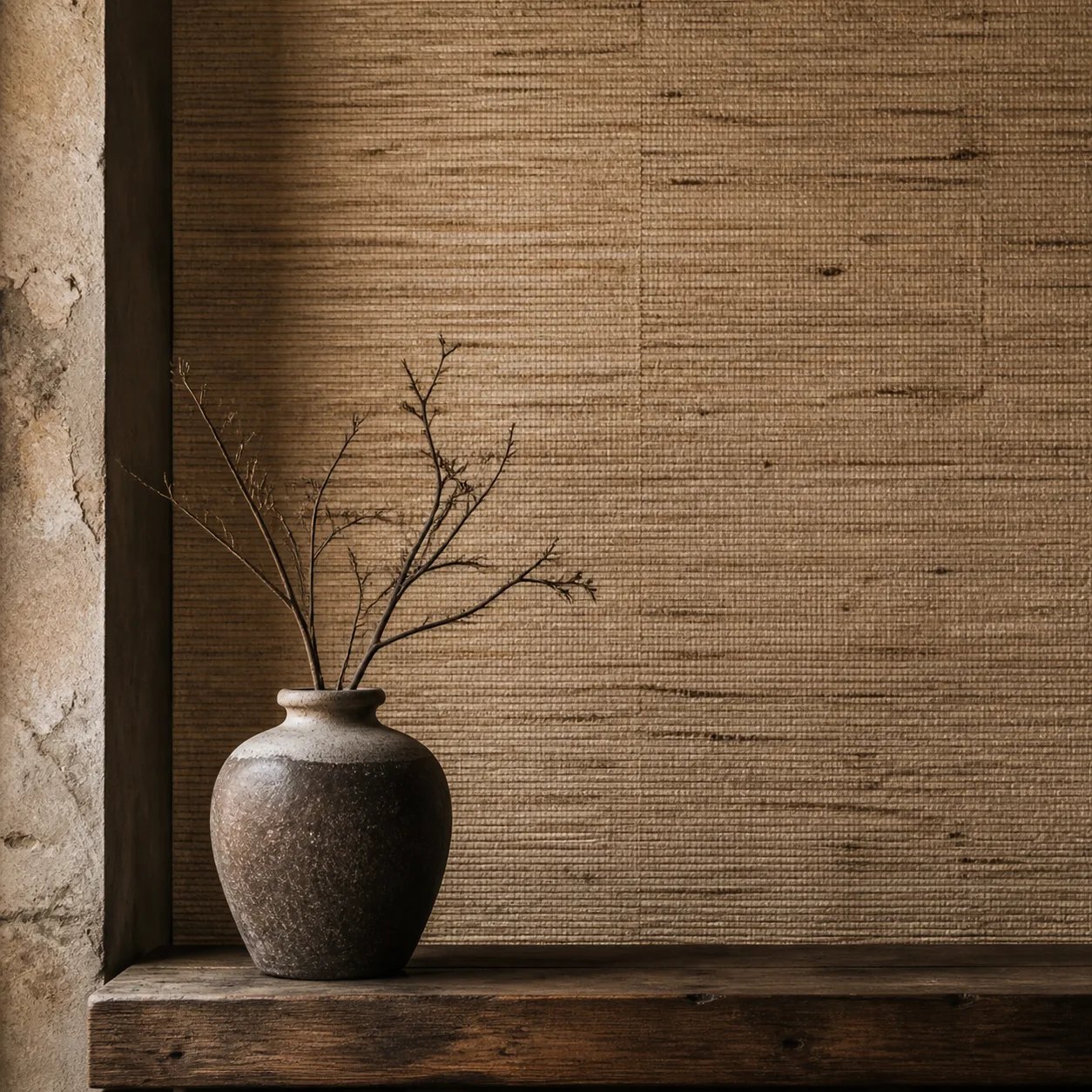
Wabi-Sabi Walls: Embracing Imperfection with Natural Wallcovering
Why the most beautiful walls aren't perfect — and how natural wallcovering's inherent irregularity embodies the Japanese aesthetic of finding beauty in impermanence.
Key Takeaways
- Wabi-sabi = beauty in imperfection, impermanence, incompleteness.
- Visible seams are intentional — part of the material's character.
- Color variation is a feature — each panel is subtly unique.
- Natural aging is beautiful — grasscloth develops patina over time.
- Handwoven irregularity creates depth no machine can replicate.
- Pair with: hand-thrown ceramics, raw wood, linen.
- Set client expectations correctly — imperfections are the value.
What Makes Natural Wallcovering Wabi-Sabi?
| Characteristic | Vinyl View | Wabi-Sabi View |
|---|---|---|
| Visible seams | "Installation flaw" | "Honest craft" |
| Color variation | "Defective dye lot" | "Natural depth" |
| Irregular weave | "Inconsistent" | "Handmade character" |
| Fiber imperfections | "Error" | "Evidence of real material" |
| Aging patina | "Degradation" | "Living surface with history" |
How Do You Communicate Wabi-Sabi to Clients?
- Set expectations before sampling: "Variation is intentional — that's why we chose it"
- Show the comparison: Hold vinyl grasscloth-print next to real grasscloth
- Use craft language: "Handwoven," "artisan-made," "unique character"
- Reference the philosophy: "We chose beauty over perfection"
- Show aging examples: 5-year-old grasscloth walls look better than new
Which Materials Have the Strongest Wabi-Sabi Character?
| Material | Intensity | Character |
|---|---|---|
| Raw undyed grasscloth | Highest | Maximum variation, golden warmth |
| Jute | High | Coarse weave, dramatic texture |
| Sisal | Medium-High | Fine fiber variation, elegant |
| Cork | Medium | Unique bark grain patterns |
| Paper weave | Medium | Subtle, refined imperfection |
How Do You Design a Wabi-Sabi Room?
- Walls: Full-room wallcovering — wabi-sabi is about atmosphere, not accent
- Furniture: Solid wood with visible grain, hand-finished edges
- Textiles: Linen, raw silk, hand-loomed throws
- Objects: Hand-thrown ceramics, irregular stone, dried botanicals
- Lighting: Warm, natural-spectrum, revealing texture
- Color: Muted, nature-derived — see color trends
What Should You Avoid?
- Printed patterns: Let the natural weave be the pattern
- Uniformity obsession: Matching every panel perfectly defeats the purpose
- High-gloss finishes: Matte and satin only
- Mass-produced accessories: Every object should feel intentional
Frequently Asked Questions
Will clients complain about visible seams?
Only if expectations aren't set. Visible seams are normal and expected. Pre-installation communication is key — show samples with seams visible and frame them as evidence of authenticity.
Does natural wallcovering age well?
Beautifully. Colors soften, fiber relaxes, texture mellows — like natural wood or leather. A 10-year-old grasscloth wall often looks better than new.
Is wabi-sabi appropriate for commercial spaces?
Absolutely. Boutique hotels, wellness retreats, Japanese restaurants and spas specify natural wallcovering specifically for its wabi-sabi qualities — it signals authenticity.
Related Guides
Japandi Style
Japanese + Nordic fusion.
Trends 2026
Full trend forecast.
Textured Walls
Texture selection guide.
Installation
Professional tips.
Evaluate Samples
Quality checklist.
Grasscloth vs Vinyl
Real vs. imitation.
Embrace Imperfection
Experience the wabi-sabi character of real natural wallcovering — request samples to see the texture and variation firsthand.
Request Samples