Design Guide
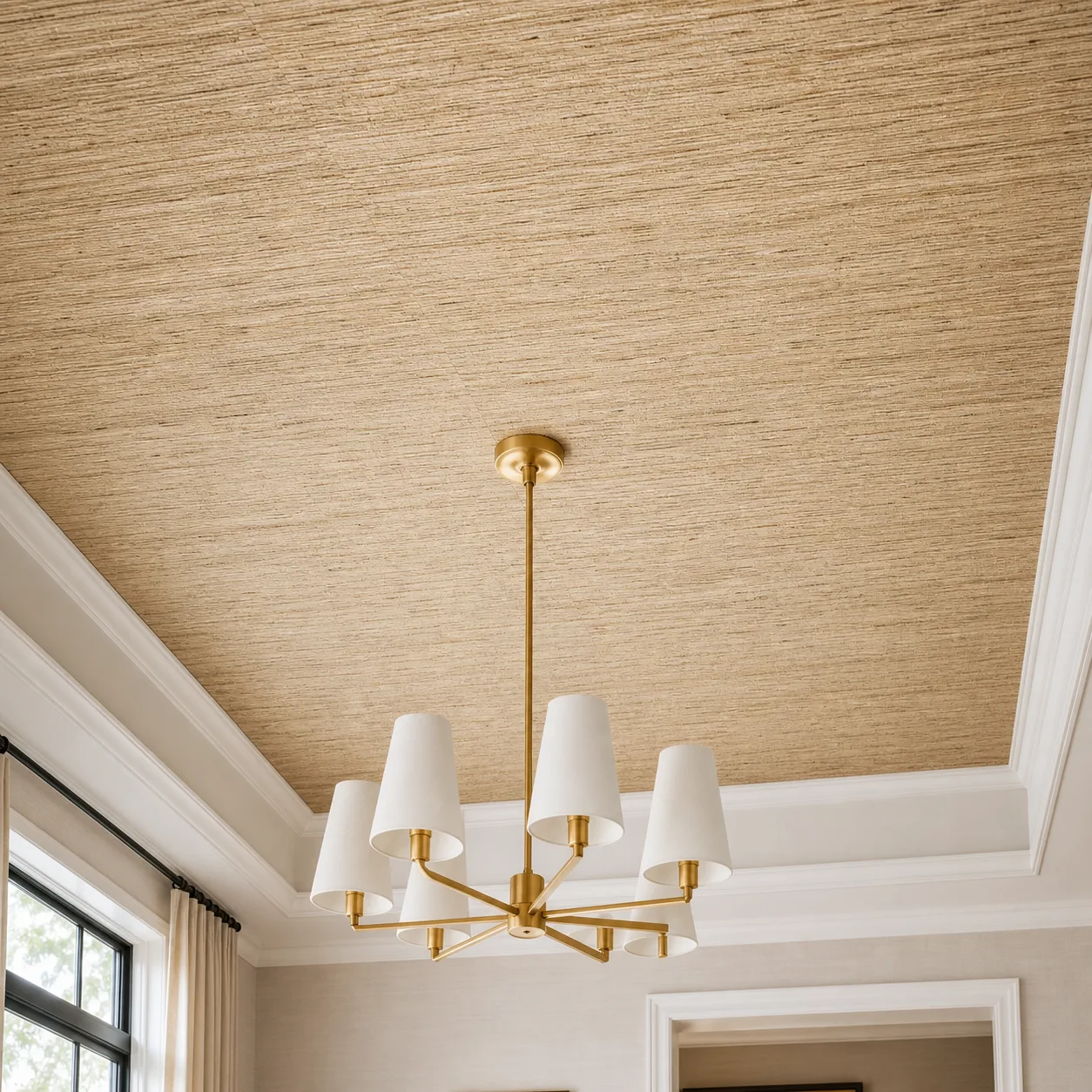
Ceiling Wallcovering: The Fifth Wall in Natural Texture
Why designers are putting grasscloth and cork on ceilings — the coffered ceiling trend, installation considerations and how the "fifth wall" transforms a room from decorated to immersive.
Key Takeaways
- See detailed sections below for comprehensive guidance.
Why Put Wallcovering on the Ceiling?
- The jewel-box effect: Wallcovering on walls + ceiling creates an immersive, enveloping space
- Architectural enhancement: Grasscloth in coffered or tray ceilings frames the texture beautifully
- Acoustic benefit: Cork and grasscloth absorb sound — especially valuable in dining rooms and restaurants
- Design differentiation: Few homeowners or designers think of the ceiling — it is an instant wow factor
- Intimacy in tall rooms: Dark grasscloth on a high ceiling brings it visually closer, creating warmth
Which Materials Work Best on Ceilings?
| Material | Ceiling Suitability | Best Application |
|---|---|---|
| Grasscloth | Excellent — lightweight, dramatic | Coffered ceilings, dining rooms, bedrooms |
| Cork | Excellent — acoustic + visual | Media rooms, restaurants, spas |
| Paper weave | Good — light and subtle | Bedrooms, tray ceilings |
| Wood veneer | Heavier — needs strong adhesion | Feature panels only |
What Are the Installation Considerations?
- Surface prep is critical: The ceiling must be perfectly smooth — any bumps telegraph through natural fiber
- Professional installation required: Gravity makes ceiling work significantly harder than walls
- Use a laser level: Essential for maintaining alignment when you cannot see the whole surface at once
- Avoid high-humidity rooms: No shower bathrooms or kitchens — steam rises and hits the ceiling first
- Keep adhesive off the face: Natural fiber stains permanently from paste — work clean
- Panel alternation: Alternate roll direction to manage natural shading variation
How Do You Choose Colors for Ceilings?
- Same as walls: Full-room wrap in one material creates the strongest immersive effect
- Darker than walls: Drops the ceiling visually — creates intimacy (good for dining rooms)
- Lighter than walls: Maintains ceiling height while adding texture — safer for smaller rooms
- Natural/undyed: Warm golden tone works beautifully overhead, adding organic warmth
See our dark vs. light guide and color trends for palette ideas.
Frequently Asked Questions
Is ceiling installation harder than walls?
Yes — gravity works against you. Professional installation is strongly recommended. The ceiling must be perfectly smooth, and a laser level is essential for alignment.
Which rooms work best for ceiling wallcovering?
Dining rooms with coffered or tray ceilings, bedrooms for cocooning effect, powder rooms for jewel-box drama, and restaurants for acoustic + visual impact.
Does ceiling wallcovering help with acoustics?
Yes. Grasscloth and especially cork provide meaningful acoustic dampening, reducing echo and ambient noise. This is a functional benefit beyond the visual.