Grasscloth.
Hand-woven reed, paper backing.
Custom grasscloth wallpaper and wall covering, sourced direct from our partner mills in China. Hunan reed · partner mill. Below: where pricing starts, specifications, and patterns from our line photographed from the real swatch.
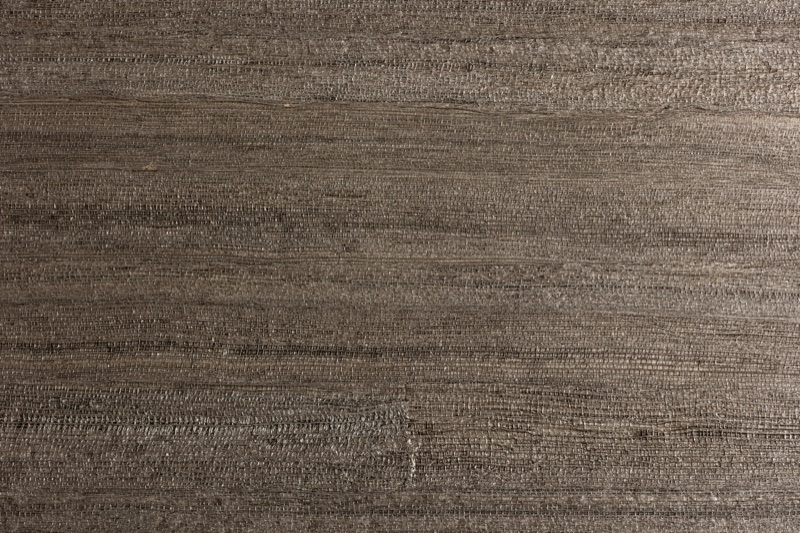
- Starts at from $45 / roll (≈$8 / m)
- Custom replicationQuoted per project
Entry price for standard constructions, EXW Chengdu — rises with weave complexity and custom colour, falls with volume. Full terms & pricing →
Buying grasscloth for a project or a brand?
- Interior designers — Project quantities from 50 rolls; free digital sample kit in 24 h; spec sheets without our branding.
- Brands & private label — Custom colourways and private label from 100 rolls per SKU; a woven proof before production.
- Distributors & hospitality — Batch-consistent runs to several thousand m²; per-batch lot certificates; EXW Chengdu, FOB / CIF / DDP on request.
- Minimum order
- 50 rolls (about 250 m²) catalog · 100 rolls custom / private label
- Lead time
- 4–6 weeks standard · 5–8 weeks specialty, after sample approval and payment
- Terms
- EXW Chengdu · FOB, CIF, DDP on request
- Samples
- Free digital kit in 24 h · paid swatch pack, credited in full on your first order
- Reply
- Within 24 hours
Physical swatch pack $45 incl. DHL, credited on your first order over $500.
What Is Grasscloth Wallcovering?
Grasscloth is a type of natural wallcovering made from woven plant fibers — typically arrowroot, jute, seagrass, or reed — that are hand-woven onto a paper or non-woven backing. It is one of the oldest forms of wall decoration, with roots in East Asian craftsmanship dating back centuries.
Unlike printed wallpapers or vinyl wallcoverings, grasscloth derives its beauty from the natural irregularity of the fibers themselves. Each roll displays unique variations in color, texture and weave density — characteristics that are considered part of the material's inherent charm, not defects.
Today, grasscloth is widely specified in luxury residential, hospitality and commercial interiors. It is the signature material of natural wallcovering and remains the most popular category in the natural wallcovering market.
Key Fact: Grasscloth is a handcrafted product. Visible seams (known as "paneling") are a natural characteristic of the material. When properly installed, these seams contribute to a rich, organic aesthetic that cannot be replicated by machine-made wallpapers.
Types of Grasscloth Weave Patterns
Grasscloth wallcoverings are available in a variety of weave patterns, each creating a distinct visual effect. The most common types include:
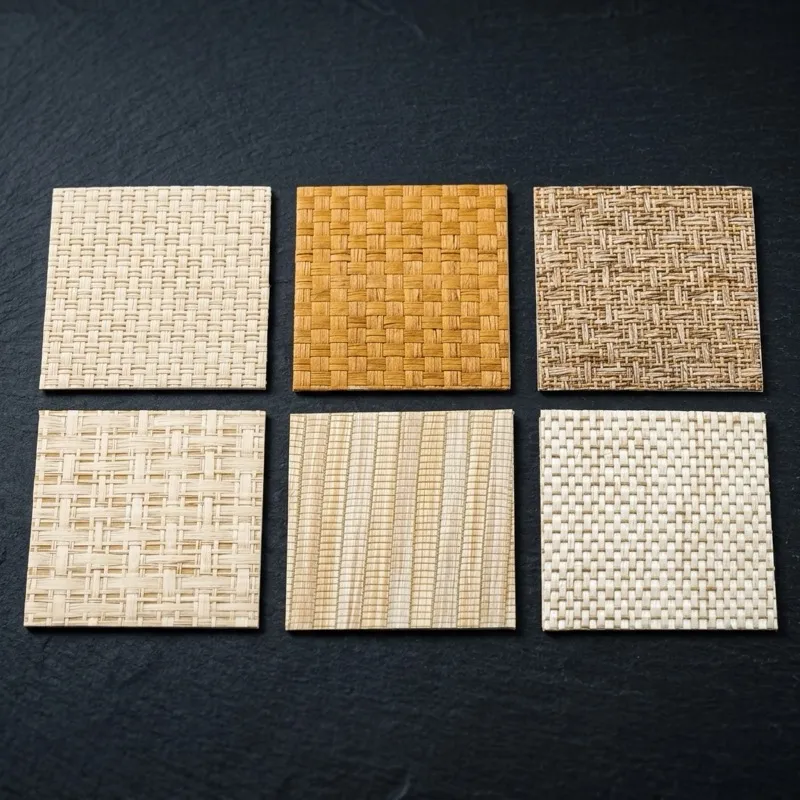
1. Fine Weave
Thin, closely spaced fibers creating a subtle, refined texture. Ideal for spaces where you want the warmth of grasscloth without a heavy visual impact. Popular in bedrooms, dining rooms and smaller residential spaces.
2. Medium Weave
The most versatile and widely used weave. Offers a clear natural texture while maintaining visual balance. Suitable for living rooms, hotel guest rooms and office reception areas.
3. Coarse / Chunky Weave
Thick, bold fibers with pronounced texture and dramatic visual depth. Best suited for feature walls, hotel lobbies and large-scale commercial spaces where the grasscloth serves as a focal point.
4. Herringbone Weave
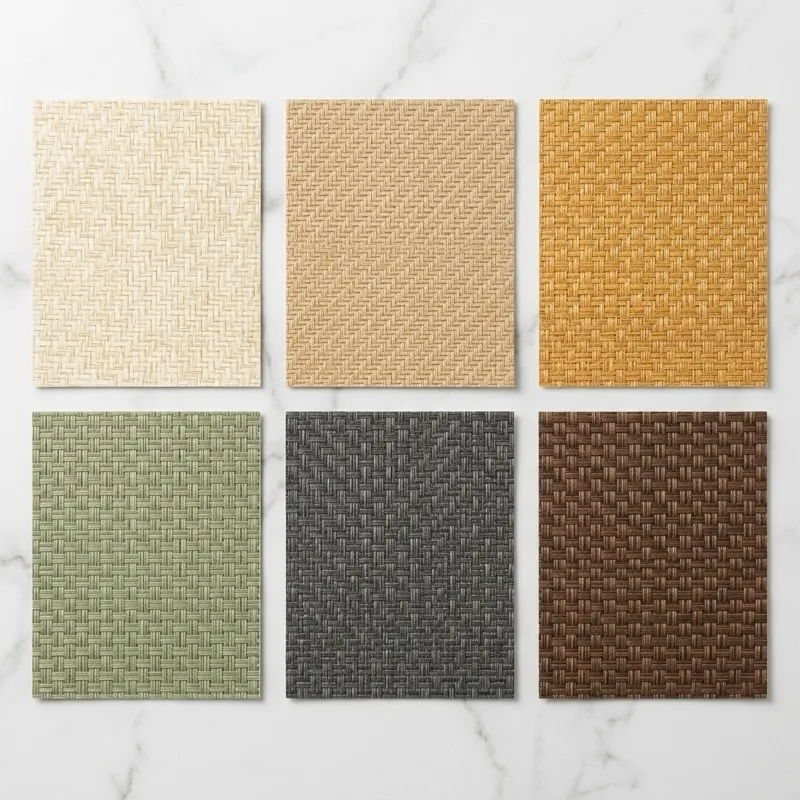
Fibers woven in a V-shaped zigzag pattern, adding geometric interest to the organic material. A contemporary choice that bridges traditional grasscloth with modern interior design.
5. Basketweave
An interlocking over-under pattern reminiscent of woven baskets. Creates a structured, grid-like appearance while retaining the natural warmth of the fibers.
Technical Specifications
The following specifications are typical for commercial-grade grasscloth wallcoverings. Exact values may vary by product line and manufacturer.
| Property | Specification |
|---|---|
| Material | Natural grass fiber (arrowroot, jute, seagrass, or reed) on backing |
| Backing | Non-woven or paper backing |
| Width | 0.915 m (36 in) standard, pre-trimmed |
| Roll Length | 5.5 m (6 yd) standard roll |
| Coverage | ~5.0 m² (54 sq ft) per roll |
| Fire Rating | ASTM E84 Class A (when specified) |
| Seaming | Panels visibly — natural paneling is a design characteristic |
| Color Variation | Inherent — natural fiber dye absorption varies |
| Adhesive | Manufacturer-recommended heavy-duty clear adhesive |
| Maintenance | Dry clean only — vacuum with soft brush or wipe with dry cloth |
For Specifiers: When writing specifications for grasscloth under CSI MasterFormat Section 09 72 00 — Wall Coverings, always specify that all material must come from the same production batch to ensure visual consistency. Include a clause acknowledging that natural variations in color and texture are inherent characteristics, not defects.
Best Applications
Grasscloth is best suited for climate-controlled interiors with stable humidity levels (below 70% RH). It is not recommended for high-moisture environments such as bathrooms or kitchens.
- Luxury Residential: Living rooms, dining rooms, bedrooms, hallways — grasscloth adds instant warmth and texture to any room.
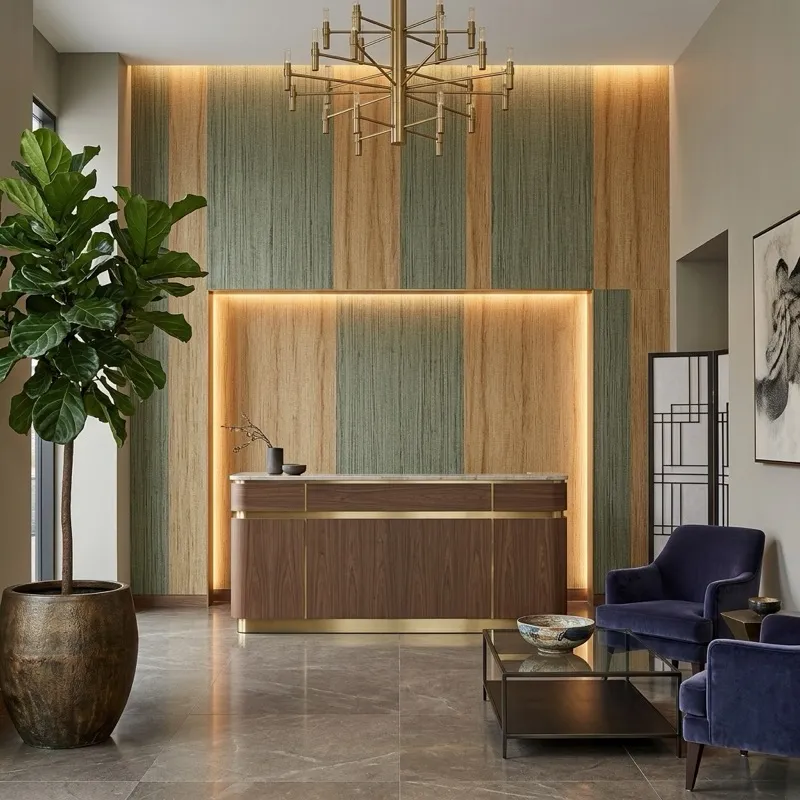
- Hotels & Hospitality: Guest rooms, lobby feature walls, restaurant interiors, spa reception areas. Grasscloth is one of the most specified materials in boutique and luxury hotel design.
- Commercial Offices: Executive offices, boardrooms, reception areas. The organic texture creates a sophisticated, calming environment.
- Retail & Showrooms: Boutiques, galleries, and showrooms where the wall treatment serves as a subtle backdrop that enhances displayed products.
Installation Considerations
Grasscloth requires professional installation by an experienced wallcovering installer. Key considerations include:
- Wall Preparation: Surfaces must be smooth, clean, dry and primed with a professional-grade primer. Imperfections will telegraph through the natural fibers.
- Adhesive Application: Apply adhesive to the wall, not the backing ("paste-the-wall" method). This prevents moisture from staining through the natural fibers.
- Booking Time: Allow the material to acclimate to room temperature and humidity before installation. Follow manufacturer guidelines for booking time.
- Seam Handling: Use a sharp, new blade for every cut. Do not over-roll seams — natural fibers can be damaged by excessive pressure.
- Same Batch Requirement: All rolls for a single room must come from the same production batch. Check batch numbers before installation begins.
Maintenance & Care
Grasscloth is a low-maintenance material when properly installed in an appropriate environment:
- Regular Cleaning: Use a dry, lint-free cloth or vacuum with a soft brush attachment. Never use water or liquid cleaners on natural grasscloth.
- Spot Cleaning: For minor marks, gently blot with a clean, dry cloth. Avoid rubbing, which can damage the fibers.
- Sunlight Protection: Prolonged direct sunlight may cause gradual fading. Consider window treatments in sun-exposed rooms.
- Humidity Control: Maintain stable indoor humidity levels. Excessive moisture can cause fiber expansion and adhesive failure.
Why Source Grasscloth from China?
China is the world's largest producer and exporter of natural grasscloth wallcoverings. Many of the grasscloth products sold under premium international brands are manufactured in Chinese workshops using traditional hand-weaving techniques.
Sourcing directly from a specialized Chinese supplier like Grasscloths offers several advantages:
- Cost Efficiency: Eliminate distribution costs by working directly with the source.
- Multi-Material Sourcing: Access grasscloth, sisal, wood veneer, gold foil, cork and mica wallcoverings through a single supplier.
- Custom Options: Request custom colors, weave patterns and dye finishes tailored to your project specifications.
- Proven Export Experience: Grasscloths has completed export orders to the United States, the UK, Germany and other international markets.
Frequently Asked Questions
What is grasscloth wallpaper made from?
Grasscloth is made from woven plant fibers such as arrowroot, jute, seagrass or reed, laminated to a paper or non-woven backing. Natural variation in color, texture and weave density is an inherent material characteristic, not a defect.
Are visible seams normal with grasscloth wallpaper?
Yes. Grasscloth panels naturally show seams because each woven strip varies slightly. This paneling effect is part of the material's handcrafted appearance and should be reviewed with the installer before hanging.
Can grasscloth wallpaper be used in bathrooms?
No. Natural grasscloth is porous and moisture-sensitive, so steam and splashes can stain the fibers or weaken the adhesive. Use it in dry, climate-controlled rooms and choose a moisture-resistant alternative for bathrooms.