Design Guide
Biophilic Design with Natural Wallcovering: The Complete Guide
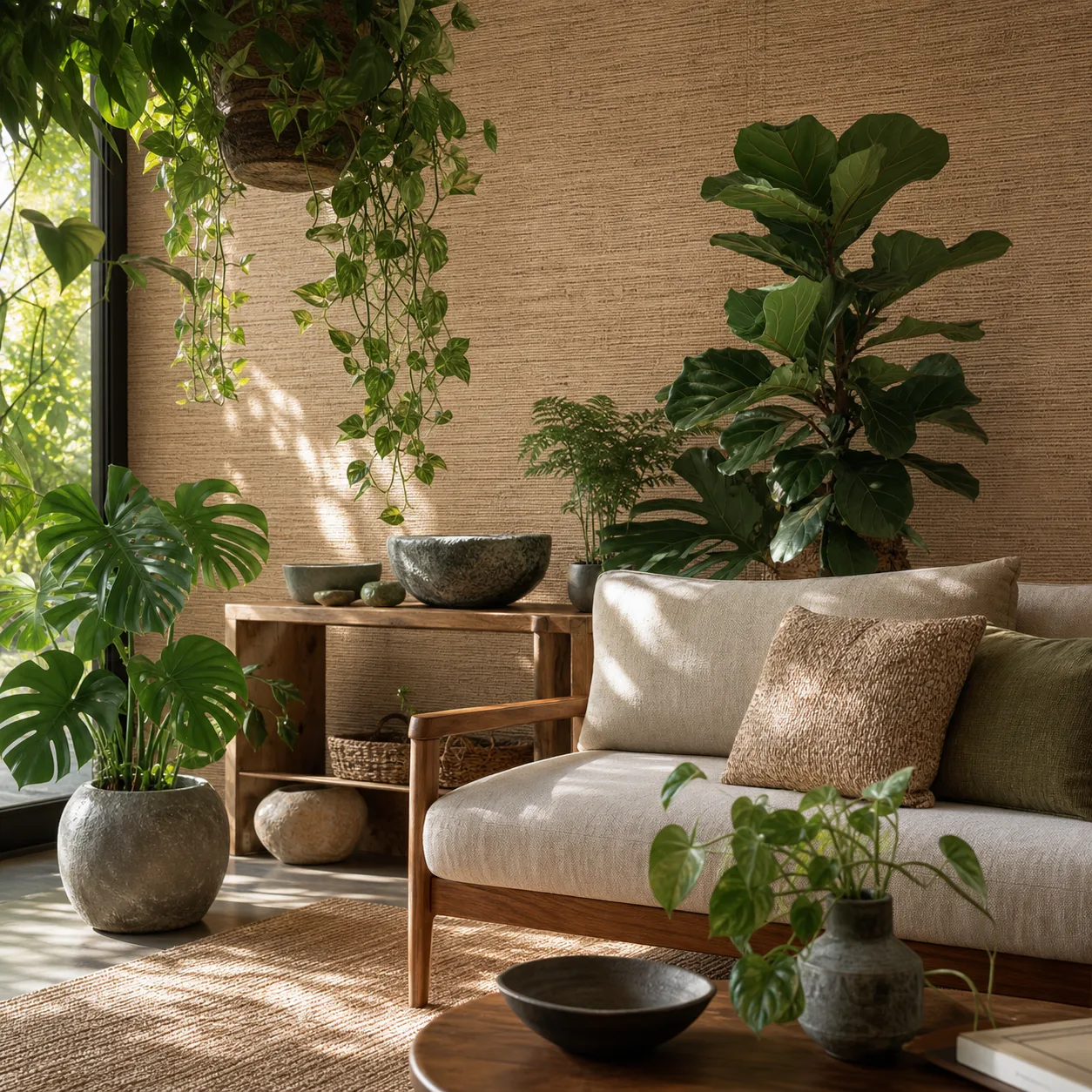
How natural wallcovering materials — grasscloth, sisal, cork and wood veneer — serve as the foundation of biophilic design. From the science behind nature-connected interiors to WELL Building Standard credits and room-by-room specification.
Key Takeaways
- Biophilic design reduces cortisol, improves cognitive function and enhances occupant satisfaction.
- Natural materials > printed imitations — authenticity is core to the biophilic effect.
- WELL Building Standard credits: Mind (Biophilia I & II), Materials, Comfort.
- Grasscloth — visual texture + acoustic dampening + low VOC.
- Cork — thermal insulation + acoustic absorption + hypoallergenic.
- Sisal — durable natural texture for commercial high-traffic areas.
- 3 implementation levels: accent wall → room treatment → full environment.
What Is Biophilic Design and Why Does It Work?
Biophilic design is the practice of integrating nature into built environments — not as decoration, but as a core design strategy backed by neuroscience:
- Stress reduction: Research shows exposure to natural textures and materials lowers cortisol levels by up to 60% compared to synthetic-only environments
- Cognitive performance: Nature-connected workplaces show 8–12% improvement in productivity and focus
- Healing environments: Hospital studies demonstrate faster recovery rates in rooms with natural materials and views
- Employee satisfaction: 15% higher reported wellbeing in offices with biophilic elements
The key insight: Biophilic benefits require authenticity. A printed "grasscloth look" vinyl doesn't trigger the same neurological response as real woven fibers — the brain detects the difference through tactile cues and visual complexity.
Which Natural Materials Support Biophilic Design?
| Material | Biophilic Qualities | Functional Benefits | Best Applications |
|---|---|---|---|
| Grasscloth | Organic weave, visual complexity, tactile depth | Acoustic dampening, low VOC | Offices, lobbies, bedrooms |
| Cork | Bark texture, earth connection | Thermal insulation, acoustic absorption, hypoallergenic | Meeting rooms, wellness, media rooms |
| Sisal | Raw fiber texture, natural variation | High durability, commercial grade | Corridors, restaurants, retail |
| Wood veneer | Grain pattern, warmth, forest connection | Premium visual, long-lasting | Feature walls, hospitality suites |
| Mica | Mineral shimmer, geological depth | Light-reflective, premium visual | Statement walls, luxury residential |
How Does Natural Wallcovering Contribute to WELL Certification?
| WELL Concept | How Natural Wallcovering Helps | Relevant Features |
|---|---|---|
| Mind — Biophilia I (Precondition) | Qualifies as "nature integration" in biophilia plan | Authentic natural material, organic texture |
| Mind — Biophilia II (Optimization) | Contributes to quantitative biophilic coverage | Wall surface area with natural material |
| Materials | Low-VOC, natural fiber, no PVC | Material health transparency |
| Comfort — Sound | Acoustic dampening (cork, grasscloth) | Reduces ambient noise levels |
| Comfort — Thermal | Cork provides thermal insulation | Stable surface temperature |
For specifiers: Natural wallcovering can contribute to multiple WELL credits simultaneously — making it an efficient specification for projects targeting certification. See our specification guide for ASTM and fire rating documentation.
What Are the Three Levels of Biophilic Implementation?
- Level 1 — Accent: Single feature wall in grasscloth or cork. Low investment, immediate impact. Works in any project as a starting point
- Level 2 — Room treatment: Full room wrapped in natural wallcovering — walls and optionally ceiling. Creates an immersive natural environment. Common in bedrooms, offices and meeting rooms
- Level 3 — Full environment: Natural wallcovering throughout a floor or building, combined with natural flooring, furniture and planting. The "biophilic maximalism" approach trending in hospitality and wellness facilities
How Do You Specify for Different Room Types?
| Room Type | Recommended Material | Color Direction | Biophilic Effect |
|---|---|---|---|
| Office / workspace | Grasscloth, cork | Sage, warm neutral | Focus, reduced fatigue |
| Hotel lobby | Sisal, wood veneer | Earth tones, rich brown | Welcome, grounding |
| Spa / wellness | Cork, grasscloth | Muted green, natural | Deep calm, restoration |
| Restaurant | Grasscloth, sisal | Warm clay, terracotta | Comfort, appetite |
| Healthcare | Cork, paper weave | Soft green, warm taupe | Healing, lower anxiety |
| Residential bedroom | Grasscloth, paper weave | Moss, sand, chocolate | Sleep quality, cocooning |
What Are Common Mistakes in Biophilic Wallcovering?
- Using vinyl "grasscloth look": Printed imitations lack the tactile and visual complexity that triggers biophilic response — and they don't qualify for WELL materials credits
- Over-patterning: Biophilic design works through organic subtlety, not busy prints. Let the natural weave be the pattern — see wabi-sabi walls guide
- Ignoring acoustics: Half the biophilic value of cork and grasscloth is acoustic — specify them where noise reduction matters most
- Treating it as decoration: Biophilic design is a strategy with measurable outcomes, not a style trend. Present it to clients with the wellness data behind it
Frequently Asked Questions
Is biophilic design just a trend?
No — it's evidence-based. Biophilic design is grounded in decades of environmental psychology research and codified in building standards (WELL, LEED). Unlike aesthetic trends that cycle, the science behind nature-human connection is permanent. The design expression of biophilia evolves (currently toward "restorative luxury" — see 2026 trends), but the underlying principle is established.
Does natural wallcovering alone qualify for WELL credits?
It contributes, but isn't sufficient alone. WELL's Biophilia features require a holistic plan — natural wallcovering is one component alongside natural light, views, planting and spatial design. However, natural wallcovering can contribute to multiple credit categories simultaneously (Mind, Materials, Comfort), making it an efficient specification choice.
How do I present biophilic design to cost-conscious clients?
Lead with ROI. For commercial clients: reduced absenteeism, higher productivity, WELL certification marketing value. For residential: improved sleep quality, stress reduction, long-term material durability vs. paint (grasscloth lasts 10–15 years vs. 3–5 years for paint). The initial investment pays back through longevity and occupant benefits.
Related Guides
Trends 2026
Full trend forecast.
Sustainability
Environmental credentials.
Wabi-Sabi Walls
Imperfect beauty.
Cork Guide
Acoustic + thermal.
Feature Walls
Impact wall design.
Specify Grasscloth
Write professional specs.
Design with Nature
Explore our natural material library for biophilic specification — grasscloth, sisal, cork and wood veneer with full ASTM documentation.
Request Biophilic Samples