Material Comparison
Grasscloth vs Vinyl: 10 Differences Every Designer Should Know
The most common dilemma in wallcovering selection — natural grasscloth's organic beauty versus vinyl's bulletproof durability. A sourcing specialist’s honest comparison with lifecycle cost data and ASTM performance ratings.
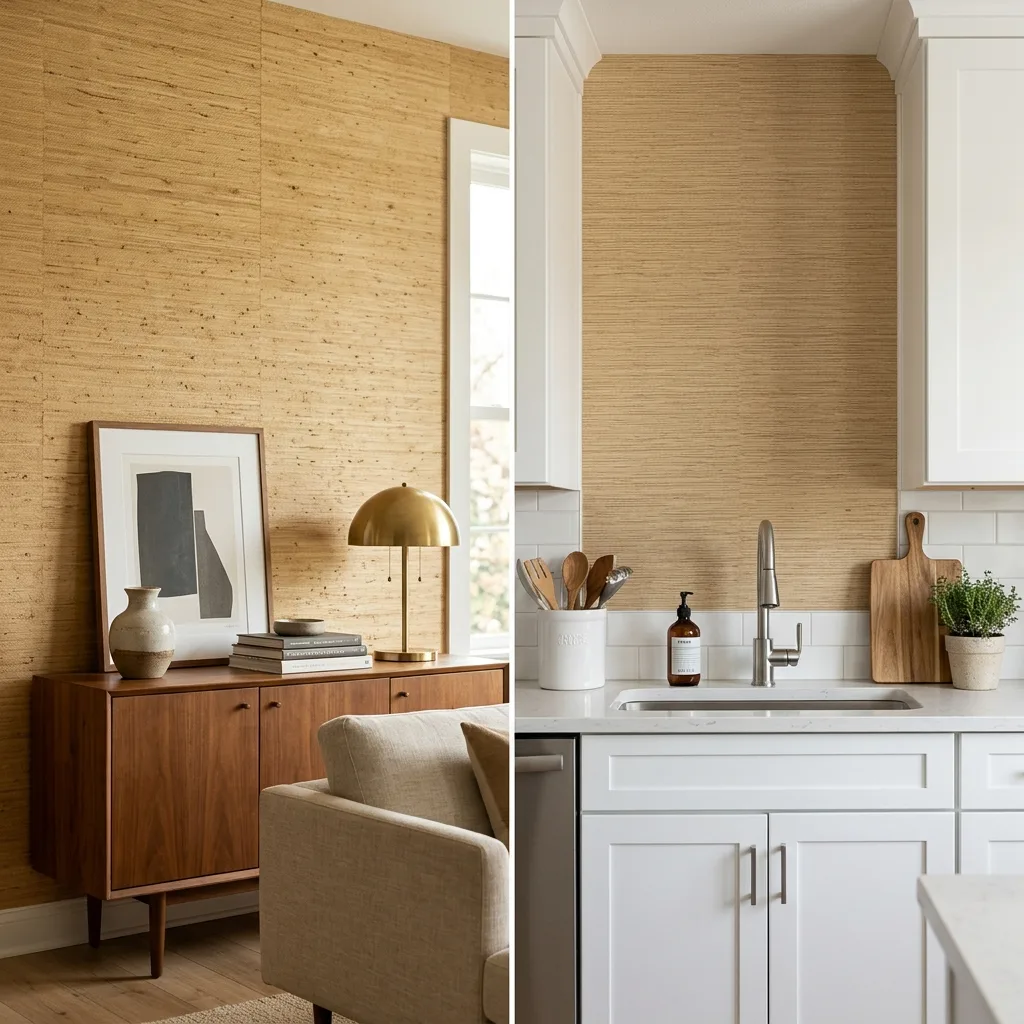
Key Takeaways
- Texture: Grasscloth is hand-woven, tactile, and unique per roll. Vinyl is printed/embossed, uniform and consistent.
- Durability: Vinyl wins — 10,000+ double rubs (ASTM D4157) vs grasscloth's 1,000–2,000.
- Cost: Vinyl is 2–4× cheaper upfront ($2–8/m² vs $8–18/m²), but grasscloth lasts longer (15–25 vs 10–15 years).
- Sustainability: Grasscloth is biodegradable and low-VOC; vinyl is PVC-based and non-biodegradable.
- Maintenance: Vinyl is fully washable; grasscloth is dry-brush only.
- Faux option: Vinyl "faux grasscloth" mimics the look but not the feel — a reasonable compromise for wet areas.
- Best strategy: Use grasscloth in feature areas, vinyl in utility zones — many projects combine both.
At a Glance: Grasscloth vs Vinyl Comparison Table
| Feature | Natural Grasscloth | Vinyl Wallpaper |
|---|---|---|
| Material | Hand-woven natural plant fibers on paper/non-woven backing | PVC or vinyl film on paper/fabric backing |
| Texture | Organic, tactile, unique per roll | Uniform, printed or embossed pattern |
| Durability | Moderate (residential grade) | Very high (Type I–III commercial) |
| Washability | Dry brush/vacuum only | Fully washable, scrub-resistant |
| Moisture Resistance | Low — avoid wet areas | High — suitable for bathrooms |
| Sustainability | Biodegradable, renewable fibers, low VOC | PVC-based, not biodegradable, potential VOC off-gassing |
| Color Variation | Natural variation between panels (a feature) | Perfectly uniform color matching |
| Visible Seams | Yes — characteristic of the material | Minimal — designed for seamless look |
| Lifespan | 15–25 years (in appropriate environment) | 10–15 years |
| Price Range | $8–18 /m² (FOB manufacturer) | $2–8 /m² (FOB manufacturer) |
| Installation | Professional recommended | DIY-friendly |
| Fire Rating | Class B1 (GB 8624) | Class B1 (GB 8624) |
| Sound Absorption | Moderate — natural fibers dampen echo | Minimal |
| Commercial Grade | Residential / Type I | Type I, II or III available |
Why Do Designers Still Choose Real Grasscloth?
Natural grasscloth offers something vinyl fundamentally cannot: authenticity. Every roll is hand-woven from real plant fibers, creating a unique texture that varies subtly from panel to panel. This organic irregularity is not a manufacturing defect — it's the entire point. Designers and architects specify grasscloth specifically because of its tactile depth, visual warmth and connection to natural materials.
Where Grasscloth Excels
- Luxury residential spaces — living rooms, dining rooms, master bedrooms
- Hospitality lobbies and guest rooms — where first impressions and premium feel matter
- Design-forward commercial spaces — boutique offices, high-end retail, spas
- Biophilic design projects — LEED/WELL certified buildings requiring natural materials
- Feature walls — where texture is the focal point
Key Statistics
- Real grasscloth has been used in interior design for over 2,000 years, originating in ancient China and Japan
- Natural wallcovering demand is growing at 8.2% CAGR (2024–2030), driven by sustainability trends (source: Grand View Research)
- Hotels and luxury residences specify grasscloth at 3× the rate of standard vinyl in high-end hospitality projects
When Does Vinyl Make More Sense?
Vinyl's advantages are practical, not aesthetic. It's the workhorse of the wallcovering industry — easy to install, easy to clean, moisture-proof and affordable. Modern vinyl can mimic many natural textures, including grasscloth patterns, at a fraction of the cost.
Where Vinyl Excels
- High-humidity areas — bathrooms, kitchens, laundry rooms
- High-traffic commercial spaces — hospital corridors, school hallways, retail
- Children's rooms — scrubbable surface handles crayon and fingerprints
- Budget-driven projects — large-area coverage at minimal cost
- Short-term installations — rental properties, pop-up retail
A Vinyl Caveat: Moisture Trapping
While vinyl excels in wet areas, it acts as a vapor barrier — trapping moisture between the wall substrate and the wallcovering. In older buildings or exterior walls without proper vapor retarders, this can cause mold growth behind the vinyl surface. Always ensure walls are dry and sealed before installing vinyl in humid climates. This is a common concern raised in professional installer communities.
Can Vinyl Really Replicate Grasscloth?
Modern "faux grasscloth" vinyl has improved dramatically. Embossed textures and high-resolution printing can create a convincing visual approximation at a distance. However, the difference is immediately apparent in three ways:
- Touch — real grasscloth has a distinctly fibrous, organic feel; vinyl feels smooth and plastic
- Visual depth — real fibers create three-dimensional light play that printed patterns cannot match
- Panel variation — real grasscloth has subtle panel-to-panel differences; vinyl is perfectly uniform
For discerning clients who will physically interact with walls (touching, close inspection), the difference is unmistakable. For large-area coverage viewed at arm's length, quality faux grasscloth can be a reasonable compromise.
Which Is More Sustainable: Grasscloth or Vinyl?
| Environmental Factor | Grasscloth | Vinyl |
|---|---|---|
| Raw Material | Renewable plant fibers (annual crops) | Petroleum-derived PVC |
| Biodegradability | Fully biodegradable | Not biodegradable (500+ years) |
| VOC Emissions | Very low / negligible | Moderate (depends on formulation) |
| Recyclability | Compostable | Difficult (PVC recycling is limited) |
| Carbon Footprint | Low | Moderate-High |
For LEED, WELL and Living Building Challenge projects, grasscloth's environmental profile is a significant specification advantage. See our LEED wallcovering guide for specific credit pathways.
Lifecycle Cost: Which Is Actually Cheaper?
Upfront, vinyl wins by a wide margin. Over 20 years, grasscloth is surprisingly competitive. Here's the math for a 50 m² accent wall:
| Cost Factor | Grasscloth | Vinyl |
|---|---|---|
| Material (FOB) | $600–900 | $100–400 |
| Installation | $400–600 (professional) | $100–300 (DIY possible) |
| Replacements over 20 yrs | 0–1 (lasts 15–25 yrs) | 1–2 (lasts 10–15 yrs) |
| 20-year total cost | $1,000–1,500 | $400–1,400 |
| Cost per year | $50–75/yr | $20–70/yr |
Key insight: The gap narrows significantly when you factor in vinyl's shorter lifespan and replacement labor. For long-term installations (hotels, owned homes), grasscloth's lifecycle cost can match or beat vinyl.
How Does Installation Differ Between Grasscloth and Vinyl?
Grasscloth requires professional installation; vinyl is DIY-friendly. This is one of the biggest practical differences:
- Grasscloth: Paste-the-wall application, reverse hanging recommended, professional installer strongly advised. Visible seams are intentional — not a defect. See our DIY vs professional installation guide
- Vinyl: Paste-the-back or peel-and-stick options available. DIY-friendly. Seams designed to be nearly invisible
- Removal: Grasscloth is more difficult to remove — often requires steaming and scraping. Vinyl peels off more cleanly. See our grasscloth removal guide
What About Pets, Odors and Day-to-Day Wear?
This is an area competitors rarely discuss honestly, but it matters for real-world decisions:
- Pet damage: Grasscloth's fibrous texture is attractive to cats — scratching can cause irreparable damage. Vinyl is scratch-resistant. If you have cats, consider vinyl in accessible areas and grasscloth above furniture height
- Odor absorption: Natural fibers absorb odors (cooking, smoking, pet smells) over time. Vinyl does not. For kitchens and dining rooms with heavy cooking, this is a real consideration
- Stain resistance: Any liquid contact on grasscloth can leave permanent marks. Vinyl can be wiped clean. How to clean grasscloth →
- UV fading: Both materials can fade in direct sunlight, but grasscloth's natural dyes are more susceptible. Use UV-filtering window treatments for south-facing walls
Frequently Asked Questions
Is real grasscloth worth the extra cost over vinyl?
For most designers and homeowners seeking an authentic, premium natural finish — yes. Real grasscloth offers unique tactile warmth, organic texture variation and genuine sustainability that vinyl cannot replicate. However, for high-traffic commercial areas, children's rooms or humid environments, vinyl's durability and washability make it the more practical choice. Our grasscloth pros & cons guide goes deeper.
Can you tell the difference between grasscloth and vinyl grasscloth?
Yes, an experienced eye can always tell the difference. Real grasscloth has visible fiber irregularity, subtle color variation between panels, and a distinctly organic feel to the touch. Vinyl grasscloth has perfectly uniform texture, precise color matching and a slightly plastic sheen. The difference is most obvious in side-by-side comparison and when running your hand across the surface. See our grasscloth vs faux grasscloth comparison for a deeper dive.
How long does grasscloth last compared to vinyl?
In appropriate environments, real grasscloth can last 15–25 years with proper care. Vinyl wallpaper typically lasts 10–15 years before showing wear or discoloration. However, grasscloth is more vulnerable to damage from moisture, stains and abrasion, so its longevity depends heavily on placement and maintenance. See our wallcovering lifespan guide.
Can I use grasscloth in a bathroom?
Not recommended. Grasscloth absorbs moisture and can develop mold, warping or dye bleeding in humid environments. For bathroom applications, use vinyl faux grasscloth or our recommended faux alternatives that replicate the texture with moisture-resistant substrates.
Is there a middle ground between grasscloth and vinyl?
Yes — faux grasscloth vinyl offers the visual texture of natural fibers with vinyl's durability and washability. It's ideal for high-traffic areas, bathrooms and rental properties where authenticity is less critical. Quality has improved dramatically — premium faux grasscloth can be convincing at arm's length, though it lacks the tactile depth of real fibers.
Related Guides
Grasscloth Guide
Complete reference on grasscloth wallcovering.
Grasscloth vs Faux
Real vs faux grasscloth in depth.
Grasscloth vs Sisal
Two popular natural wallcoverings compared.
Pros & Cons
Honest advantages and drawbacks.
Cost Guide
Full pricing breakdown with FOB data.
Commercial vs Residential
Key differences for specifiers.
See the Difference Yourself
Request real grasscloth samples and feel the texture, weight and organic warmth that no vinyl can match.
Request Samples