Material Comparison
Cork Wallpaper vs Cork Tiles: Which Format Is Right?
Both use natural cork — but the similarity ends there. We compare wallpaper rolls vs rigid tiles on thickness, acoustic NRC ratings, thermal R-values, cost, installation difficulty and durability with real performance data.
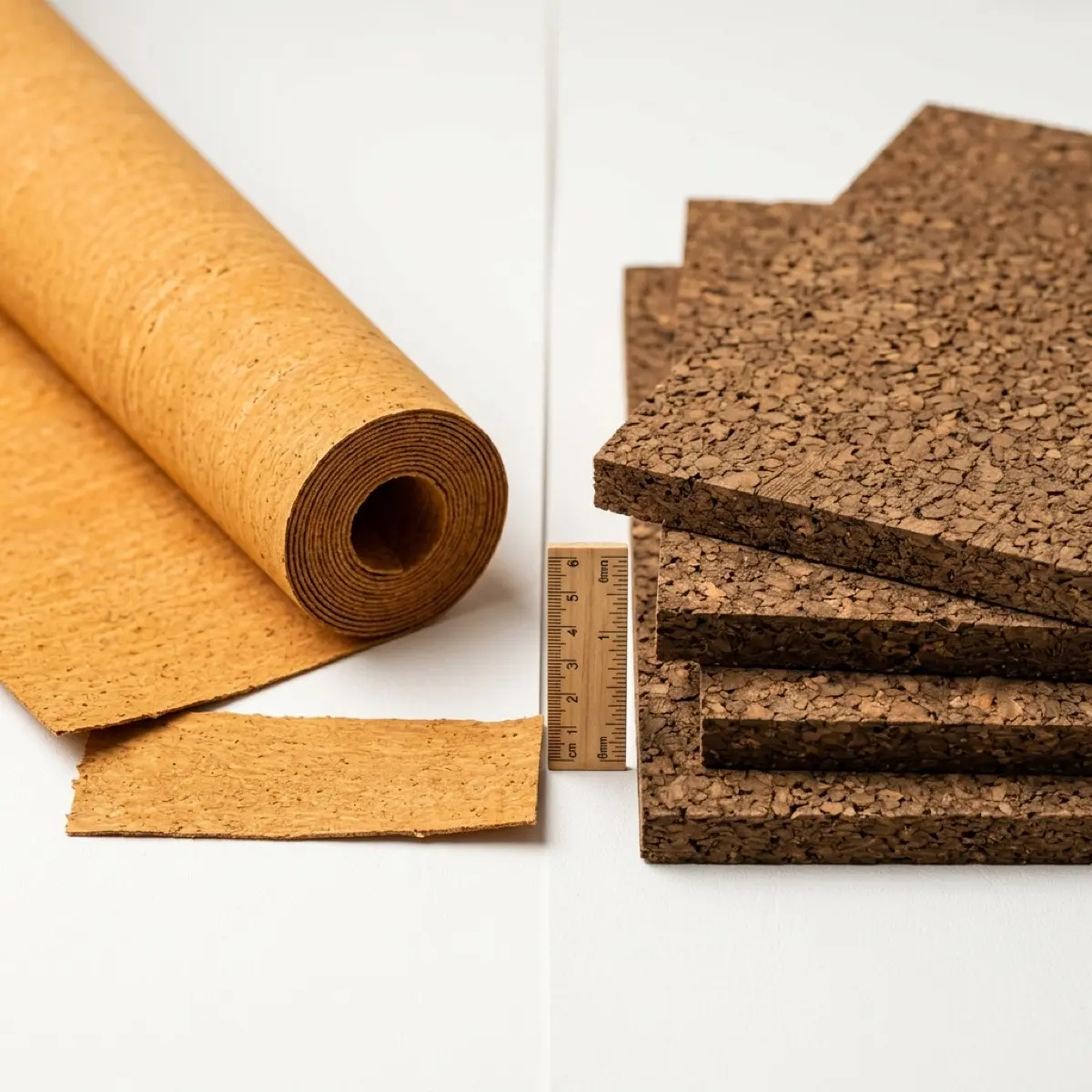
Key Takeaways
- Thickness: Wallpaper 1–3mm vs tiles 3–13mm — this drives all performance differences.
- Acoustics: Tiles NRC 0.30–0.70 (6mm+) vs wallpaper NRC 0.10–0.15 — tiles are 3–5× better.
- Thermal: Cork R-value is 3.6–4.2 per inch; 13mm tiles provide measurable insulation.
- Cost: Wallpaper $3–12/sq ft vs tiles $7–20+/sq ft material.
- Installation: Tiles are more DIY-friendly (rigid, self-adhesive options); wallpaper needs precision.
- Durability: Tiles 20–30+ years vs wallpaper 15–25 years.
- Pin board: Tiles function as natural bulletin boards; wallpaper is too thin.
How Do Cork Wallpaper and Cork Tiles Compare at a Glance?
| Feature | Cork Wallpaper | Cork Wall Tiles |
|---|---|---|
| Thickness | 1–3mm | 3–13mm |
| Format | Rolls (like standard wallpaper) | Rigid panels (300×300 to 600×300mm) |
| Primary purpose | Decorative wall finish | Acoustic/thermal + decorative |
| NRC rating | 0.10–0.15 | 0.15–0.70 |
| Thermal R-value | Negligible | R-0.2 to R-0.5 (per panel) |
| Material cost | $3–12/sq ft | $7–20+/sq ft |
| Installation | Paste-the-wall (like wallpaper) | Contact cement or self-adhesive |
| DIY difficulty | Moderate (seam alignment) | Easy (rigid, forgiving) |
| Pin board function | No (too thin) | Yes (3mm+) |
| Durability | 15–25 years | 20–30+ years |
| Moisture tolerance | Low | Low–moderate (sealed tiles) |
| Best for | Feature walls, bedrooms, dining | Offices, studios, media rooms |
How Does Acoustic Performance Compare?
This is the most significant functional difference. Cork's cellular structure (40 million air-filled cells per cm³) naturally absorbs sound — but thickness determines how much.
| Thickness | Format | NRC Rating | Practical Effect |
|---|---|---|---|
| 1–2mm | Wallpaper | 0.10–0.12 | Negligible — slight echo reduction |
| 3mm | Thin tile / thick wallpaper | 0.15–0.20 | Subtle softening of room acoustics |
| 6mm | Standard acoustic tile | 0.30–0.40 | Noticeable echo reduction for offices |
| 10–13mm | Thick acoustic tile | 0.50–0.70 | Significant absorption for studios |
Bottom line: If acoustic performance matters — home offices, podcast studios, conference rooms, or acoustic treatment projects — choose tiles at 6mm minimum. Cork wallpaper's acoustic contribution is negligible. For a deeper dive, see our cork vs acoustic panels comparison.
How Does Cost Compare?
Cork wallpaper costs less upfront, but tiles deliver more value per dollar through functional performance and longer lifespan.
| Cost Element | Cork Wallpaper | Cork Tiles (6mm) |
|---|---|---|
| Material | $3–12/sq ft | $7–15/sq ft |
| Installation labor | $6–14/sq ft | $4–10/sq ft (or DIY) |
| Adhesive | $0.50–1/sq ft | $0.50–1.50/sq ft |
| Total installed (150 sq ft) | $1,425–4,050 | $1,725–3,975 |
| Lifespan | 15–25 years | 20–30+ years |
| Cost per year | $57–270/yr | $58–199/yr |
For detailed cork pricing, see our cork wallcovering cost guide.
Which Is Easier to Install?
Cork tiles are more DIY-friendly than cork wallpaper. This surprises most people, but the rigid tile format is genuinely easier to handle:
| Factor | Cork Wallpaper | Cork Tiles |
|---|---|---|
| Handling | Flexible, can tear | Rigid, easy to grip |
| Seam alignment | Critical (visible seams) | Butt-joint (tiles hide gaps) |
| Repositioning | Difficult once placed | Adjustable before adhesive cures |
| Self-adhesive option | Rare | Widely available |
| Cutting | Sharp blade, steady hand | Utility knife, straightedge |
| Professional needed? | Recommended | Optional (most DIY-able) |
Which Is More Durable?
Cork tiles win on durability due to greater thickness, density, and the option for protective finishes:
- Impact resistance: 6mm+ tiles absorb bumps and scuffs; 1–3mm wallpaper tears or dents easily
- Repairability: Individual tiles can be replaced; wallpaper damage usually requires replacing an entire panel or strip
- Protective finish: Tiles can be waxed or lacquered for added durability; wallpaper finishes are limited
- High-traffic tolerance: Tiles are suitable for hallways and commercial spaces; wallpaper is best reserved for low-traffic zones
- Lifespan: Properly maintained tiles last 20–30+ years; wallpaper typically lasts 15–25 years
When Should You Choose Cork Wallpaper?
Cork wallpaper is the right choice when aesthetics are the priority and functional performance is secondary:
- Feature walls in bedrooms, dining rooms, or living areas where visual texture matters most
- Projects where the wall surface needs to remain thin (tight spaces, flush transitions)
- Budget-conscious decorating where cork wallpaper's lower cost is the deciding factor
- Rental properties where wallpaper is easier to remove than adhesive-mounted tiles
- Pairing with complementary painted walls for a mixed-material design
When Should You Choose Cork Tiles?
Cork tiles are the right choice when you need functional performance beyond decoration:
- Home offices: Acoustic dampening for video calls + natural pin board for notes
- Podcast/music studios: NRC 0.50–0.70 at 10mm+ for meaningful sound absorption
- Children's rooms: Impact-absorbing surface, non-toxic, hypoallergenic
- Thermal insulation: Cold exterior walls benefit from cork's R-value 3.6–4.2/inch
- Commercial/hospitality: Durable, eco-friendly, LEED-qualifying wall treatment
- DIY projects: Self-adhesive tiles are the easiest cork format to install
Frequently Asked Questions
What is the difference between cork wallpaper and cork tiles?
The main difference is thickness and function. Cork wallpaper is a thin decorative covering (1–3mm) applied in rolls. Cork wall tiles are thicker rigid panels (3–13mm) that provide measurable acoustic absorption (NRC 0.15–0.70), thermal insulation (R-value 3.6–4.2 per inch), and can serve as pin boards. Tiles cost more ($7–20+/sq ft vs $3–12/sq ft) but deliver functional performance.
Are cork tiles better for soundproofing than cork wallpaper?
Yes, significantly. Cork tiles at 6–13mm thickness achieve NRC ratings of 0.30–0.70, providing meaningful sound absorption. Cork wallpaper at 1–3mm has NRC ratings of only 0.10–0.15 — not enough for acoustic treatment. Choose tiles at 6mm minimum for acoustic benefit.
Which is cheaper: cork wallpaper or cork tiles?
Cork wallpaper is cheaper upfront: $3–12/sq ft vs $7–20+/sq ft for tiles. Installation costs are similar. However, tiles last longer (20–30+ years vs 15–25 years) and provide functional benefits that wallpaper cannot match, making the cost-per-year comparison closer.
Can I install cork tiles myself?
Yes. Cork wall tiles are more DIY-friendly than cork wallpaper. Many come with self-adhesive backing. Key requirements: clean, dry, smooth wall; recommended adhesive; and careful layout planning. Budget 15% extra material for cutting waste.
Which cork format is better for a home office?
Cork tiles. They provide meaningful acoustic dampening for video calls (NRC 0.30–0.70 at 6mm+), function as a natural pin board, and add thermal insulation. Cork wallpaper adds visual warmth but lacks functional acoustic benefit.
Related Guides
Cork Wallcovering Guide
Complete material reference.
Cork Cost Guide
Price breakdown per sq ft.
Cork vs Acoustic Panels
Sound performance compared.
Grasscloth vs Cork
Two natural materials face off.
Eco-Friendly Guide
Sustainable materials ranked.
Humidity Risks
Moisture and natural materials.
Source Natural Cork Wallcovering
We supply both cork wallpaper rolls and cork wall tiles in multiple thicknesses, finishes and colors. Request samples to compare formats side by side.
Request Cork Samples