Technical Guide
Humidity Risks for Natural Wallcovering: Prevention & Management
Natural fiber wallcovering and moisture — the honest guide. Which rooms are safe, which are not, how to manage humidity year-round and what to do if problems occur.
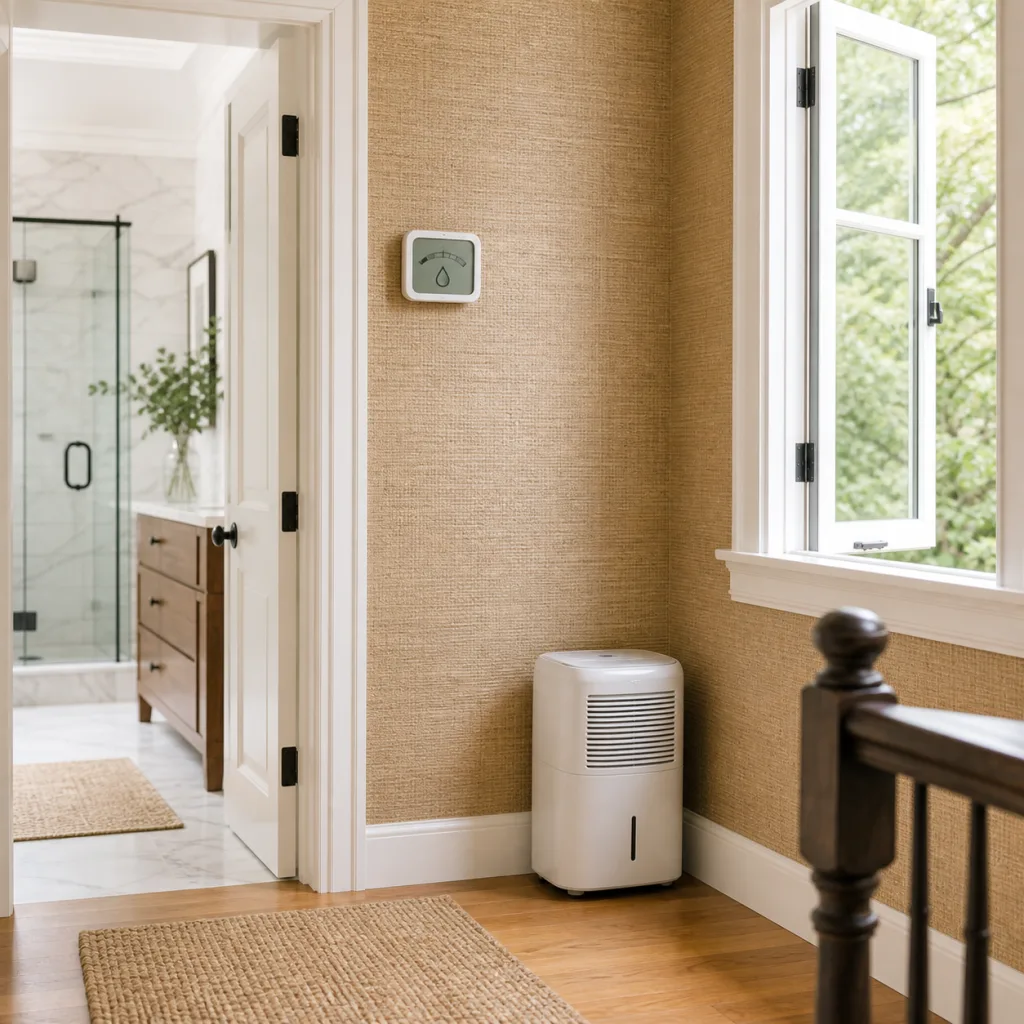
Key Takeaways
- See detailed technical sections below.
What Is the Safe Humidity Range?
| Humidity Level | Risk | Action |
|---|---|---|
| Below 30% RH | Fiber brittleness, cracking, edge curling | Use humidifier, especially in winter heating season |
| 40-60% RH | Safe operating range | No action needed — ideal conditions |
| 60-70% RH | Elevated risk — monitor closely | Run dehumidifier, check for condensation |
| Above 70% RH | Mold risk, adhesive failure, fiber swelling | Do not install; address moisture source first |
Which Rooms Are Safe for Natural Wallcovering?
| Room | Suitability | Notes |
|---|---|---|
| Living room | Excellent | Stable humidity, good ventilation |
| Bedroom | Excellent | Low moisture generation |
| Dining room | Excellent | Occasional steam from food — no problem |
| Home office | Excellent | Climate-controlled environment |
| Powder room | Good | Brief humidity spikes; ensure exhaust fan |
| Kitchen | Caution | Avoid near stove/sink; OK on non-cooking walls |
| Bathroom with shower | Not recommended | Sustained humidity damages natural fiber |
| Basement | Caution | Only if humidity-controlled below 60% RH |
How Do You Prevent Moisture Problems?
- Test the wall first: Tape a plastic sheet to the wall for 24 hours — if moisture appears underneath, resolve the moisture source before installing
- Prime properly: Use a moisture-barrier primer on the substrate
- Maintain HVAC: Keep consistent temperature and humidity year-round — avoid shutting off climate control in unoccupied rooms
- Ventilate: Ensure exhaust fans in adjacent wet rooms (bathrooms, kitchens)
- Acclimate material: Store wallcovering rolls in the installation room for 24-48 hours before hanging
- Monitor: Place a hygrometer in wallcovered rooms — digital models cost under $20
What If You See Moisture Damage?
- Staining: If caught early, blot (never rub) with a dry cloth. Persistent stains may require panel replacement
- Edge curling: Usually indicates adhesive failure from moisture — re-adhere with fresh paste if the material is intact
- Mold spots: Remove affected panels, treat the wall substrate, resolve moisture source, then reinstall — see mold prevention guide
- Fiber swelling: Indicates sustained high humidity — the material may not recover. Focus on environment control before replacement
Frequently Asked Questions
Can I use grasscloth in a bathroom?
Only in powder rooms (half-baths) without a shower or tub. Full bathrooms with showers generate too much humidity and steam for natural fiber. The moisture will cause warping, staining and potential mold growth.
What is the safe humidity range?
40-60% relative humidity is the safe operating range for natural wallcovering. Below 30% risks fiber brittleness and cracking. Above 70% risks mold growth and adhesive failure.
What if my climate is naturally humid?
Use a dehumidifier to maintain indoor humidity below 60% RH. Ensure proper HVAC ventilation. Consider paper-backed or acrylic-coated options for better moisture resistance.
Related Guides
Bugs & Mold
Prevention guide.
Lifespan
Durability factors.
Installation
Professional tips.
Maintenance
Care instructions.
Grasscloth Guide
Material deep-dive.
Evaluate Samples
Quality checklist.
Source Moisture-Ready Materials
Request materials with full technical documentation and test reports.
Request Specs