Innovation
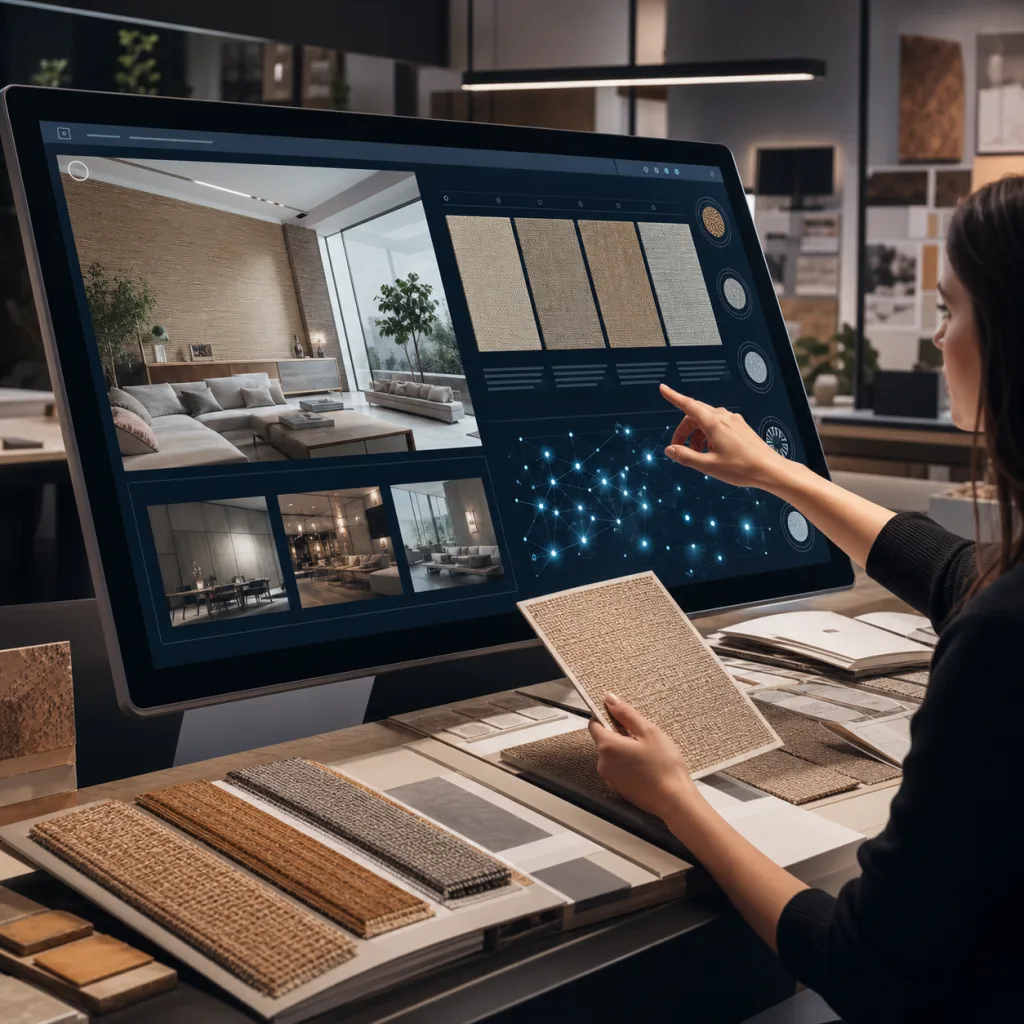
AI-Powered Material Selection for Wallcovering
How artificial intelligence is transforming how designers, architects and buyers discover, visualize and specify natural wallcovering — and what is still better done by human expertise.
Key Takeaways
- See detailed sections below.
How Is AI Being Used Today?
| Application | Maturity | Value for Natural Wallcovering |
|---|---|---|
| Room visualization | Mature | See how materials look in your space before ordering |
| Color recommendation | Growing | Palette suggestions based on room photos and style |
| Material matching | Growing | Find similar materials across suppliers |
| Specification assistance | Early | Auto-generate spec language from product data |
| Supply chain optimization | Early | Demand forecasting, inventory management |
What Works Well with AI?
- Shortlisting: AI can narrow 200+ options to 5-10 candidates based on color, texture, price and performance requirements
- Visualization: See wallcovering in room renders before committing — especially valuable for client presentations
- Color coordination: AI-suggested palettes for wallcovering + paint + furnishing combinations — see paint pairing guide
- Mood boards: AI-generated concept boards speed up the design process — see mood board guide
What Still Requires Human Expertise?
- Tactile evaluation: The feel of natural fiber is why you choose it — AI cannot replicate touch
- Quality assessment: Weave tension, fiber consistency, backing quality — requires physical inspection. See evaluation guide
- Custom color development: Lab dips and production color management need human oversight. See color guide
- Installation judgment: Wall conditions, humidity assessment, seam placement — installer expertise
- Supplier relationship: Understanding project timelines, managing custom orders, resolving issues — human-to-human
Frequently Asked Questions
Can AI replace physical material samples?
No. AI visualization is excellent for shortlisting and concept development, but natural wallcovering must be experienced physically — the tactile quality, fiber variation and light behavior cannot be fully replicated digitally. Use AI to narrow choices, then request physical samples for final decisions.
How accurate is AI color matching?
Improving rapidly but not yet perfect for natural materials. AI handles solid colors well but struggles with the multi-tonal complexity of natural fiber. Always verify AI color suggestions against physical Pantone references and material samples.
Will AI change how we source wallcovering?
It already is. AI-powered search and recommendation tools help buyers find materials faster. But the relationship with your supplier — understanding your project needs, providing technical guidance, managing custom production — remains human-centric.