Green Jute Wallpaper
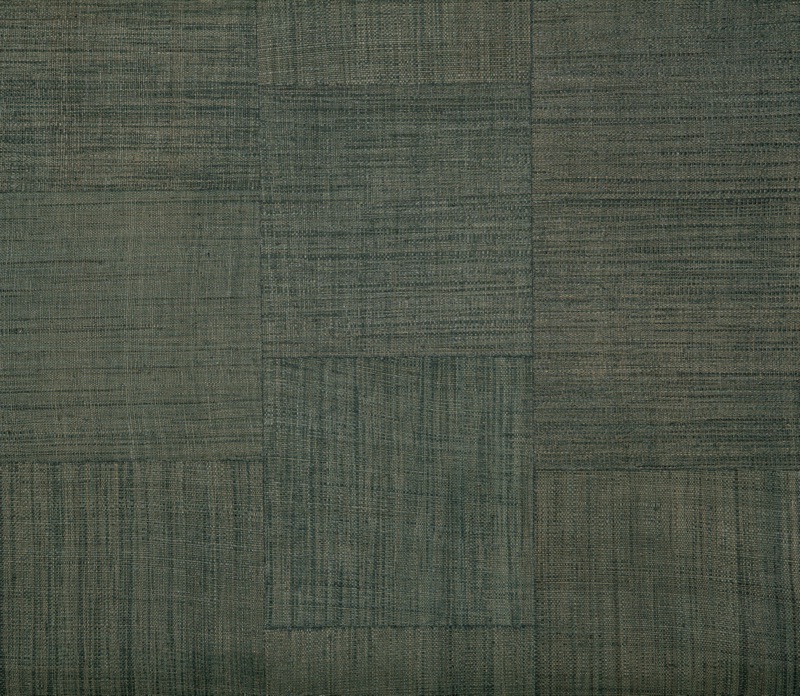
Moss Grid is a deep, cool moss-green grasscloth in which alternating block panels of jute fibre create quiet tonal variation across the wall surface without any printed pattern or repeat. Supplied to interior designers, architects, and hospitality buyers from 50 rolls, it is the kind of green jute wallpaper that reads as a single anchoring colour at distance, then reveals coarse, slightly irregular natural strands up close. The cool charcoal-green grounds a room with authority while remaining comfortable beside oak, brass, or plaster.
Studies, Hotel Suites, and Private Dining: Rooms That Reward a Dark Ground
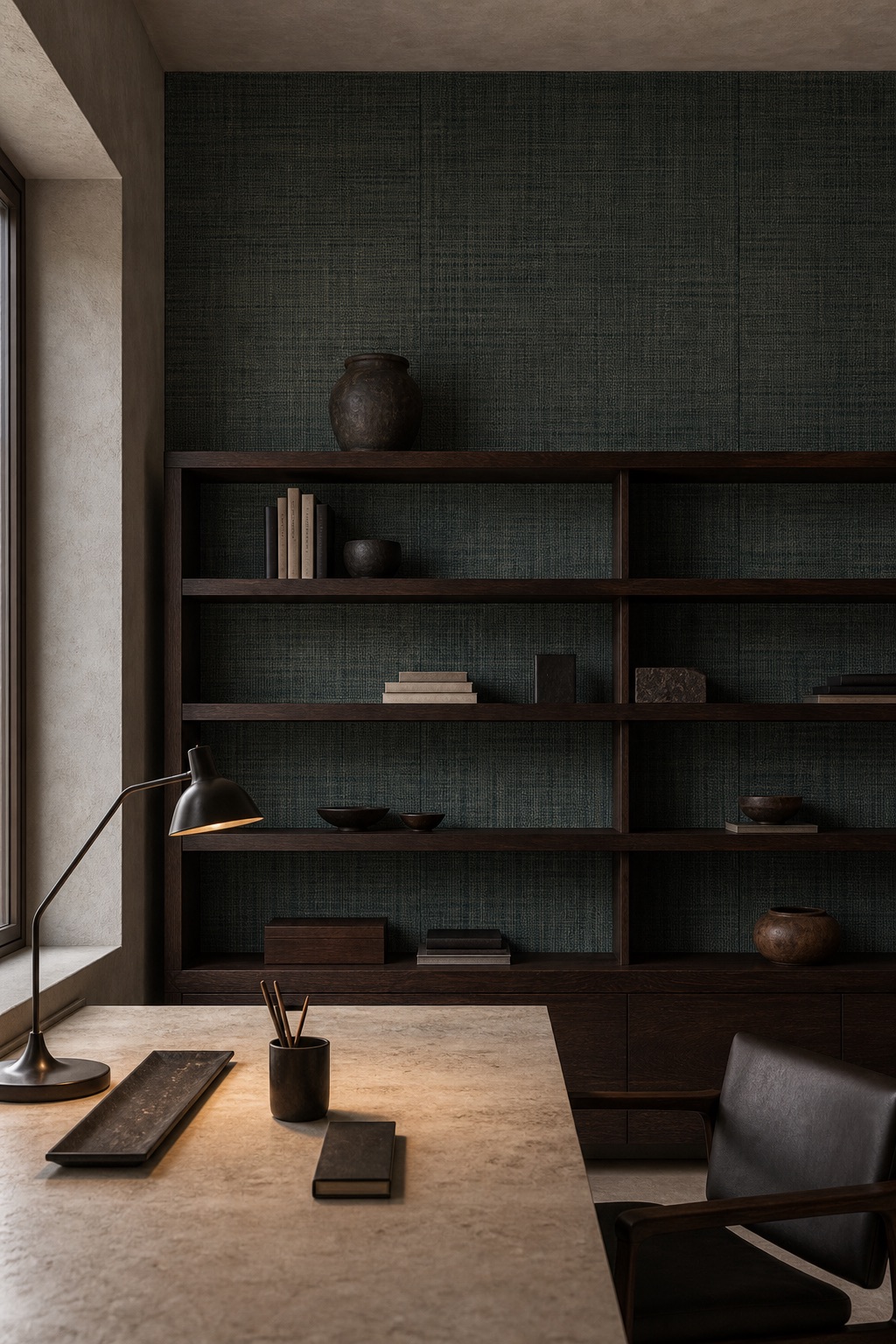
- Studies and home libraries: the absorptive deep green reads as focused and grounded, anchoring a room of warm timber and worn surfaces.
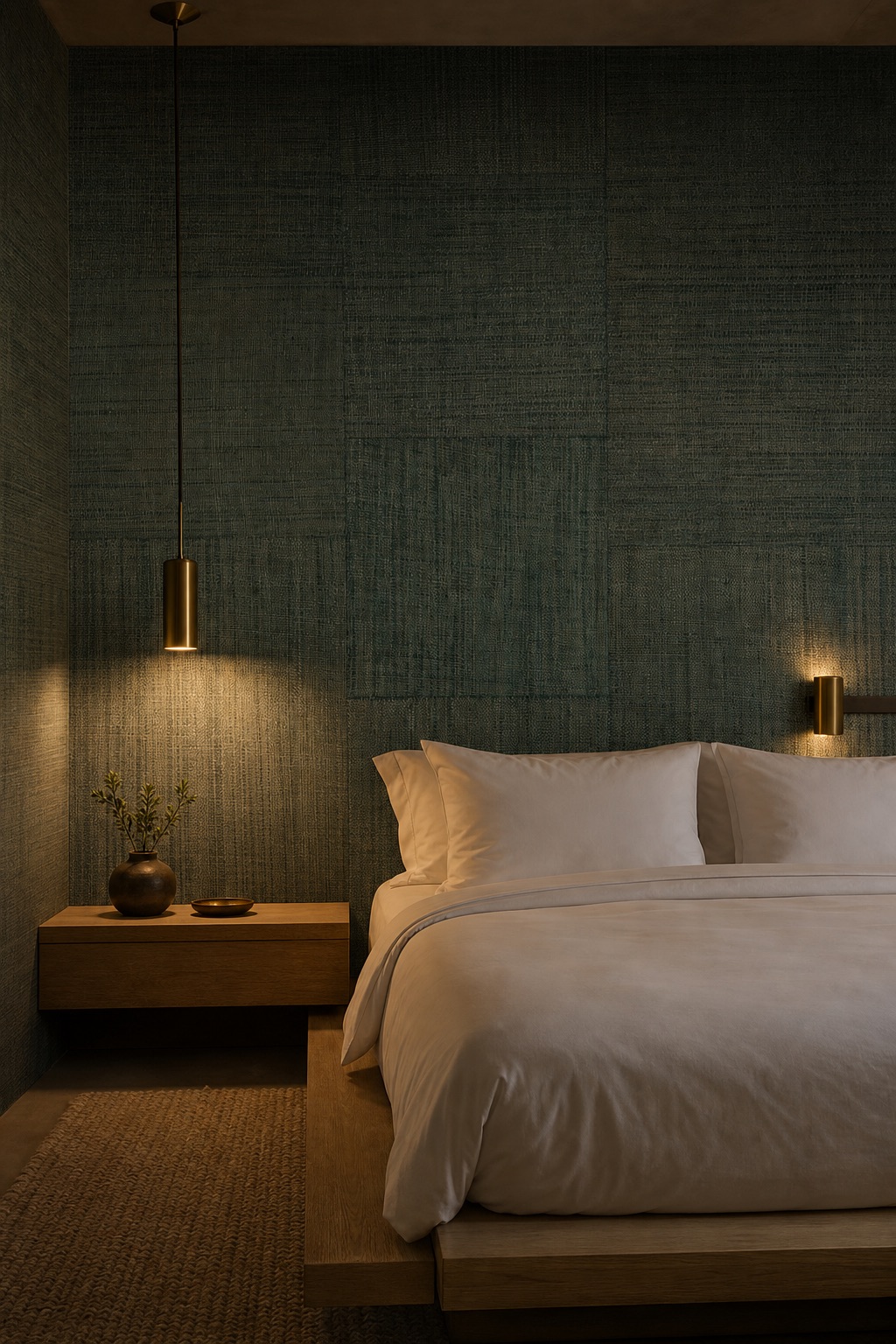
- Hotel-suite headwalls: behind a low-profile bed the dark cool colour creates a strong backdrop without the distraction of a printed pattern.
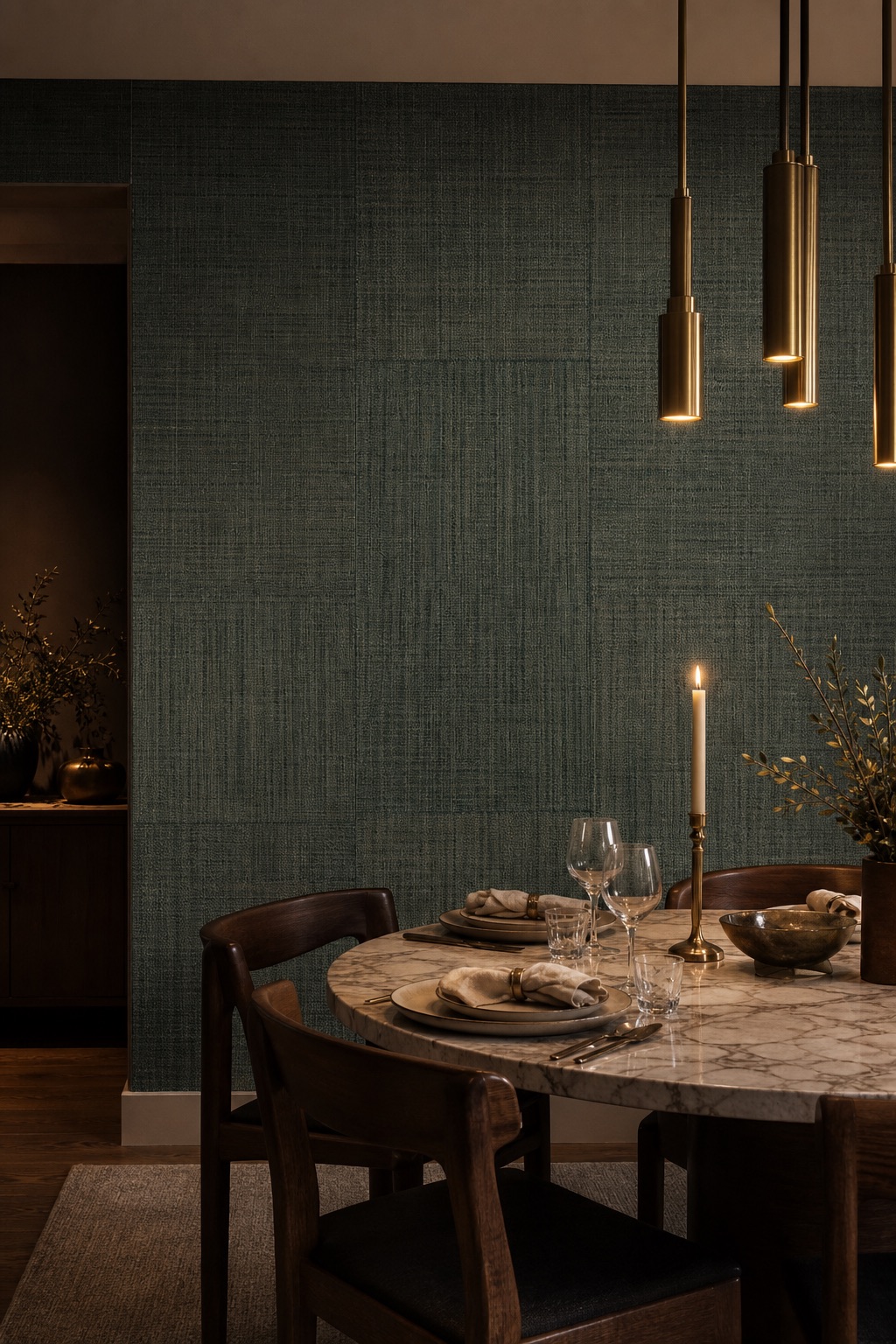
- Private dining and restaurant feature walls: the depth amplifies candlelight and incandescent warmth without the surface itself competing for attention.
- Works as a full surround in rooms with controlled artificial light; more effective as a single feature wall opposite the main window in spaces that depend on strong natural light.
- Less suited to rooms where spaciousness or brightness is the primary design goal; the dark value absorbs rather than reflects.
Dark, cool greens earn their place in interiors where the design intent is retreat rather than activation, and Moss Grid supports that across several room types. As a full surround in a windowless private dining room, it amplifies warm candlelight against the matte surface without the wall itself competing for attention. As a headwall in a boutique hotel bedroom, the deep green creates authority without pattern. In a residential study, the colour reads bookish and settled in a way that lighter grasscloths cannot achieve. Spaces with controlled artificial light can carry all four walls; rooms relying on a single window of natural light are better served using Moss Grid on the wall opposite, where it absorbs brightness and adds counterweight to the rest of the scheme.
Grid Without Print: How Alternating Reed Panels Build Depth in a Single Colour
- The block-panel structure is woven, not printed: adjacent rectangles of plain jute run warp-dominant then weft-dominant, rotated 90 degrees to one another.
- At 2 to 3 m viewing distance the panels merge into a near-uniform field; closer inspection makes the directional shift legible as a low-relief grid.
- Individual jute strands are coarse and slightly irregular, so no two panels read identically even within the same dye lot.
- The fully matte finish means all tonal variation originates from fibre direction and ambient light angle rather than sheen — the effect is structural rather than decorative.
- No pattern repeat means no matching cuts required, which simplifies installation planning and reduces material waste on non-standard wall heights.
The surface of Moss Grid is built from rectangles of plain-woven jute, each oriented 90 degrees to its neighbour. Because warp-dominant and weft-dominant panels reflect ambient light from slightly different angles, the wall acquires a low-relief grid effect that is difficult to capture in photographs but distinctly present in real space. From across the room it settles into a rich, near-uniform field of deep green; at reading distance, the alternating directionality and the slight irregularity of individual fibres become part of the visual interest. There is no printed colour, no repeat to match, and no risk of the construction dating with shifts in surface-pattern trends.
Moss at Noon, Near-Charcoal After Dark: How This Green Jute Wallpaper Shifts Through the Day
- Under strong natural daylight: the surface reads as a saturated forest green with visible grey-green secondary tones in the weft strands.
- In warm incandescent or evening lighting: the green deepens toward near-charcoal as the lighter secondary tones recede.
- In north-facing or overcast rooms: the cool undertone dominates, lending the wall a calm blue-grey cast that suits japandi and wabi-sabi palettes.
- The matte finish prevents light flares and hotspots, keeping the colour read consistent across different light angles and times of day.
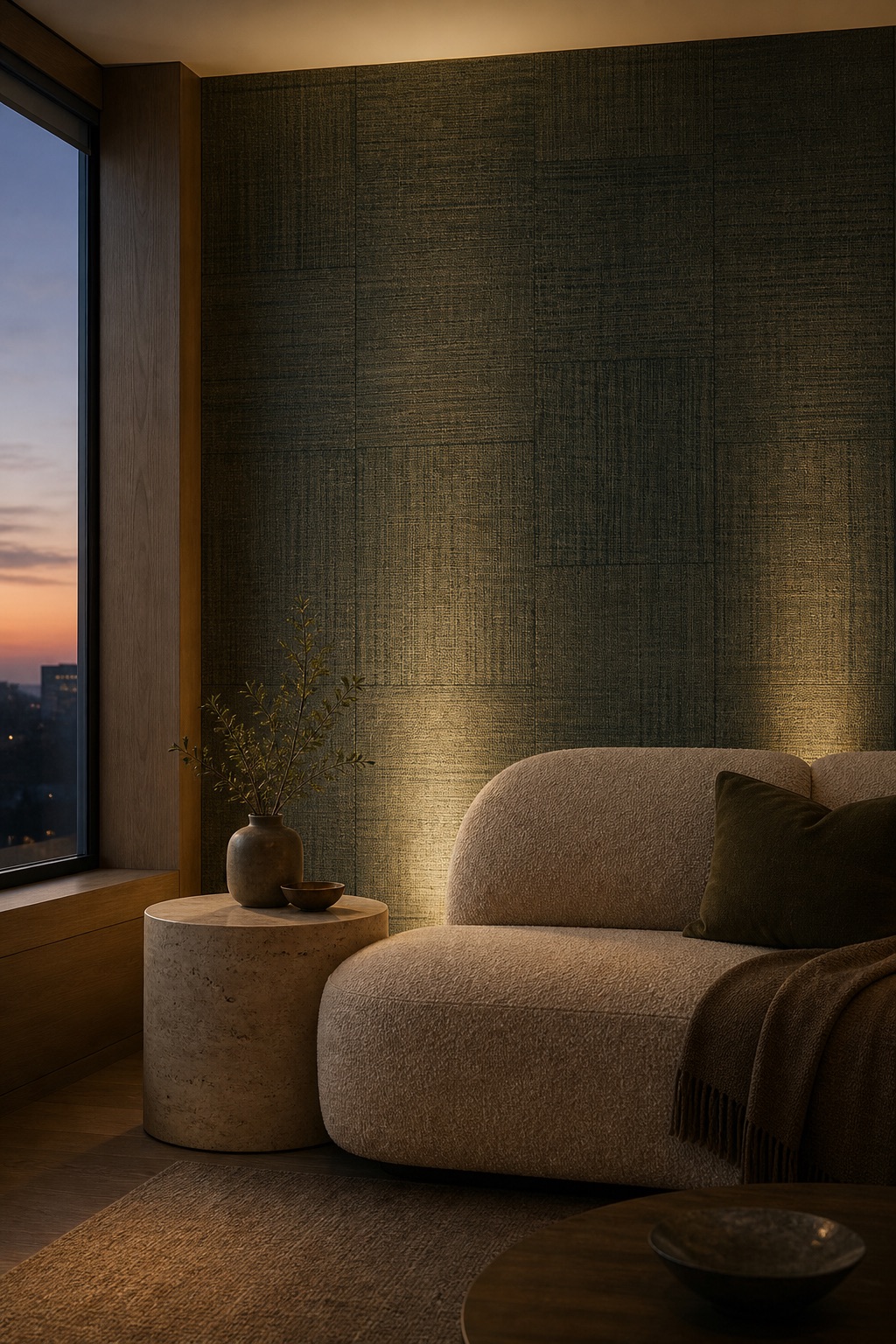
In a south-facing room at noon, Moss Grid reads as a saturated forest green with visible grey-green secondary tones moving through the weft strands. As daylight warms toward evening, or when the room switches to incandescent lamps, the same surface deepens noticeably: the secondary greys recede and the green takes on a near-charcoal quality that reads as enclosure rather than colour. In north-facing or overcast rooms, a cool blue-green cast comes forward, which works particularly well in schemes referencing japandi and wabi-sabi. Because the finish is fully matte, there are no shifting reflections or light pooling to account for when specifying companion lighting.
Moss, Metal, and Stone: Companion Finishes for a Deep Cool-Green Wall
- Unlacquered or satin brass for lighting hardware, pendant fixtures, and switchplates: adds the colour temperature the wall itself withholds.
- Pale travertine and rough plaster: provide chromatic relief and make the deep green read richer by contrast.
- Bleached or pale oak: keeps the palette light enough to register as japandi without sacrificing the green's depth.
- Dark-stained oak or blackened steel: for fully enclosed palettes in private dining rooms or members-club interiors.
- Undyed linen and natural bouclé for upholstery: sit closest to the wall's own register without competing for attention.
- Avoid high-gloss white lacquer directly adjacent: in harsh directional light it emphasises the natural irregularity of the jute fibre.
The cool moss undertone accepts warm metals with readiness: unlacquered or satin brass for lighting and hardware adds the colour temperature the wall itself reserves. Pale travertine, rough plaster, and bleached oak are natural companions, providing quiet contrast that makes the dark green read as forest rather than void. Specifiers building a deeper, more enclosed palette can substitute dark-stained oak or blackened steel for these lighter tones with equally strong results. For soft furnishings, undyed linen and natural bouclé sit closest to the wall's own register; bright or chromatic upholstery will work against the quiet authority of the green rather than with it. If you love this weave but need your own colour or scale, our design studio engineers custom colourways from your reference and can produce them through our partner mills from a minimum of 50 rolls.
Samples, Studio Proofing, and a Single Dye Lot: How a Moss Grid Order Works
- Physical sample books carry the actual weave and dye so specifiers can confirm the dark green reads correctly under their project's specific lighting before committing.
- Sample book cost is credited against confirmed orders (up to 10%); paid proofing is quoted upfront and takes roughly one to two weeks.
- Production runs four to six weeks for standard natural materials from order confirmation; each batch ships with its own dye-lot certificate.
- Three in-house designers work directly from reference images or moodboards, translating them into mill-ready CAD for custom colourways produced with our partner mills.
- Custom colourways from 50 rolls (approx. 250 m²); stock patterns available at lower minimums for first trials.
- Payment follows the terms confirmed on the pro-forma invoice; freight is quoted separately at the buyer's cost on FOB, CIF, or DDP terms.
Every Moss Grid enquiry begins with a physical sample: our sample books carry the actual weave and dye so specifiers can confirm that the deep cool green reads as intended under their project's light conditions before any commitment is made. Sample book cost is credited against confirmed orders (up to 10%). Proofing is quoted before it begins and takes approximately one to two weeks; production of a confirmed order runs four to six weeks with standard natural materials, and each production batch ships with its own dye-lot certificate, important for multi-room specifications where cross-delivery consistency matters. Our three in-house designers work directly from a specifier's reference images or moodboard, translating them into mill-ready CAD. The studio has been rooted in natural wallcovering since the founder entered the trade in 2018.
Buying grasscloth for a project or a brand?
- Minimum order
- 50 rolls (about 250 m²) catalog · 100 rolls custom / private label
- Lead time
- 4–6 weeks standard · 5–8 weeks specialty, after sample approval and payment
- Terms
- EXW Chengdu · FOB, CIF, DDP on request
- Samples
- Free digital kit in 24 h · paid swatch pack, credited in full on your first order
- Reply
- Within 24 hours
Frequently asked
- Will this deep moss green jute wallpaper fade noticeably in a room with direct sunlight?
- All natural plant-fibre wallcoverings are susceptible to UV-related colour shift over time. Deep, saturated values such as this moss green tend to show fading as a gradual lightening toward grey-green rather than an abrupt colour change. We recommend avoiding sustained direct sunlight on any natural grasscloth. For rooms with significant south-facing glazing, reviewing a physical sample under your project's actual lighting conditions before committing is the most reliable check. Our guide on fading prevention covers protective measures in detail: /guides/fading-prevention.
- How visible are seams in a block-panel weave like Moss Grid?
- Seams on natural grasscloth are always visible to some degree. The block-panel structure on Moss Grid means horizontal seam lines fall between panel rows rather than cutting across a plain continuous ground, which reduces visual interruption compared with a standard plain weave. A skilled installer using a reverse-hang technique further minimises tonal shift between strips. Our installation guide covers seam placement and adhesive selection for natural grasscloth in full: /guides/installation-guide.
- Can green jute wallpaper be installed in a bathroom or other space with high humidity?
- Jute-based grasscloth is a natural fibre product not recommended for wet zones or rooms with sustained high humidity. Steam or condensation can cause fibres to swell, seams to open, and in persistent cases, mould growth. A guest powder room with adequate mechanical ventilation is a marginal case; a bathroom with a shower is not suitable. Our humidity guide covers the full picture for natural wallcoverings: /guides/humidity-risks.
- Can I commission a custom colourway on this block-panel construction — for example in teal, slate, or deep charcoal?
- Yes. Our in-house design studio works with partner mills to develop custom colourways on this construction from a minimum of 50 rolls (approx. 250 m²). Paid proofing is quoted upfront and takes roughly one to two weeks; confirmed production follows the standard four-to-six-week schedule. Send a colour reference or Pantone target to our studio to begin. For a full overview of the custom colourway process, see: /guides/custom-colorway.
- Where can I find full details on sampling, payment terms, and lead times for an order?
- All commercial terms, including sample book costs, proofing fees, payment terms, and freight options, are covered on our process page: /process.