Grey Grasscloth Wallpaper
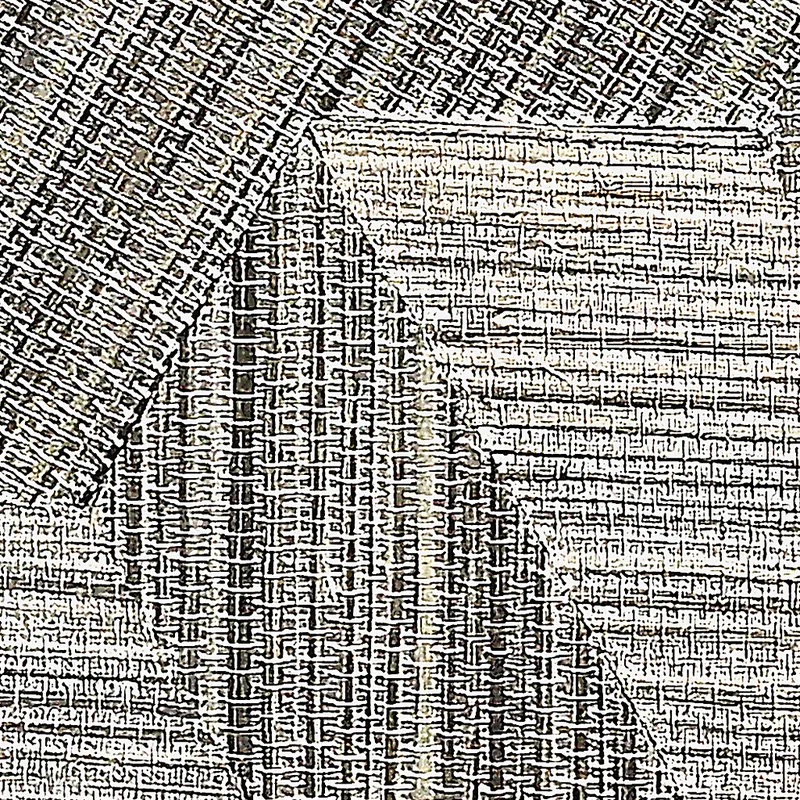
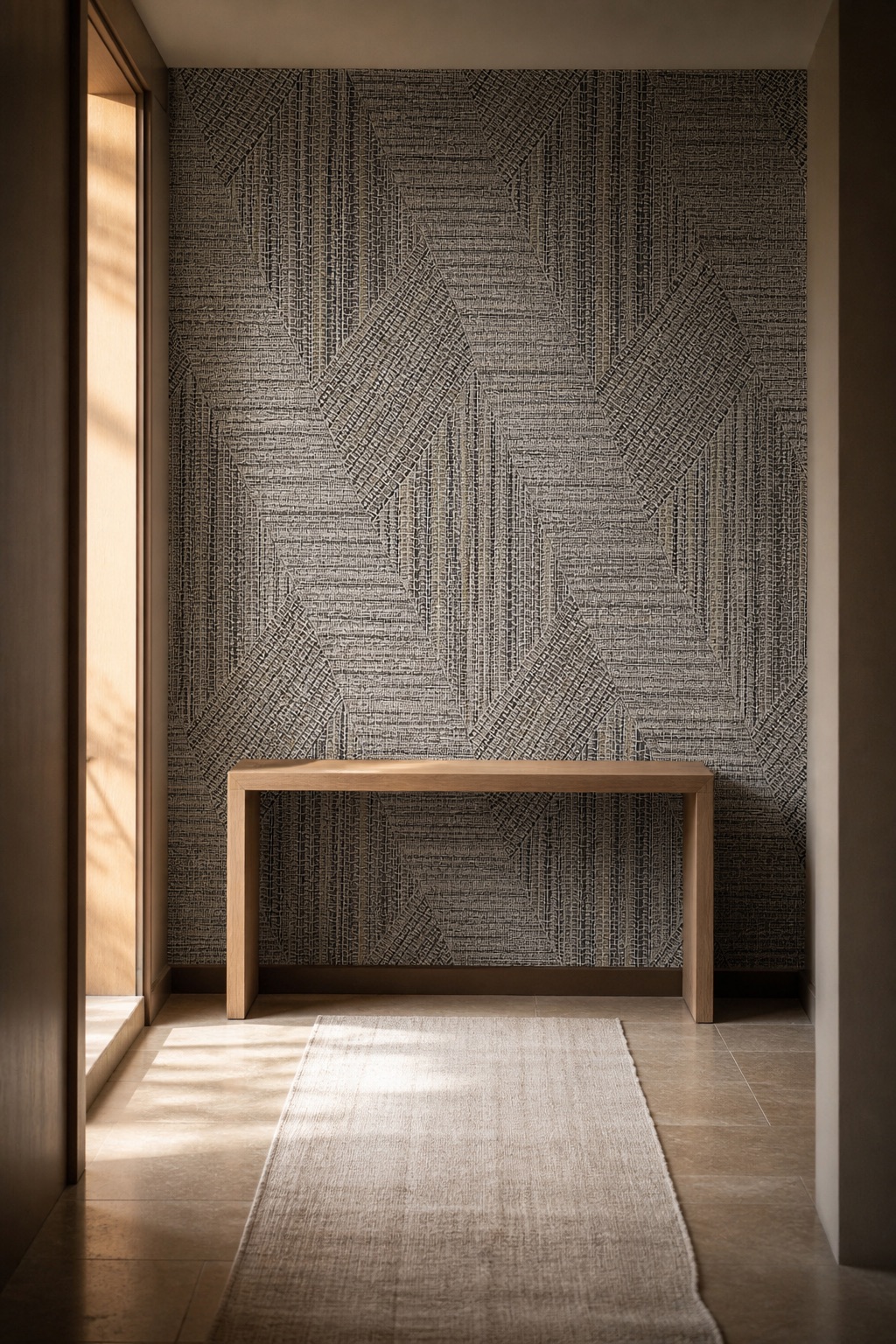
Cool silver-grey herringbone grasscloth built from flat reed strands — the alternating diagonal bands and central chevron spine create architectural geometry visible at a distance while the natural fibre texture holds its character at close range. The matte surface reads near-neutral in most light conditions, making Silver Herringbone a reliable anchoring element for japandi, minimalist, and organic-modern schemes that require visual weight without warmth. Produced with our partner mills to our design studio's specifications, it is supplied to interior designers and trade buyers from 50 rolls (≈250 m²), with custom colourway capability for project-specific requirements.
How the Herringbone Chevron Reads at Scale
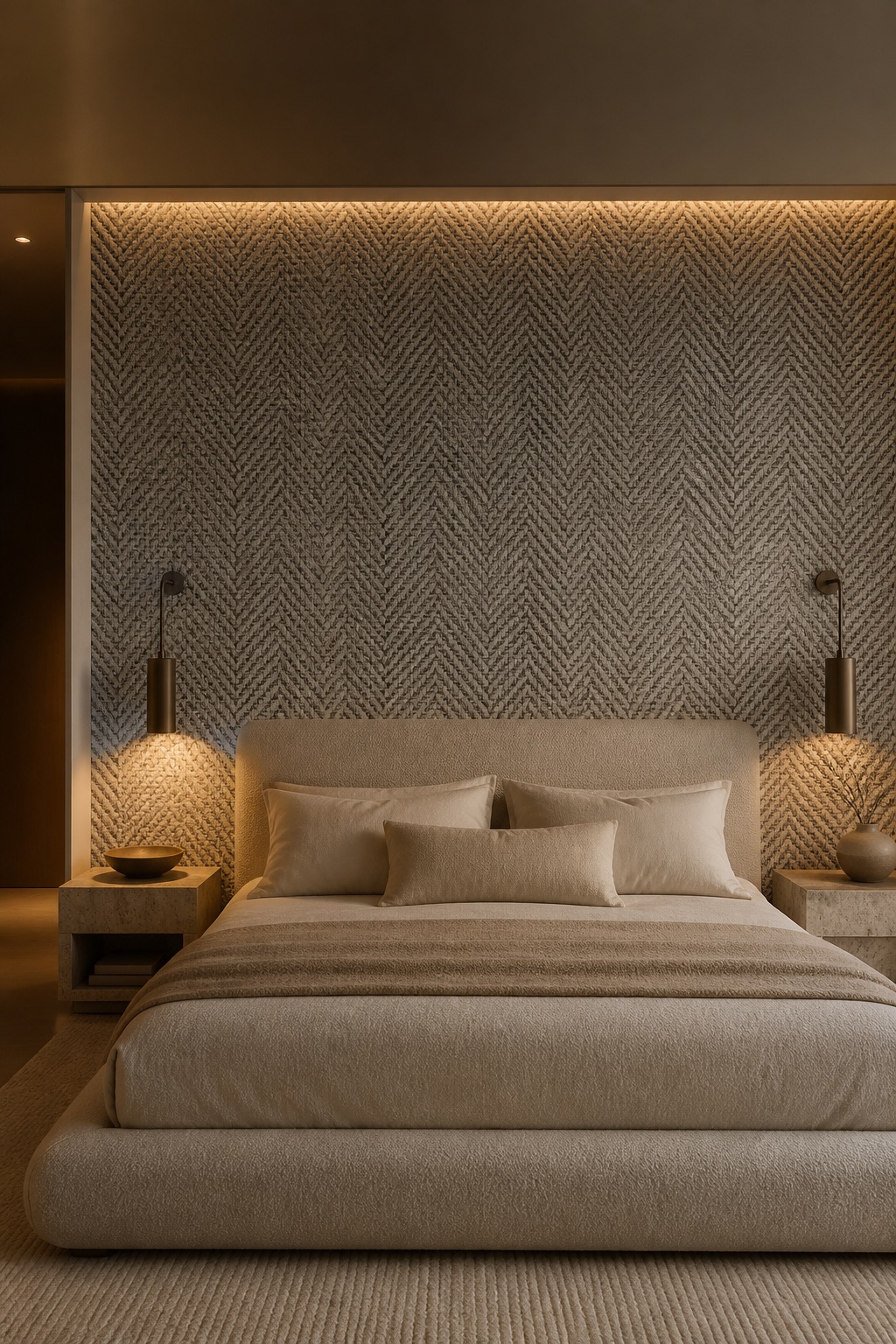
- The herringbone is structural, not printed: alternating diagonal bands of densely packed flat reed strands converge at a chevron spine that is legible from across the room.
- Adjacent bands run at opposing angles, creating subtle light-and-shadow variation within a single undyed colourway — tonal depth without dye complexity.
- The cool silver-grey reads near-neutral in most conditions, shifting faintly warmer under incandescent sources and sharper under north-facing or overcast light.
- Texture scale is medium: individual reed strands read as hand-width detail at close range but resolve into an even, architectural surface plane from 2–3 metres.
- Because there is no printed pattern repeat, layout management centres entirely on weave direction, which must be kept consistent across all panels.
The herringbone in Silver Herringbone is woven structure, not a surface treatment: alternating diagonal bands of densely packed flat reed strands where adjacent bands run at opposing angles and converge at a chevron spine visible from across the room. This structural geometry does what colour alone cannot — it creates tonal variation and directional movement within a single, undyed colourway. At close range the natural reed's inherent fibre variation adds a further layer of organic texture; at room distance the surface reads as a coherent architectural plane that earns its position on a primary wall without competing with furniture or art.
Companion Palette: What Cool-Grey Pairs With and How Light Changes It
- The undertone is distinctly cool — silver rather than beige — making Silver Herringbone one of the few natural grasscloths that functions as a true neutral without adding warmth to a scheme.
- In north-facing or diffused light it holds its clean architectural grey; in warm afternoon or lamp light the individual reed strands reveal subtle organic warmth that prevents coldness.
- Hard material companions: travertine flooring, honed marble, plaster ceilings and plaster-render panels.
- Soft material companions: bouclé upholstery, linen, unbleached canvas. Metal: brushed brass for warmth, matte-black hardware for contrast.
- The charcoal undertones within darker reed strands give enough contrast to keep the weave geometry legible without making the wall feel heavy.
- Style fit: japandi residential, minimalist hotel suites, studies, and any hospitality brief where organic material must read as a refined neutral.
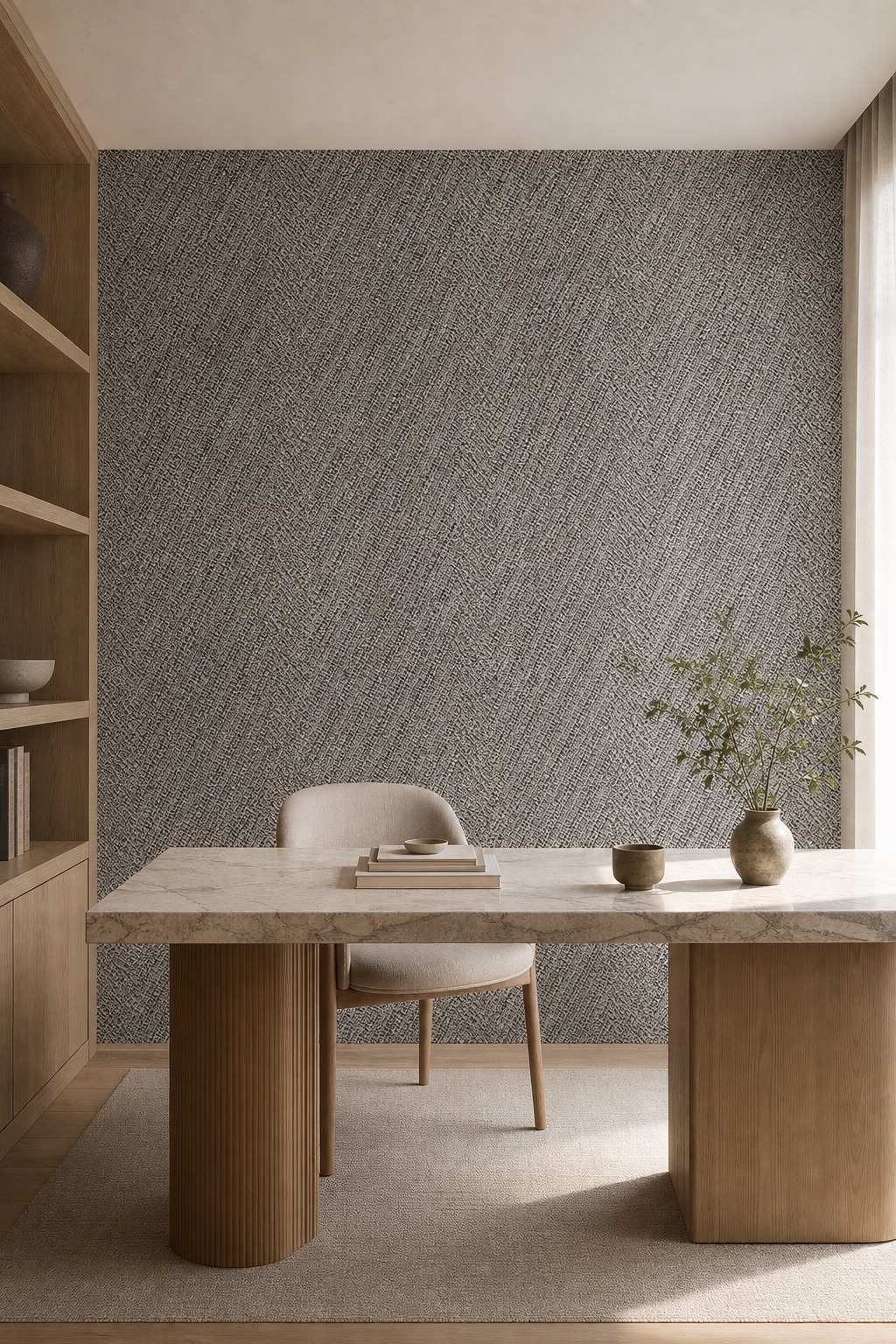
Silver-grey sits at an unusual position in the natural wallcovering palette — cool enough to function as a true neutral without the warmth of sisal or undyed jute, yet organic enough to avoid the flatness of painted plaster. In north-facing rooms or overcast daylight Silver Herringbone holds its clean architectural character; under warm afternoon or artificial light the individual reed strands reveal a subtle liveliness that prevents the surface from reading as cold. It pairs with travertine, honed marble, and plaster for hard materials, and with bouclé, linen, and unbleached canvas for soft surfaces — a companion palette suited equally to japandi residential, minimalist hotel, and quiet-luxury hospitality briefs. Love this weave but need a different tone — a warmer silver, a site-specific grey, or a custom-matched colourway? Our design studio engineers custom colourways from your colour reference or physical sample.
Seam Behaviour and Panel Alignment for a Herringbone Weave
- Each roll is 0.915 m wide × 5.5 m long, yielding approximately 5 m² per roll; seams fall approximately every 915 mm along a wall run.
- Grasscloth seams are inherent to the material; in a herringbone weave the panel edge reads as a continuation of the diagonal band direction when all panels are hung consistently.
- Rotating alternate panels — common in plain-weave grasscloth to even out natural tonal variation — breaks the herringbone geometry and is not recommended for Silver Herringbone.
- Maintaining a single dye-lot across the full order is critical: natural fibre variation between production runs cannot be controlled, and cross-batch panel joins will show tonal discontinuity.
- Our design studio provides panel-layout diagrams for complex spaces — alcoves, columns, rooms with irregular geometry — on request alongside the sample book.
Grasscloth seams are a property of the material to be planned for, not minimised away. In a herringbone weave, seam placement becomes part of the wall's geometry: when panels are hung with consistent band direction, the panel edge follows the weave's own diagonal rhythm and reads as a feature rather than a fault. What disrupts the herringbone is inconsistency — rotating panels or mixing roll orientation breaks the chevron and creates a visible fault line at every join. A single dye-lot across the full order is equally important: natural fibre variation between production runs cannot be controlled, and cross-batch mixing will produce tonal discontinuity at panel edges regardless of hanging technique.
Proofing, Dye-Lots, and How Our Studio Supports a Specification
- Sample books carry a cost credited against orders (up to 10% of order value); paid proofing is quoted upfront and confirms colour, weave, and finish before full production commits.
- Our three full-time in-house designers develop CAD layouts, panel-placement diagrams, and custom colourway files from your mood board, reference image, or physical sample.
- Every production batch issues a per-lot dye certificate confirming colour consistency; single dye-lot discipline means the specification you approve in proof is what ships.
- Production lead time is approximately one month from approved sample and payment; ocean freight is scheduled separately and should be built into project timelines. Proofing takes 1–2 weeks.
- Our founder, Yuxing Qin, has worked directly in the natural wallcovering supply chain since 2018; Grasscloths has been supplying design trade and hospitality projects since 2023.
- Orders proceed on the terms confirmed on the pro-forma invoice; FOB, CIF, or DDP terms are available by destination — full commercial detail on our FAQ page.
Every specification starts with a sample book — its cost is credited against your order value (up to 10%) — and moves to paid proofing when colour or finish approval is needed before committing production. Our three full-time in-house designers translate briefs, reference images, and mood boards into CAD layout files, panel diagrams, and colourway developments. Each production run issues a per-batch lot certificate; single dye-lot production means the colour and weave you approve in the proof sample is what arrives on site. Production runs approximately one month from approved sample and payment, with ocean freight separate; proofing alone takes 1–2 weeks. Yuxing Qin has worked in natural wallcovering supply since 2018, and Grasscloths has been delivering custom wallcovering projects since 2023.
Buying grasscloth for a project or a brand?
- Minimum order
- 50 rolls (about 250 m²) catalog · 100 rolls custom / private label
- Lead time
- 4–6 weeks standard · 5–8 weeks specialty, after sample approval and payment
- Terms
- EXW Chengdu · FOB, CIF, DDP on request
- Samples
- Free digital kit in 24 h · paid swatch pack, credited in full on your first order
- Reply
- Within 24 hours
Frequently asked
- Will the cool-grey tone of Silver Herringbone shift or fade near south-facing or unshaded windows?
- Natural reed fibres are susceptible to UV-driven colour shift over time; direct south-facing or unshaded exposure will lighten the silvery-grey tone more quickly than indirect light conditions. UV-filtering glazing or sheer window treatments significantly reduce this risk. Viewing the sample in your project's actual light conditions before committing is the most reliable guide to expected on-site performance.
- How visible are the seams in a herringbone weave on a wide feature wall?
- Grasscloth seams are always present and visible — this is inherent to the material. In a herringbone weave, consistently hung panels have seam edges that align with the weave's own diagonal direction, which reduces the visual contrast of the joint compared with plain-weave grasscloth. The most seam-prominent condition is raking side light; for such installations, we can discuss wall geometry and lighting placement in advance as part of the specification process.
- Can Silver Herringbone be installed in a spa corridor or hotel bathroom with indirect humidity?
- Natural grasscloth is not suitable for wet rooms or areas with continuous steam or condensation. In spa corridors, en-suite dressing areas, or hotel bathrooms with good ventilation and only indirect humidity exposure, many specifiers use natural wallcovering successfully. We include a humidity guidance note with the sample pack and recommend an on-site moisture reading before specifying in any borderline space.
- Can we reverse-hang alternate panels to reduce natural shading variation across the wall?
- Reverse-hanging — rotating alternate panels 180° — is a standard technique for plain-weave grasscloth but is not recommended for Silver Herringbone: the rotation mirrors the herringbone chevron and produces an alternating broken pattern rather than the intended continuous geometry. For this weave, consistent panel orientation is the correct approach; natural tonal variation within a single dye-lot is typically minor and will even out with time and light exposure.
- What are the minimum order quantities and lead times for Silver Herringbone?
- Full MOQ, lead-time, and payment structure details are on our process and FAQ page at /faq.