Beige Grasscloth Wallpaper
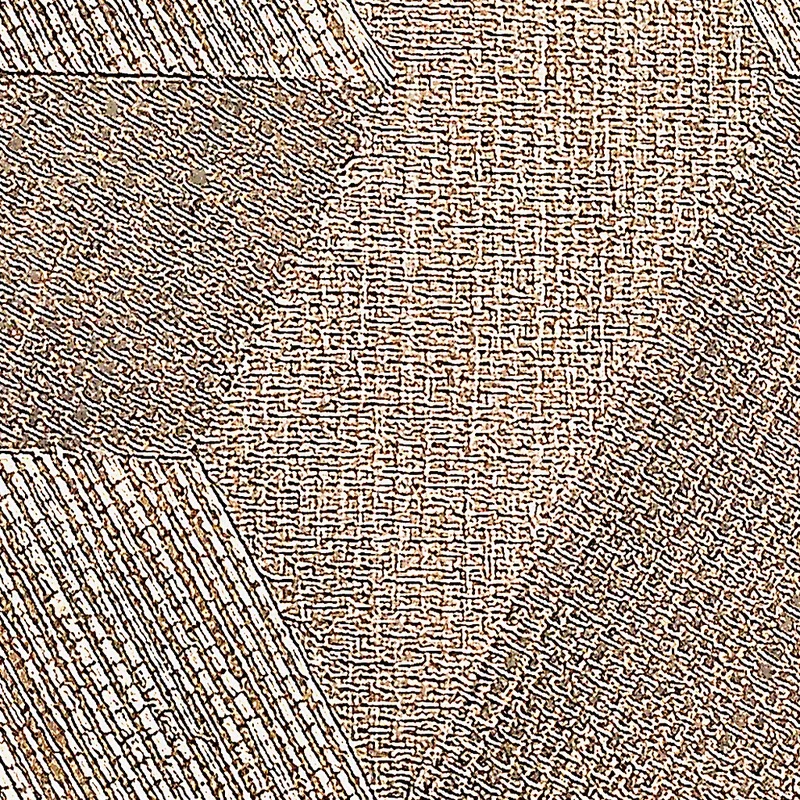
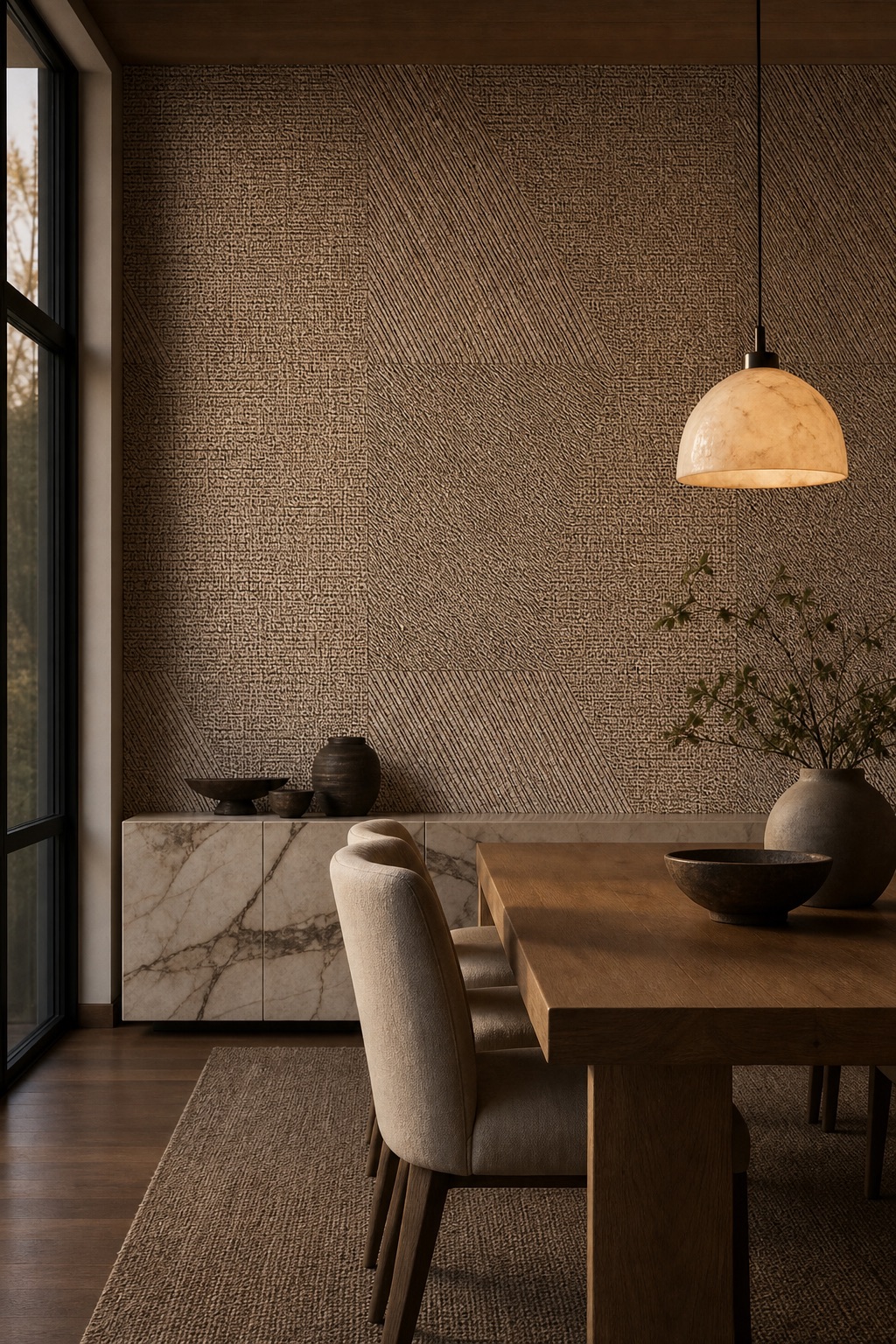
A warm sandy beige woven in a plain tabby and assembled into large opposing diagonal panels, Sand Facet achieves tonal depth through geometry rather than colour contrast — a single dye lot reads lighter or darker across each facet depending on the angle of incident light. Produced with our partner mills and supplied to interior designers, architects, and trade buyers from 50 rolls (≈250 m²), it suits japandi, wabi-sabi, and organic-modern specifications across residential and hospitality contexts. At mid-value, fully matte, and finished in a consistent medium-gauge natural fibre, it is the kind of grounded neutral that holds a scheme together without competing with it.
Warm Beige in Changing Light: How the Colour Reads Through the Day
- Sandy tan base registers as warm and grounded; the warm undertone remains stable as ambient light temperature shifts from cool morning to amber evening.
- The opposing panel geometry means adjacent facets catch incident light at different angles, producing tonal variation within a single dye lot without introducing a second colour.
- Under diffuse north-facing daylight the panels read as close tones; under directional lamp or afternoon sun the contrast between facets becomes noticeably more pronounced.
- Full matte finish absorbs rather than reflects, keeping warmth consistently present across the surface without glare or hot-spots.
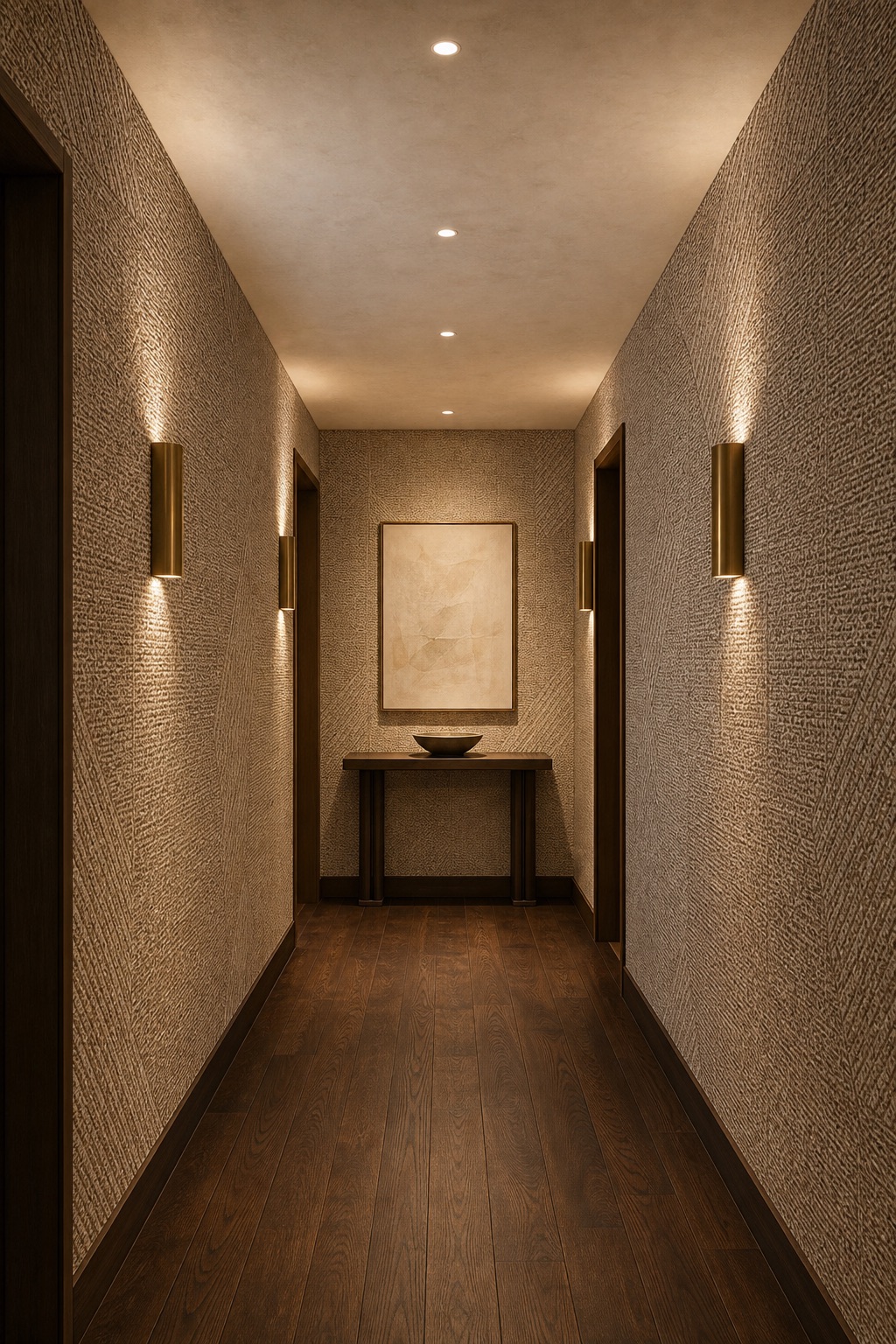
- Works particularly well where light travels across the wall — long corridors, angled feature walls, and rooms with shifting daylight cycles.
Beige grasscloth in this panel geometry achieves visual interest through structure rather than through colour variation. What the eye reads as pattern is actually the interaction of weave direction and light angle — which means the character of the wall surface shifts through the day without ever feeling inconsistent. For specifiers assembling a quiet, considered palette, that behaviour is an asset rather than a complication.
How the Opposing Panel Construction Is Built
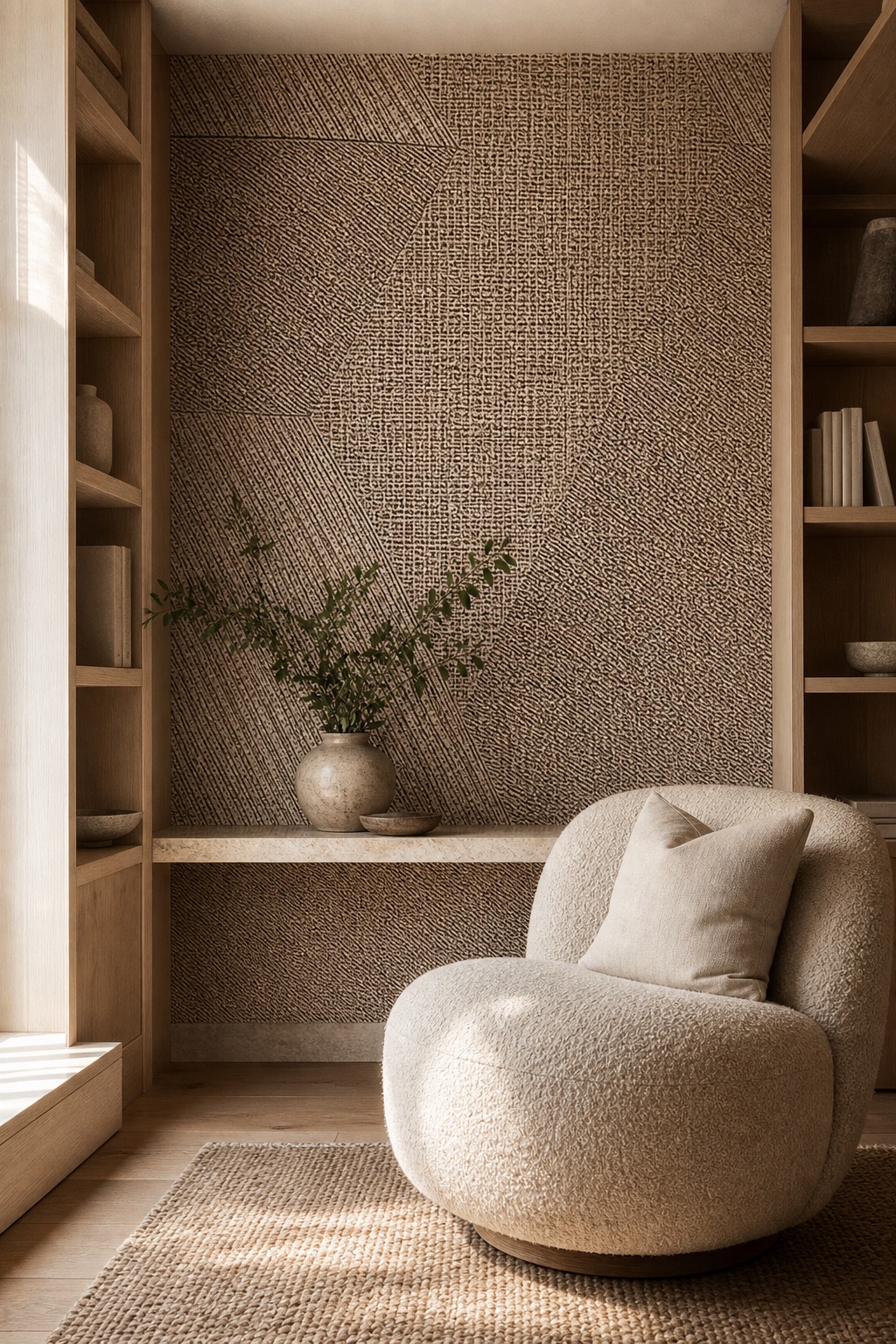
- Plain tabby weave — the most structurally stable grasscloth construction — is the base unit of the material.
- Panels are assembled with adjacent sections rotated in opposing directions; panel boundaries fall along straight vertical and diagonal lines.
- Medium-gauge strands give the surface clear presence at arm's length while remaining refined when viewed across a room.
- No printed or applied pattern: the geometry is entirely structural, woven into the material itself.
- Because the visual effect is produced by weave direction alone, no pattern repeat or drop-matching is required when hanging strip to strip — panels butt at straight vertical seams.
Interior designers who have specified geometric printed wallcoverings and faced complex drop-matching logistics will find this construction considerably more forgiving. There is no pattern to align, only a direction of hang. The geometric effect emerges from the material itself, and it does so without placing precision demands on installation teams that natural fibre products — with their inherent slight variation — cannot always sustain.
Spaces and Companion Materials Where Sandy Beige Performs Best
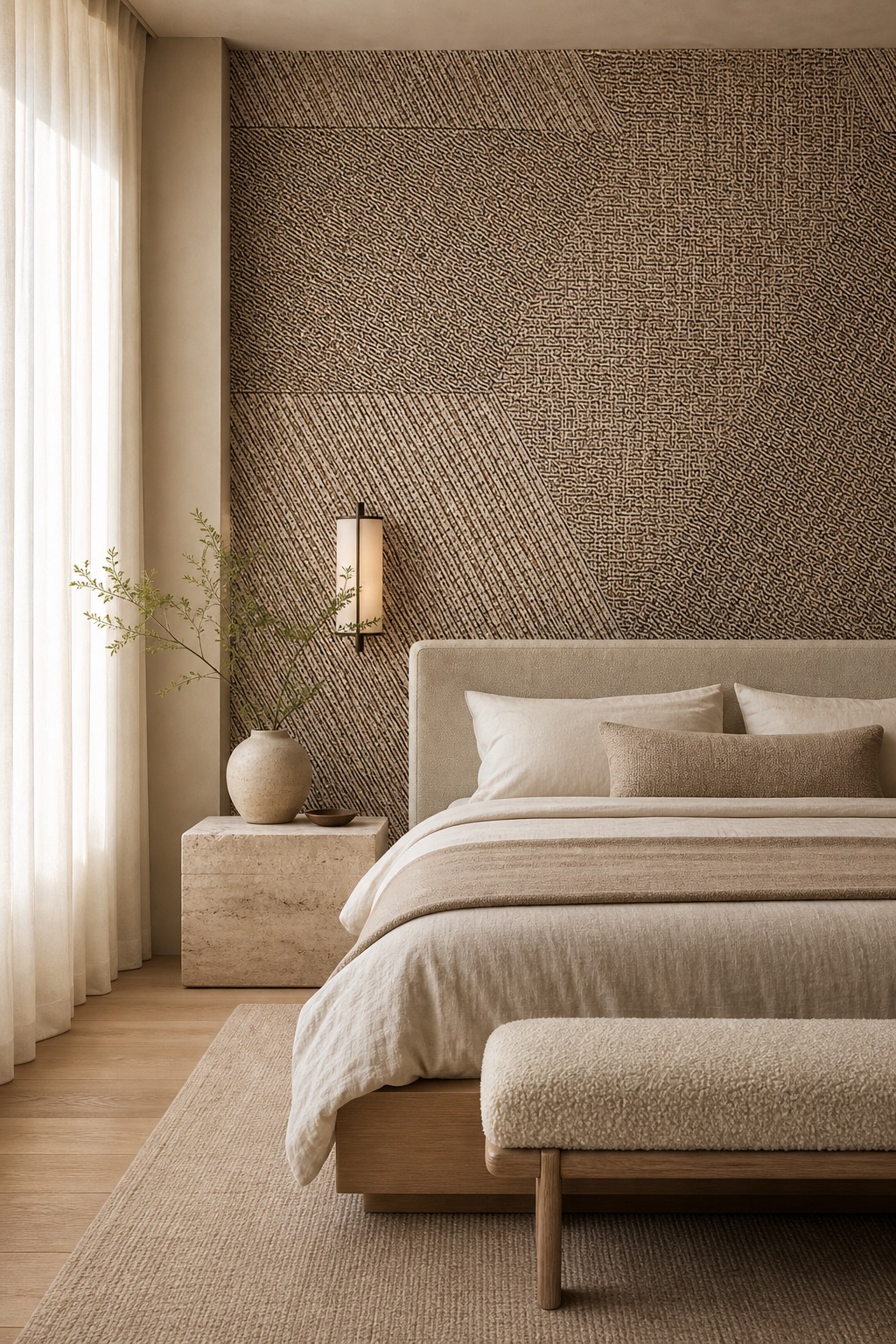
- Primary residential applications: bedroom headboard feature wall, living room accent, library or study lining.
- Hospitality: hotel suite headboard wall, spa reception, executive lounge — the matte warmth reads as considered rather than anonymous.
- Companion materials that complement without competing: travertine, pale oak, unbleached linen, plaster, blackened steel, loose-weave bouclé, veined marble in warm cream tones.
- On north-facing walls in cooler ambient light, warm artificial sources preserve the sandy undertone; on south-facing walls it performs consistently throughout the day.
- Transitions naturally across japandi, wabi-sabi, organic-modern, and quiet-luxury residential schemes; also suits contemporary hospitality interiors seeking tactile warmth without dramatic pattern.
Sandy beige is among the most consistently specified grasscloth colour families in global hospitality procurement precisely because it anchors without overpowering — it gives the rest of the specification room to read. The challenge for specifiers is not finding a space where it works; it is ensuring the companion materials are chosen with enough specificity that the beige reads as a deliberate decision rather than a default.
A Foundation Tone That Accepts Custom Colourways
- This warm beige family can be shifted toward deeper sand, cooler greige, pale terracotta, or a more golden tone through custom colourway work with our design studio.
- Our three in-house designers engineer target tones from paint chips, fabric samples, or image references, and produce CAD visualisations before production begins.
- Custom colourway proofing is quoted upfront and takes approximately 1–2 weeks; the approved tone is locked to a dedicated production batch.
- Custom specifications are discussed at enquiry stage; the standard grasscloth MOQ applies.
Love this weave but need your own colour? Our design studio engineers custom colourways from your reference — a Pantone, a paint chip, or a fabric swatch — and delivers a CAD visualisation before any proofing commitment is made. That capability is what distinguishes a supply-chain partner from a catalogue supplier.
Trade Specifications, Sampling, and the Order Process
- Standard roll: 0.915 m × 5.5 m ≈ 5 m² per roll; grasscloth MOQ is 50 rolls (≈250 m²).
- Paid physical sample books are available; the sample cost credits against a confirmed order (up to 10%).
- Production runs approximately one month from order confirmation; ocean freight is quoted and invoiced separately.
- Every grasscloth run is cast as a single dye lot; a per-batch lot certificate is issued at despatch for each production order.
- Three full-time in-house designers support specification from material selection through to production drawings; our founder has been active in natural wallcovering since 2018.
- We supply material samples and mill documentation to assist buyers obtaining ASTM E84, CA TB117, REACH, or equivalent certifications — we do not ourselves hold these certifications; certifying buyers arrange testing against their own project requirements.
A paid sample book travels to you first. When the specification is confirmed, a paid proof is quoted before production begins, and the order proceeds on the terms confirmed on the pro-forma invoice. The lot certificate issued at despatch gives specifiers and contractors the documentation they need for quality sign-off and, if required, batch-matched reorders — because each grasscloth run is a single dye lot, there is no ambiguity about what was delivered.
Buying grasscloth for a project or a brand?
- Minimum order
- 50 rolls (about 250 m²) catalog · 100 rolls custom / private label
- Lead time
- 4–6 weeks standard · 5–8 weeks specialty, after sample approval and payment
- Terms
- EXW Chengdu · FOB, CIF, DDP on request
- Samples
- Free digital kit in 24 h · paid swatch pack, credited in full on your first order
- Reply
- Within 24 hours
Frequently asked
- Will this warm beige fade or shift colour in rooms with sustained direct sunlight?
- Natural grasscloth fibres will shift in tone under prolonged UV exposure; this warm beige may gradually dry out or lighten in south-facing rooms with unfiltered sun on the wall surface. UV-filtering glazing and positioning the wallcovering away from direct sun significantly extends colour stability — see /guides/fading-prevention for the precautions we recommend.
- How do seams read with this diagonal panel construction — does weave direction need to be matched strip to strip?
- No pattern alignment is required. The geometric effect is produced by opposing weave directions within each panel section; adjacent strips butt at a straight vertical seam, which reads as a natural break in the fibre direction rather than a misalignment. A wallcovering installer experienced with natural fibre products should handle the hang; wall preparation is as important as the technique.
- Is sandy beige grasscloth suitable for hotel bathrooms or high-humidity spa environments?
- Natural grasscloth performs best in humidity-controlled environments with good mechanical ventilation. For bathroom-adjacent or spa applications, we recommend confirming the building's ventilation specification before committing to natural fibre — see /guides/humidity-risks before finalising the specification.
- Can the panel scale or strand gauge be altered for a bespoke project?
- Yes — our design studio can engineer changes to strand gauge, panel proportion, and overall weave scale as part of a custom specification brief. Bring the project parameters to us at enquiry stage and we will confirm feasibility and quote for proofing.
- What is the minimum order quantity and how does payment work?
- Grasscloth MOQ is 50 rolls (≈250 m²); full commercial terms covering payment structure, proofing fees, and lead times are detailed at /faq.