Geometric Grasscloth Wallpaper
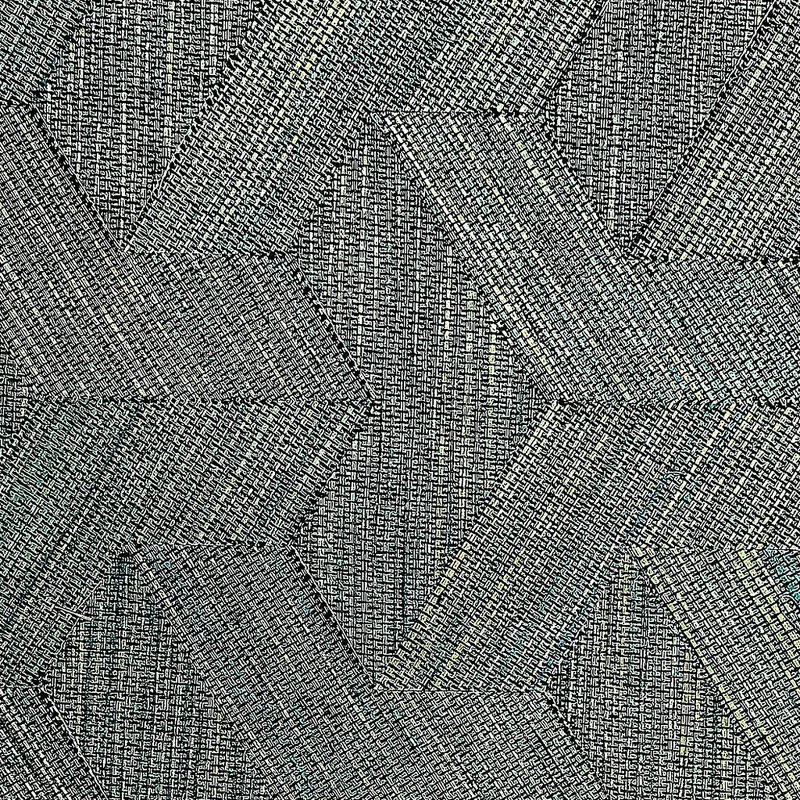
Slate Chevron is a geometric grasscloth wallpaper structured around a direction-reversing chevron weave: each section of angled fibre meets its mirror to form large, broken-diamond shapes across the cloth face — a pattern that emerges from the weave architecture itself, not from printing or embossing. The base material is a tightly packed natural-fibre cloth with a cool charcoal finish and a fully matte surface, produced with our partner mills to Grasscloths' studio specification. We supply this wallcovering to interior designers, architects, and hospitality buyers from 50 rolls (≈250 m²), with three in-house designers available to assist with custom colourway development, sample coordination, and project documentation.
A Structural Diamond: How the Weave Is Built
- The broken-diamond geometry is structural: it is formed by reversing the direction of the chevron weave across each repeat, not by surface printing or embossing.
- At typical viewing distances of 2–3 m, the diamond shapes read clearly and consistently across the full wall plane.
- The matte, tightly packed fibre surface carries no sheen, so light does not create hot spots or distort the pattern geometry at any angle.
- The medium texture scale is bold enough to read as a deliberate design element yet refined enough to co-exist with detailed architectural joinery without competing.
- Because the geometry is woven rather than printed, each repeat carries the natural irregularity of hand-processed fibre — providing tactile warmth that digital reproduction cannot replicate.
The defining characteristic of Slate Chevron is that its geometry is structural rather than decorative: the broken-diamond field emerges when opposing chevron runs meet along a shared axis, producing a clean angular repeat that registers at every scale from close inspection to across a full room. Unlike printed geometric wallpapers, the pattern has tactile depth — the fibre direction can be traced by hand — and it responds to raking light by throwing faint micro-shadows along each chevron edge. The cool charcoal tones the entire structure down to a quiet, authoritative register appropriate to premium residential and hospitality interiors.
Spaces Where This Weave Performs
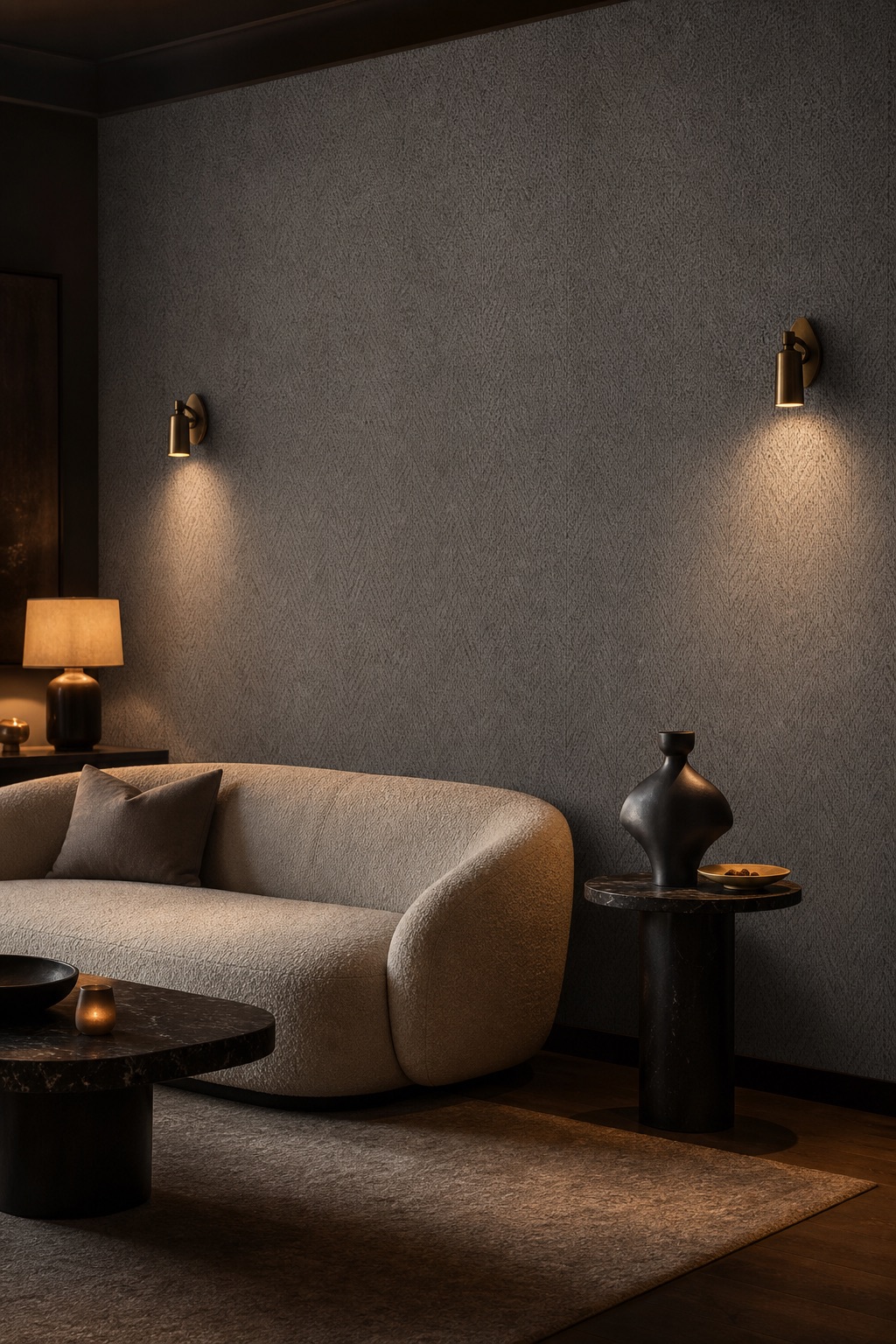
- Best suited as an accent or feature wall; four-wall installation works well in rooms above approximately 20 m², where the dark field creates depth rather than enclosure.
- Ideal applications include hotel-suite headwalls, private-dining alcoves, executive studies, cinema rooms, and hospitality corridor feature panels.
- Natural grasscloth must not be specified in bathrooms, kitchens, or any area with persistent moisture, direct water splash, or uncontrolled humidity.
- The cool charcoal and angular geometry align naturally with Japandi, organic-modern, and refined-industrial interior schemes.
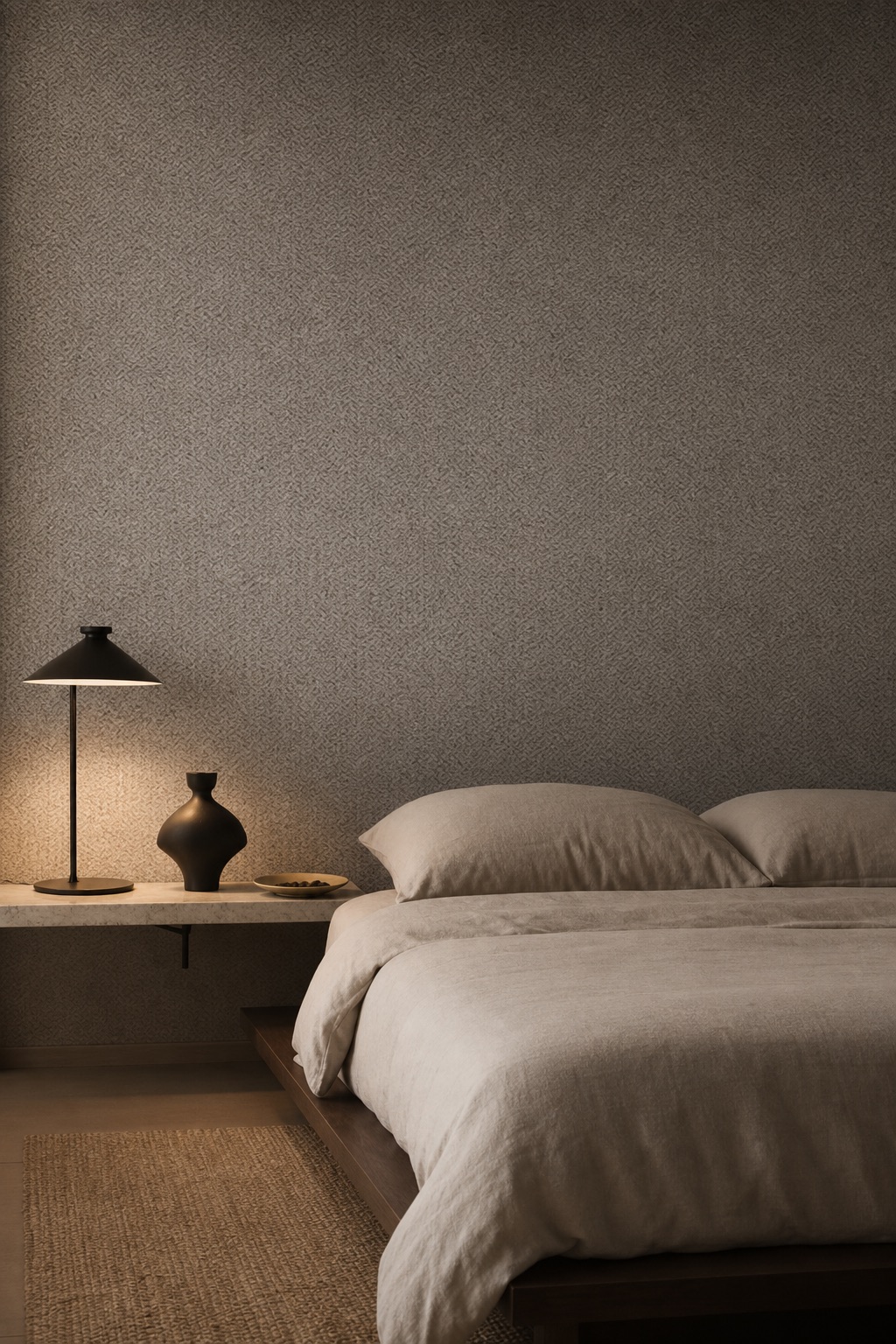
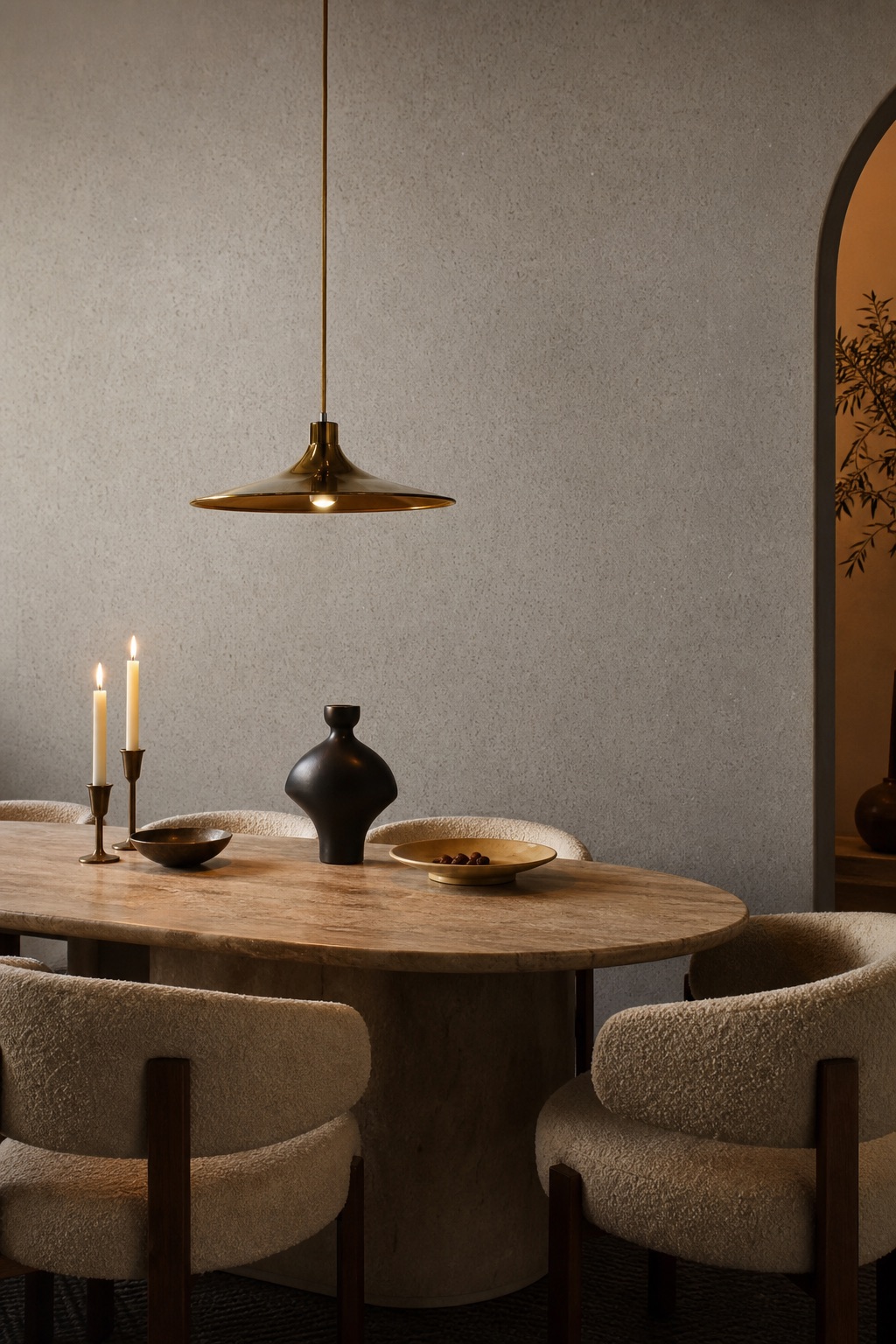
- Companion materials from the quiet-luxury palette — travertine, solid oak, brushed brass, linen, blackened steel, undyed bouclé — integrate without needing to be colour-matched exactly.
A dark geometric wallcovering earns its place in rooms with volume and intention: hotel suite headwalls where the pattern frames the bed without overwhelming the space; private dining alcoves where the geometry holds the eye as diners enter; studies and executive offices where cool charcoal projects focus and quiet authority. The angular structure integrates naturally with brass-accented lighting, oak joinery, and travertine surfaces — the materials most often paired with Japandi and organic-modern schemes. For residential projects, a single feature wall behind the bed or sofa tends to be the most specifier-approved application; we are happy to provide samples of co-ordinating plain colourways on request.
How Charcoal Reads Under Shifting Light
- The fully matte surface absorbs light rather than returning it; the wall plane recedes visually — no glare, no specular reflection at any angle of incidence.
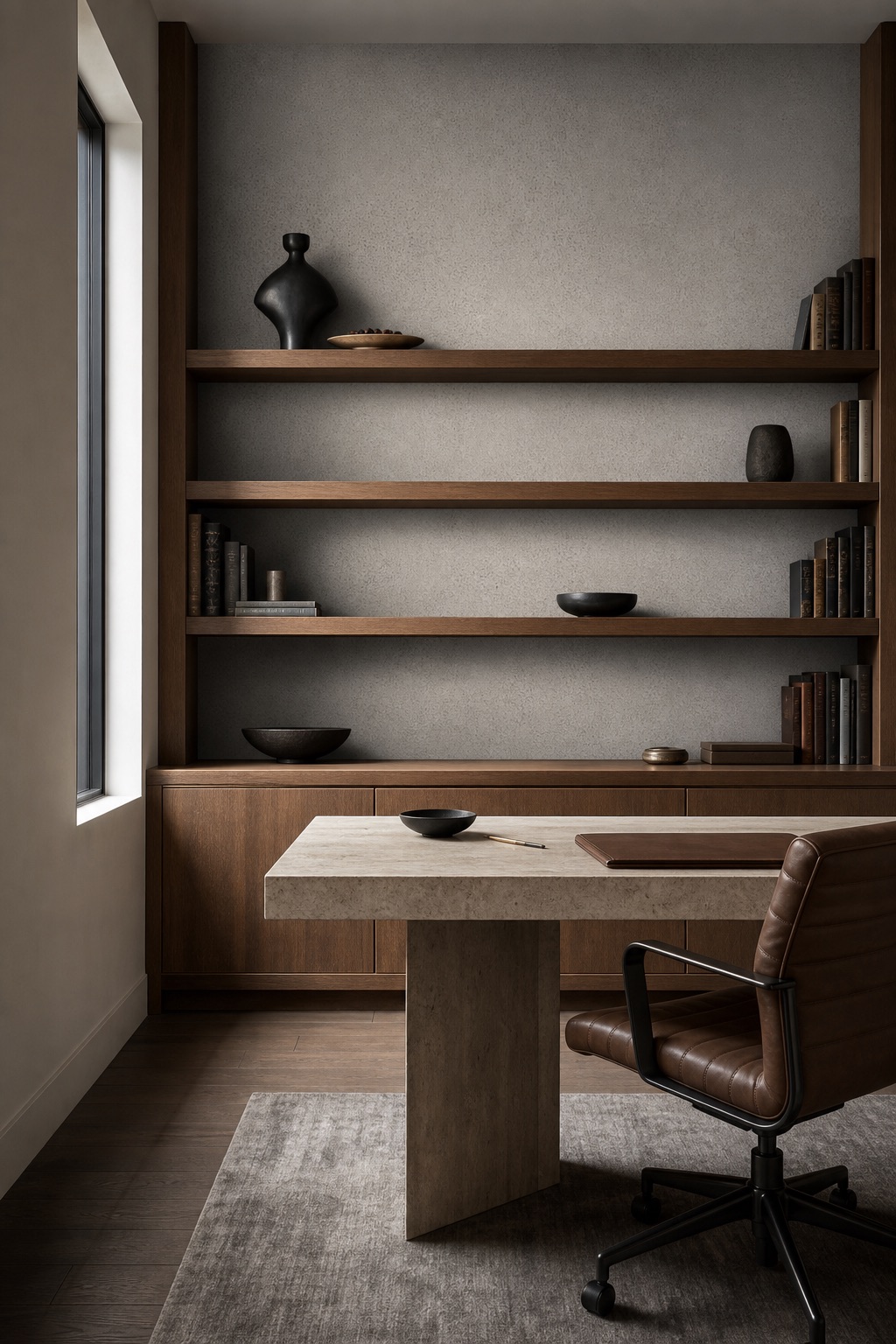
- Under warm artificial light at 2700–3000 K, the cool charcoal acquires a faint graphite-brown warmth that softens its register without losing depth.
- Under cool north-facing daylight or an overcast sky, the cool undertone is at its most pronounced — the wall reads its truest charcoal.
- The woven chevron structure throws micro-shadows under raking or wall-mounted light sources; sconce placement close to the surface will heighten the pattern's three-dimensional quality after dark.
- Photography will render this colour differently from in-situ perception under your actual light source — always sample on the intended wall before finalising specification.
Charcoal grasscloth at matte finish behaves differently from dark painted surfaces: it does not return light into the room, so the wall reads as genuinely dark and textured rather than flat. Under warm artificial lighting, the cool undertone retreats slightly — the wall becomes richer and less stark, sitting comfortably alongside brass fixtures and warm timber. Under abundant cool daylight, the true cool charcoal character dominates. The geometric structure adds a further variable: a sconce or grazing downlight placed close to the surface highlights the chevron ridges, making the diamond geometry more dimensionally visible in evening conditions. Experiencing a physical sample on your actual wall under your intended light source is the only reliable way to pre-qualify the colour before committing.
Pattern Alignment, Drop Mapping, and Seam Placement
- Slate Chevron is a directional geometric weave — all drops must run in the same orientation unless a deliberate reverse-hang is specified in advance.
- A reverse-hang (alternate drops rotated 180°) produces a mirror-image chevron at each seam; some specifiers use this intentionally to create a symmetrical diamond axis at the centreline.
- Standard roll dimensions are 0.915 m wide × 5.5 m long, yielding approximately 5 m² per roll; map drops against ceiling height before ordering to manage pattern-match waste accurately.
- Seams should fall at a natural break in the chevron repeat where possible — a seam cutting through the centre of a diamond will read more visibly than one placed at an angular break.
- Professional installation is required; wall preparation and adhesive selection are critical factors for a clean, long-lasting result on a geometric weave of this weight.
Because the geometry is structural, installation decisions have visible consequences: the direction of every drop, the position of seams relative to the diamond repeat, and whether a reverse-hang is specified will all affect how the finished wall reads. Standard practice is a consistent directional hang for a uniform field; a deliberate reverse-hang creates a centred symmetry point that some designers use to frame architectural features such as a chimney breast or headboard wall. At 0.915 m × 5.5 m per roll — approximately 5 m² — mapping drop positions against your actual ceiling height before ordering will help you calculate accurately and minimise offcut waste. We recommend reviewing our installation guide and discussing adhesive selection with your contractor before work begins.
From Sample to Shipment: How We Work
- Sample books are available on a paid basis and credited against confirmed orders up to 10%.
- Custom colourway proofing is quoted individually before any commitment; proof turnaround is approximately 1–2 weeks.
- Standard production at our partner mills runs approximately 1 month; ocean freight is quoted separately based on destination and Incoterm (FOB, CIF, or DDP available).
- Every production run is accompanied by a per-batch lot certificate; single dye-lot per order is our standard practice, ensuring colour consistency across all rolls in a project.
- Three full-time in-house designers convert reference images, paint chips, and mood boards into mill-ready CAD specifications.
- Grasscloths' founder has been active in the natural wallcovering supply trade since 2018; our studio and principal operations are based in Chengdu.
Our process is built around the documentation trade professionals need before they can commit: physical samples for in-situ review, a documented proof of colour before any production spend, and lot certificates confirming dye-lot consistency from roll to roll across every project. Sample books are paid but credited against your order; proofing is quoted up front so there are no surprises; production orders proceed on the terms confirmed on the pro-forma invoice. Three in-house designers handle the translation from your reference to production specification — whether that means matching a precise scheme or developing something new. Love this weave structure but need it in your own colour? Our design studio engineers custom colourways from your reference; contact us before assuming it is not possible.
Buying grasscloth for a project or a brand?
- Minimum order
- 50 rolls (about 250 m²) catalog · 100 rolls custom / private label
- Lead time
- 4–6 weeks standard · 5–8 weeks specialty, after sample approval and payment
- Terms
- EXW Chengdu · FOB, CIF, DDP on request
- Samples
- Free digital kit in 24 h · paid swatch pack, credited in full on your first order
- Reply
- Within 24 hours
Frequently asked
- Will the deep charcoal colour fade noticeably near south-facing windows?
- Dark-dyed natural fibres are more susceptible to UV fading than lighter tones. To slow fading, UV-filtering window film or lined curtains on south- and west-facing glazing are the most effective practical measures. We can supply additional rolls from the same dye lot at order time so you have material to replace a panel if fading becomes visible over years of service. See our fading prevention guide at /guides/fading-prevention for detailed guidance on protecting dark grasscloth.
- How visible are seams on a bold geometric pattern like this?
- Seam visibility depends on where the join falls relative to the diamond repeat. A seam cutting through the centre of a diamond will be more noticeable than one placed at a natural angular break in the chevron structure. We recommend that your installer maps drop positions against the repeat before cutting, and trims live edges with a straight edge rather than tearing. Our seam installation guide at /guides/handle-seams covers the technique in full for geometric weaves.
- Is natural grasscloth suitable for a property with variable humidity, such as a coastal home without year-round air conditioning?
- Natural grasscloth expands and contracts with ambient humidity. In conditioned interiors with stable humidity, this movement is negligible. In environments where humidity regularly exceeds approximately 70% RH — coastal properties without climate control, rooms prone to condensation — fibres can swell and seams may open or buckle over time. We advise against specifying natural grasscloth in bathrooms or any space with persistent moisture. Our humidity risks guide at /guides/humidity-risks covers threshold guidance in detail.
- Can I specify the Slate Chevron chevron weave structure in a different colourway?
- Yes. The angular broken-diamond weave structure of Slate Chevron can be developed in alternative colourways through our studio's custom process. Provide a colour reference — a paint chip, fabric swatch, or Pantone number — and our designers will develop a lab dip and physical proof for your approval before any production commitment. Proof turnaround is approximately 1–2 weeks. Custom colourway development is a core service our Chengdu design studio offers to trade specifiers working on bespoke projects.
- Where can I find full details on MOQ, lead times, and payment structure?
- Complete terms — minimum order quantities, production timelines, Incoterm options, and payment structure — are covered on our FAQ page at /faq.