Pricing Guide
Why Is Grasscloth Wallpaper So Expensive?
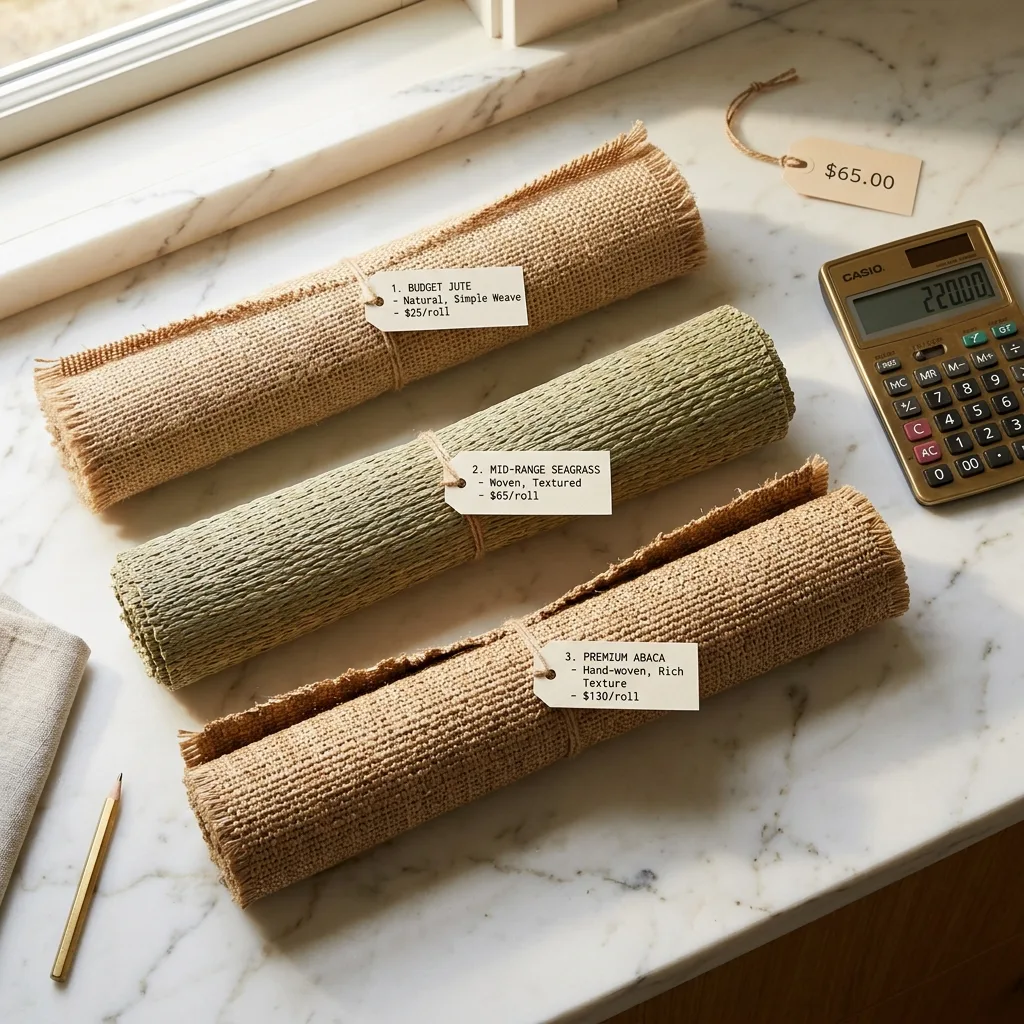
Natural grasscloth costs $80 to $200 per roll at retail, and significantly more for designer brands. Part of that price is real: each roll is hand-woven from natural plant fibers, and the production process cannot be scaled the way machine-printed wallpaper can. Part of it is distribution markup. This guide explains both.
The Real Cost Drivers
Four factors account for most of the cost in natural grasscloth wallpaper. Each is verifiable, and each adds cost at a different point in the supply chain.
Hand-Weaving Labor
Standard wallpaper is printed on machines at scale. Grasscloth is woven by hand, fiber by fiber, roll by roll. There is no industrial shortcut for this step.
Natural plant fibers (seagrass, jute, sisal, abaca, hemp, arrowroot) cannot simply be fed through a printing press. Each fiber requires sorting, threading, and careful tension management on a loom. Skilled weavers capable of this work are concentrated in parts of Asia, particularly China and the Philippines, where natural wallcovering has been produced for decades.
Because the production process is manual, output per worker per day is fundamentally limited. Wallpaper Boulevard notes that grasscloth "is the most expensive type of wallpaper due to the increased labor required to make it" and that it costs "at least double" standard wallpaper at comparable quality tiers.
Natural Fiber Sourcing and Processing
Before weaving begins, natural plant fibers go through multiple preparation steps. Seagrass reeds are harvested, left to dry in the sun, then split and knotted to create long runs for the loom. Jute fibers are inspected, washed, air-dried, and sorted for consistency before hand-dyeing. Twenty2 Grasscloth describes the process: "Each harvest is meticulously inspected, washed, and air dried before the hand-dyeing process."
Natural fibers have inherent variation. Not every harvested batch is consistent enough for wallcovering. Color matching with natural dyes is harder to hold than with synthetic dyes on machine-printed paper. These sourcing and processing steps add real cost before a single meter of finished product exists.
Import Logistics and Duties
Virtually all natural grasscloth wallcovering is made in Asia and imported into Western markets. For US buyers, this means ocean freight from origin to port, customs clearance, import duties, and domestic logistics from port to warehouse or jobsite.
Under the US Harmonized Tariff Schedule, paper-backed natural wallcovering (HTS 4814.90) carries a base MFN duty rate of Free to 3.7%. Textile-backed products (HTS 5905) may face rates of 3.5% to 8%. Additional Section 301 tariffs on Chinese-origin goods may apply on top of the base rate. See our import tariffs guide for the full breakdown by HTS code.
Transit time from Asia to a US port typically runs 30 to 50 days by sea. That time carries financing cost, insurance, and the risk of in-transit damage. Each of these factors layers into the landed price before a roll reaches a distributor or end buyer.
Professional Installation
Natural fiber wallcovering is demanding to install. Adhesive that contacts the woven face of the material can leave permanent staining. Seams are visible by design and must be planned carefully to reduce their visual impact. Most professionals charge more for grasscloth than for standard wallpaper because the margin for error is lower.
According to cost data from CountBricks, specialty natural fiber wallpaper such as grasscloth commands $4 to $6.50 per square foot in labor, compared to $1 to $4 per square foot for standard wallpaper. On a 300 square foot room, that difference in labor adds $900 to $1,650 above a standard installation.
Is Grasscloth Worth the Cost?
The answer depends entirely on the application.
In dry, low-traffic rooms with minimal cleaning requirements, grasscloth tends to justify the cost over time. The woven texture and natural variation are qualities that paint and vinyl wallpaper cannot produce, and the material holds up well in suitable conditions. Our grasscloth lifespan guide covers the durability data in detail.
The acoustic quality is also real. Woven natural fiber absorbs and scatters sound differently than a flat painted wall. For residential living rooms, dining rooms, and hospitality spaces where ambient noise matters, this is a practical benefit, not just an aesthetic one.
The case against grasscloth is equally practical. Natural fiber is sensitive to moisture and will stain or swell with prolonged humidity exposure. It cannot be scrubbed. Repairs require product from the same dye lot, which becomes harder to source over time. Bathrooms, kitchens, and high-traffic hallways are poor environments for natural grasscloth regardless of budget.
The question worth asking is whether the specific application will hold up well enough, and whether the texture quality is worth the upfront cost for that particular room.
How to Pay Less Without Losing Quality
The hand-weaving labor and natural fiber sourcing costs are fixed production costs. No supplier eliminates them. What is not fixed is the brand and distribution markup between the mill and the end buyer at retail.
Designer brands such as Phillip Jeffries, Thibaut, and Schumacher source wallcovering from Asian manufacturers, then add colorway curation, showroom presence, multi-tier distribution, and brand premium before the product reaches a designer or consumer. These additions have real value for some buyers: curated selection, established guarantees, and the ability to order in small quantities through familiar channels.
For buyers with specific project requirements, clear specifications, and volume that justifies direct engagement, sourcing through a direct partner removes the distribution layers without changing the underlying material. The fiber, weave, and backing remain the same. What changes is who manages the supply chain between the mill and the buyer.
For a full breakdown of production cost versus retail price, including FOB pricing by material type and the complete landed cost stack, see our grasscloth cost guide.
Frequently Asked Questions
Why is real grasscloth more expensive than faux grasscloth?
Real grasscloth is hand-woven from actual plant fibers (seagrass, jute, sisal, or abaca) by skilled workers, one roll at a time. Faux grasscloth is machine-printed vinyl that skips the labor and the natural material. Real fiber has depth and natural color variation that printed vinyl cannot match, and it holds up longer in suitable conditions. The price difference between real and faux reflects this production gap.
Is grasscloth wallpaper worth the cost?
In dry, low-traffic rooms with minimal cleaning demands, grasscloth typically justifies the cost through longevity and texture quality. A well-maintained installation can outlast several rounds of paint or vinyl replacement. The acoustic damping and natural texture variation are qualities that painted walls and vinyl wallpaper cannot replicate. The case weakens in humid rooms, high-traffic areas, or anywhere regular scrubbing is expected.
What makes designer grasscloth cost more than standard grasscloth?
Designer brands add curated colorways, quality grading, showroom overhead, and multi-tier distribution costs on top of the base production cost from Asian manufacturers. The raw fibers and weaving technique from a quality sourcing partner are often comparable to what goes into branded product. What the brand adds is curation, a reliable guarantee, and convenient ordering through familiar channels, and the price reflects those additions.
How much does professional grasscloth installation cost?
Professional installation for natural fiber wallpaper such as grasscloth typically runs $4 to $6.50 per square foot for labor alone. This is higher than the $1 to $4 per square foot typical for standard wallpaper because paste contact on the fiber face can cause permanent staining and seams must be carefully planned. Most professional installers treat grasscloth as specialty work.
Related Guides
How Much Does Grasscloth Wallpaper Cost?
FOB pricing by material type, total landed cost stack, and how direct sourcing compares to buying through brand channels.
Read Guide → PricingNatural Wallcovering Pricing Explained
Where the money goes in wallcovering pricing: material cost, distribution markup, installation, and how to read a quote accurately.
Read Guide → GuideGrasscloth Pros and Cons
The honest assessment of natural grasscloth wallpaper: texture, durability, cleaning limits, and where it works and where it does not.
Read Guide →Custom Grasscloth Wallpaper
Woven-to-sample custom colorways: how the development process works from your reference to production.
Is Grasscloth in Style in 2026?
Where natural texture sits in current interior trends, with designer signals to watch.
Grasscloth vs Raffia
Two woven naturals compared: fiber source, texture scale and where each belongs.