Installation Guide
Grasscloth on Textured Walls — Can It Work?
Orange peel, knockdown, skip trowel, popcorn — textured walls are the #1 obstacle to natural wallcovering installation. Here's how to assess, fix or work around wall texture for a professional result.
Key Takeaways
- Never install grasscloth over texture — it will telegraph through and look terrible.
- Light texture (orange peel): sand with 120-grit, then skim coat.
- Medium texture (knockdown): skim coat in 2–3 passes, sanding between coats.
- Heavy texture (skip trowel, popcorn): remove first, then skim coat — or install wall liner.
- Wall liner is the fastest fix — a blank bridging paper that creates a smooth substrate.
- Reflective materials (mica, glass bead, gold foil) are the least forgiving — even slight bumps show.
- Budget 1–2 extra days for texture remediation before wallcovering installation.
Why Does Wall Texture Cause Problems?
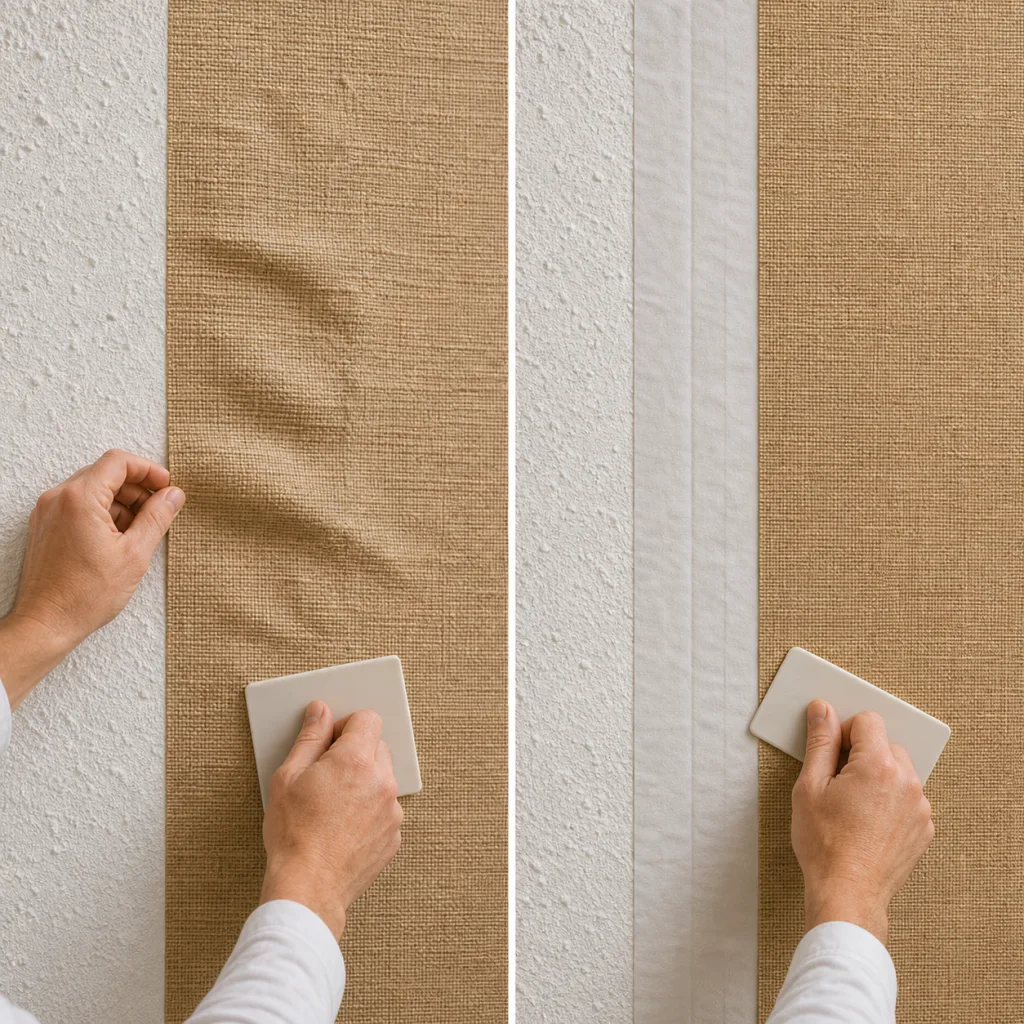
Natural wallcoverings are thin, conforming materials. Unlike thick vinyl that can bridge minor imperfections, grasscloth (typically 0.5–1.5 mm thick) drapes over the wall surface and conforms to every bump, ridge and valley. The wall texture becomes visible through the wallcovering — this is called "telegraphing."
The problem is especially severe with reflective materials like mica, glass bead and gold foil. Their shimmering surfaces catch light differently across bumps versus flat areas, amplifying every imperfection into a visible defect.
Which Texture Types Are Most Problematic?
| Texture Type | Severity | Best Fix | Labor Level |
|---|---|---|---|
| Smooth (Level 4–5) | ✅ Ready to hang | Prime and install | Low |
| Orange peel | Moderate | Sand + skim coat (1 pass) | Medium |
| Knockdown | Moderate-High | Skim coat (2–3 passes) | Medium-High |
| Skip trowel | High | Remove texture + skim coat, or wall liner | High |
| Popcorn / heavy splatter | Very High | Scrape off + skim coat, or wall liner | Very High |
| Sand finish | Moderate | Skim coat (1–2 passes) | Medium |
How Do You Fix Textured Walls for Wallcovering?
There are three approaches, from most labor-intensive to fastest:
Option 1: Skim Coat (Best Result)
Skim coating applies a thin layer of joint compound over the entire wall surface, creating a smooth, uniform substrate. This is the gold standard for wall preparation.
- Sand the texture lightly with 120-grit sandpaper to knock down the highest peaks
- Apply joint compound with a 12" or wider taping knife in thin, overlapping strokes
- Allow to dry completely (12–24 hours per coat)
- Sand smooth with 150-grit, then 220-grit for a glass-smooth finish
- Repeat if needed — heavy texture may require 2–3 passes
- Prime with wallcovering primer (e.g., Roman PRO-977) and allow 24 hours to cure
Pro tip: For heavy texture, wet the wall with a spray bottle first — dampening the compound makes the first pass smoother and reduces the need for multiple coats.
Option 2: Wall Liner (Fastest)
Wall liner (bridging liner) is a blank, heavy-duty wallpaper that creates a smooth substrate without the labor of skim coating. It's the best option when:
- You need to cover large areas quickly
- The texture is moderate (orange peel, light knockdown)
- You don't want to deal with drywall dust and compound drying time
Installation rules:
- Hang liner horizontally (cross-lining) so its seams don't align with the decorative wallcovering seams
- Use a heavy-duty clear adhesive
- Allow 24 hours to dry before applying the decorative layer
- Prime the liner with wallcovering primer before hanging grasscloth over it
Limitation: Wall liner bridges texture but doesn't eliminate it — if the texture is very heavy (deep skip trowel, popcorn), the liner itself may telegraph. In these cases, remove or sand the texture first, then use liner.
Option 3: Texture Removal (For Heavy Texture)
For popcorn ceilings/walls and deep skip trowel, the most effective approach is to remove the texture entirely:
- Wet the texture with a garden sprayer — allow 15 minutes to soften
- Scrape with a wide drywall knife (10–12") — the softened texture should come off in sheets
- Sand any remaining ridges smooth
- Skim coat to achieve a uniform Level 4–5 finish
- Prime and allow to cure
⚠️ Safety warning: Textured walls in homes built before 1980 may contain asbestos. Have the texture tested before scraping or sanding. If asbestos is present, hire a licensed abatement contractor.
Which Natural Wallcoverings Are Most Forgiving on Imperfect Walls?
| Material | Texture Tolerance | Why |
|---|---|---|
| Cork (2–4 mm) | High — most forgiving | Thick, compressible material bridges minor imperfections |
| Sisal (coarse weave) | Moderate | Heavy texture partially masks small bumps |
| Grasscloth (standard) | Low-Moderate | Thin fibers conform closely to wall surface |
| Paper-weave | Low | Smooth surface shows every bump |
| Gold foil | Very Low | Metallic surface amplifies every flaw |
| Mica | Very Low | Reflective shimmer highlights bumps |
| Glass bead | Very Low | Faceted sparkle amplifies texture |
If your walls have light texture and you don't want to skim coat, choosing a thicker, coarser material like cork or heavy sisal can help mask imperfections. However, this is a compromise — smooth walls always produce the best result.
How Do You Test If Your Walls Are Smooth Enough?
- The flashlight test: Hold a bright flashlight flat against the wall at a low angle. Any bumps, ridges or remaining texture will cast visible shadows. If you see shadows, the wall isn't smooth enough.
- The hand test: Run your open palm across the wall surface. You should feel nothing — zero texture, zero ridges, zero tape joints.
- The paper test: Hold a sheet of plain white paper against the wall with side-lighting. If texture shows through the paper, it will show through grasscloth.
Frequently Asked Questions
Can I install grasscloth directly on orange peel texture?
No. Even light orange peel texture will telegraph through grasscloth and be visible on the finished surface. You must either sand and skim coat the texture smooth, or install a wall liner first. The only exception is thick cork wallcovering (2–4 mm), which can mask very light orange peel.
Is wall liner as good as skim coating?
Wall liner is faster and produces good results for moderate texture. However, skim coating produces a superior substrate because it creates a perfectly smooth, uniform-porosity surface. For premium installations — especially reflective materials like mica or gold foil — skim coating is preferred.
How long does it take to prepare textured walls?
Budget 1–2 extra days beyond the wallcovering installation time. Skim coating requires 12–24 hours drying time per coat, plus sanding and priming. Wall liner can be hung and primed in one day, with 24 hours drying before the decorative layer.
Related Guides
Wall Preparation
Complete wall prep guide.
Installation Guide
Full 7-step installation process.
Installation Mistakes
7 errors that ruin installations.
Best Adhesive
Choosing the right paste.
Handle Seams
Minimize seam visibility.
Cork Guide
The most forgiving natural wallcovering.
Need Wall Assessment Help?
Send us photos of your wall texture and we'll recommend the best preparation approach for your specific wallcovering choice.
Contact Us