Maintenance Guide
How to Clean Grasscloth Wallpaper: Stains, Dust & Care
Natural wallcovering is porous, absorbent and dyed with natural pigments — water makes most stains worse. Here's a stain-by-stain guide to what you can fix, what needs a professional, and what's permanent.
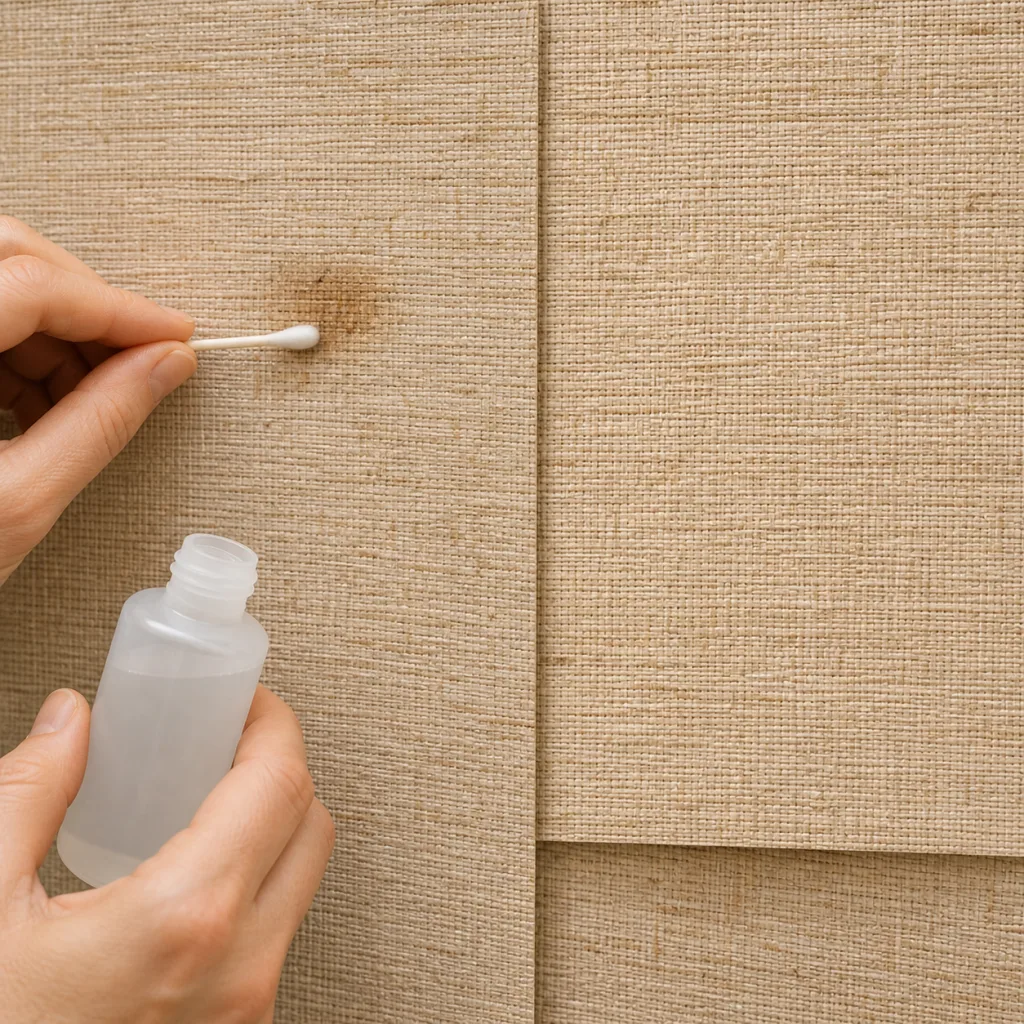
Key Takeaways
- Rule #1: No water first. Water makes most grasscloth stains worse.
- Dry-cleaning sponge is the safest, most effective cleaning tool.
- Never use Magic Erasers — they're abrasive and destroy the fiber texture.
- Act fast — fresh stains are easier to address than dried ones.
- Always test first in an inconspicuous area (behind furniture or near baseboard).
- Grease, ink and adhesive stains are usually permanent on natural fibers.
- When in doubt, call a professional — amateur cleaning often makes damage worse.
Regular Maintenance Schedule
| Frequency | Task | Method |
|---|---|---|
| Weekly | Light dusting | Soft feather duster or microfiber cloth, following the grain direction |
| Every 2–4 weeks | Vacuum | Soft brush attachment, low suction, gentle horizontal strokes |
| Every 6 months | Inspect seams | Check for lifting edges, address with adhesive before they worsen |
| Annually | Full inspection | Check for fading, fiber damage, mold indicators near windows/corners |
What NEVER to Do
These actions permanently damage grasscloth with no recovery possible:
- Never use water — even a damp cloth leaves visible watermarks on natural grasscloth.
- Never use liquid cleaners — household cleaners (Windex, 409, bleach) dissolve natural dyes and destroy fibers.
- Never scrub — abrasion breaks the weave structure and creates visible bald spots.
- Never steam clean — steam softens the adhesive, causing delamination and shrinkage.
- Never use magic erasers — melamine foam is extremely abrasive and strips both color and fiber.
- Never iron — heat scorches plant fibers and leaves permanent yellow-brown marks.
We include detailed care guides with every order. Ask us about material selection for specific environments.
Which Stains Can Be Removed from Grasscloth?
| Stain Type | Removable? | Method | Urgency |
|---|---|---|---|
| Surface dust / soot | Yes — easy | Dry-cleaning sponge or soft vacuum | Low |
| Fingerprints | Usually yes | Dry-cleaning sponge, gentle strokes | Low |
| Pencil marks | Usually yes | White art eraser, light pressure | Low |
| Light scuffs | Usually yes | Dry-cleaning sponge | Low |
| Food splatter (fresh) | Sometimes | Blot immediately, then cornstarch | Immediate |
| Grease / oil | Rarely | Cornstarch absorption (partial at best) | Immediate |
| Water marks | Usually permanent | Professional assessment | — |
| Ink / marker | Permanent | Panel replacement | — |
| Adhesive (dried paste) | Permanent | Panel replacement | — |
| Wine / coffee | Usually permanent | Professional or panel replacement | Immediate |
What Is a Dry-Cleaning Sponge and How Do You Use It?
A dry-cleaning sponge (also called a chemical sponge or soot sponge) is a vulcanized rubber sponge that lifts dirt, dust and light marks by absorption — without water, chemicals or scrubbing. It's the single most important cleaning tool for natural wallcovering.
How to use it
- Use it dry — never wet the sponge
- Long, even strokes — sweep in one direction (top to bottom or left to right). Do not scrub back and forth.
- Light pressure — let the sponge do the work. Pressing hard grinds dirt deeper into the fibers.
- Rotate to clean surface — as the sponge collects dirt, fold or slice it to expose a fresh surface
- Work in sections — clean one area at a time, overlapping strokes slightly
Dry-cleaning sponges are available at hardware stores, art supply stores and online for $5–10. They're also effective on other non-washable surfaces like suede, unfinished wood and silk.
How Do You Handle Grease and Oil Stains?
Grease stains are the most common serious stain on grasscloth, typically from cooking splatter, hand oils or furniture contact. They're also the hardest to address because oil penetrates the porous fiber structure.
The cornstarch method (partial success)
- Blot immediately with a clean, dry white cloth — absorb as much surface oil as possible. Do not rub.
- Apply cornstarch (or talcum powder) generously over the stain
- Let it sit for 2–4 hours — the powder absorbs oil from the fibers
- Brush off gently with a soft-bristle brush, or vacuum with a brush attachment
- Repeat if needed — multiple applications may draw out more oil
Reality check: This method works best on fresh, surface-level grease. If the oil has soaked into the fiber core, the stain will fade but is unlikely to disappear completely. For deep or dried grease stains, the affected area may need panel replacement.
What About Water Marks and Rings?
Water marks are paradoxically the hardest stains to fix because the damage isn't actually a "stain" — it's a dye migration. When water contacts natural fibers, it dissolves the natural dyes and carries them to the edges of the wet area. As the water evaporates, the dye concentrates at the boundary, creating a visible ring.
- Do not try to wash it out — adding more water creates a larger ring
- Do not steam it — steam spreads the dye further
- Professional assessment is recommended — a wallpaper restorer may be able to blend the ring by carefully feathering moisture across a larger area, but this requires expertise
- Panel replacement is often the only reliable solution for visible water marks
What Cleaning Products Should You Never Use?
| Product | Why It's Dangerous |
|---|---|
| Magic Eraser (melamine foam) | Abrasive — strips fiber texture, creates visible smooth patches |
| Bleach / chlorine | Destroys natural dyes, bleaches fibers unevenly |
| All-purpose cleaners (409, Windex) | Water-based + chemicals — stain and dissolve natural dyes |
| Baby wipes / wet wipes | Moisture + surfactants damage fibers and cause dye bleeding |
| Dish soap + water | Leaves surfactant residue in fibers; water causes rings |
| Rubbing alcohol | Dissolves some natural dyes; may cause color loss |
| Hydrogen peroxide | Bleaching action destroys fiber color unpredictably |
How Do You Prevent Stains in the First Place?
- Location matters: Don't install grasscloth in kitchens, bathrooms, children's rooms or high-traffic hallways where stains are likely
- Keep furniture away from walls: Oil from leather furniture and metal hardware causes transfer stains
- Use switch plate covers: Hands touching walls around light switches and door frames leave oil marks over time
- Dust regularly: Weekly vacuuming with a soft brush attachment prevents dust from embedding permanently in the weave
- Control humidity: Keep room humidity at 40–50% to prevent moisture absorption and mold growth
- UV protection: Use window treatments to prevent direct sunlight from fading natural fiber colors
- Keep spare material: Always retain at least one full strip from the same dye lot for future repairs or panel replacement
Natural vs Faux Grasscloth: Different Care Rules
If you're not sure whether your wallcovering is real or faux, check the edge or a hidden corner. Real grasscloth has visible individual fibers and feels rough to the touch. Faux grasscloth (vinyl or non-woven) has a printed or embossed texture and feels smooth.
| Care Action | Real Grasscloth | Faux (Vinyl) Grasscloth |
|---|---|---|
| Water cleaning | Never | Yes — damp cloth is fine |
| Soap solution | Never | Yes — mild soap works |
| Vacuuming | Yes — soft brush | Yes — any attachment |
| Stain removal | Very limited | Most stains removable |
| Bathroom use | Never | Yes — moisture resistant |
If cleanability is a priority for your space, consider our grasscloth vs vinyl comparison before specifying.
Frequently Asked Questions
Can I use a damp cloth on grasscloth?
Only as a last resort, and only on non-absorbent surface stains. If you must use moisture, dampen (not wet) a clean white cloth and blot — never rub. Test in an inconspicuous area first. For most stains, a dry-cleaning sponge is safer and more effective.
How often should I clean grasscloth walls?
Dust every 1–2 weeks with a soft vacuum brush or feather duster. Deep cleaning with a dry-cleaning sponge should be done every 3–6 months or as needed when marks appear. Regular dusting prevents buildup that becomes harder to remove over time.
Is there a protective coating I can apply?
Some manufacturers offer stain-resistant coatings applied during production. After-market sprays exist but may change the texture, color or sheen of the natural fibers and can void manufacturer warranties. If stain resistance is critical, consider specifying stain-guard treated grasscloth at the time of purchase rather than applying aftermarket products.
How long does grasscloth last with proper care?
15–25 years in appropriate environments (low humidity, no direct sunlight, minimal physical contact). Some historic installations have survived 30+ years. The key is placement — grasscloth in a protected living room will far outlast grasscloth in a high-traffic hallway.
Does grasscloth attract bugs or mold?
Natural fibers can attract silverfish in humid environments, and mold can grow behind grasscloth if wall moisture exceeds 70% RH. Both are preventable with proper climate control. Partner mills can apply non-toxic insect-deterrent treatments during production. See our bugs and mold prevention guide.
Can I install grasscloth in a bathroom?
We strongly advise against it. Even a well-ventilated bathroom exposes wallpaper to steam, splashes and humidity fluctuations that will damage natural fibers within 1–2 years. For bathrooms, use vinyl grasscloth (faux) which provides the visual effect with moisture resistance.
Related Guides
Repair Grasscloth
Fix tears, seams and stains.
Paint Over Grasscloth
When painting is the solution.
Remove Grasscloth
How to strip natural wallcovering.
Installation Guide
Proper installation prevents stains.
Best Adhesive
Clear adhesive avoids stain bleed.
Grasscloth Guide
Complete grasscloth reference.
Need Stain-Guard Grasscloth?
We offer factory-applied stain-resistant treatments on select grasscloth products. Ask us about stain-guard options for your project.
Contact Us