Terracotta Grasscloth Wallpaper
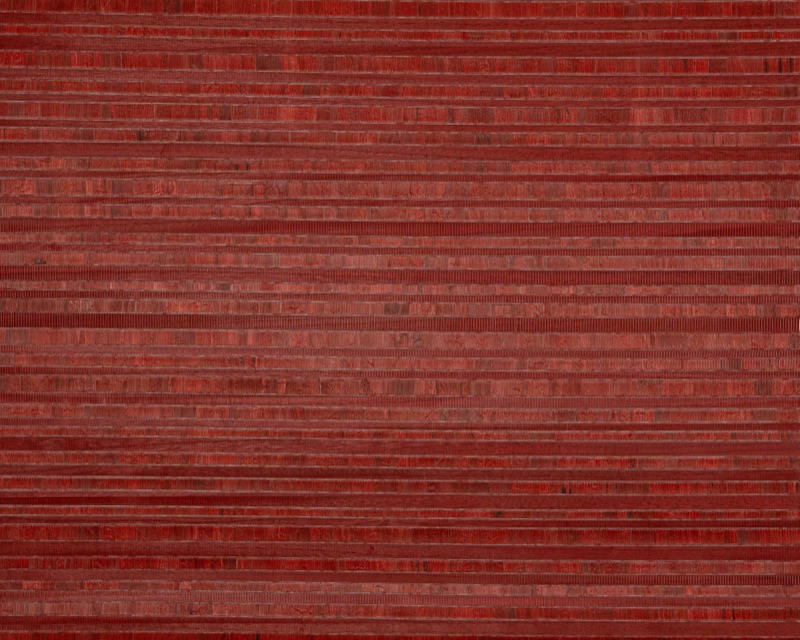
Ember Reed is a terracotta grasscloth wallpaper built on a horizontal reed weave — warm, earthy, and visually immediate from across the room. Individual reed strands carry the dye unevenly in the way natural fibre always does, producing the subtle tonal variation that separates hand-touched material from printed surfaces. Produced with our partner mills to Grasscloths' studio specifications, it is supplied to designers, hospitality buyers, and trade importers from 50 rolls, with custom colourways available for project-scale specifications.
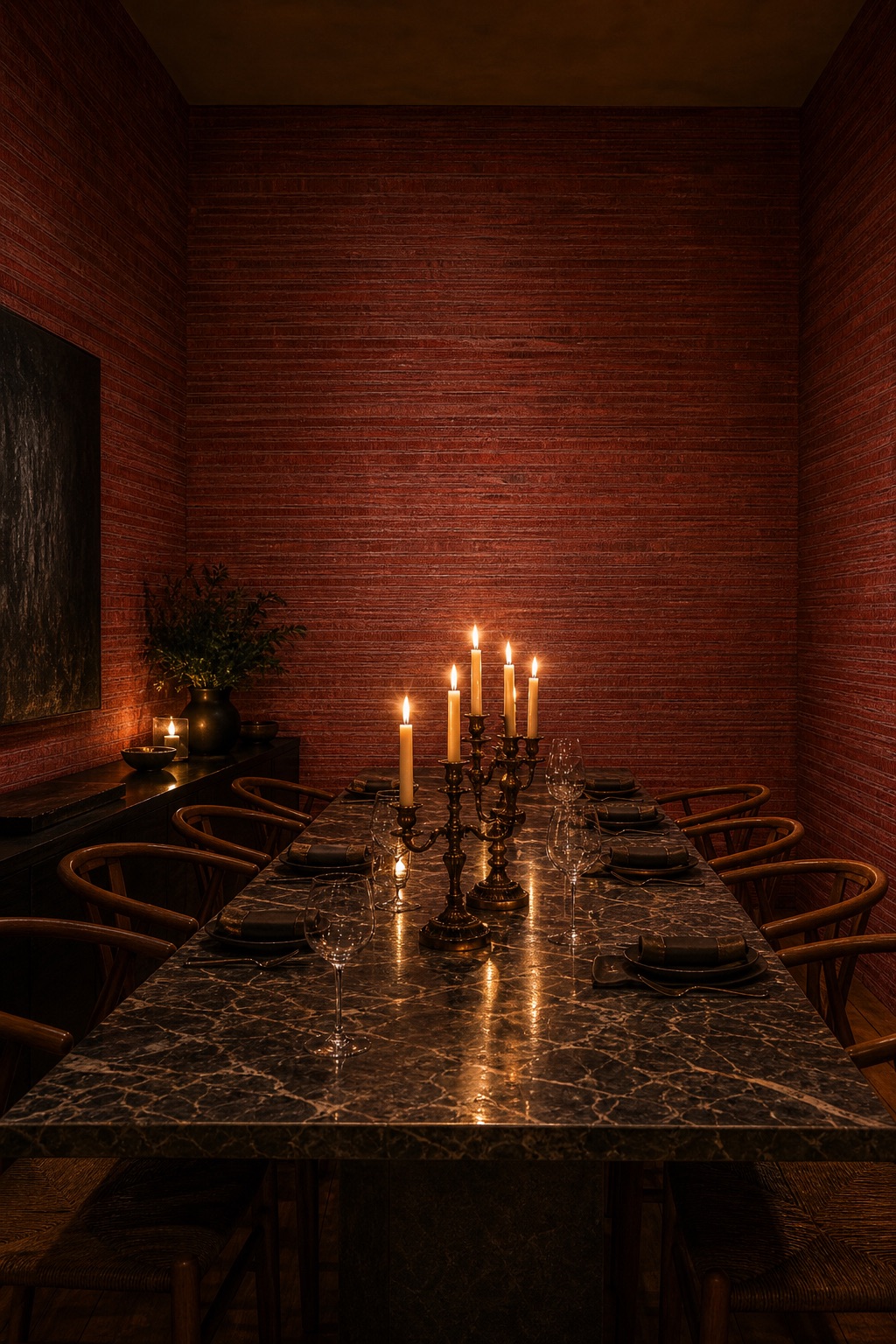
Terracotta Grasscloth in the Lamplight: How Brick Red Shifts Across a Day
- In full northern daylight, Ember Reed reads as a grounded, mid-value brick red: warm but contained, sitting closer to fired clay than to primary red.
- As ambient light shifts toward lamplight or candlelight, the terracotta deepens; reed shadows fill, and the overall tone moves toward a richer, more enclosing hue.
- Warm-spectrum LEDs and tungsten pendants draw the most from this colour; cool fluorescent or blue-white LEDs flatten it noticeably.
- The matte surface eliminates glare at every angle; light is absorbed into the weave rather than reflected off it.
- Fine vertical warp threads catch raking sidelight and reveal micro-texture that flat frontal lighting obscures, adding quiet depth visible only at close range.
In full northern daylight, Ember Reed reads as a grounded, mid-value brick red: warm but not aggressive, sitting closer to fired clay than to primary red. The individual reed strands introduce subtle tonal variation that prevents the wall from reading as flat paint. As the room moves into late afternoon and lamplight takes over, the terracotta deepens, reed shadows fill, and the surface begins to feel enclosed and almost luminous. This responsiveness to warm-spectrum LEDs and tungsten pendants is part of why terracotta grasscloth wallpaper performs so reliably in hospitality environments where the brief calls for warmth after dark. The matte surface means no glare at any angle; light settles into the weave.
Dining Rooms, Bars, and Powder Rooms: Spaces Where This Terracotta Grasscloth Earns Its Place
- Terracotta has strong hospitality precedent as a wall colour: enclosing, appetite-stimulating, and flattering under warm light.
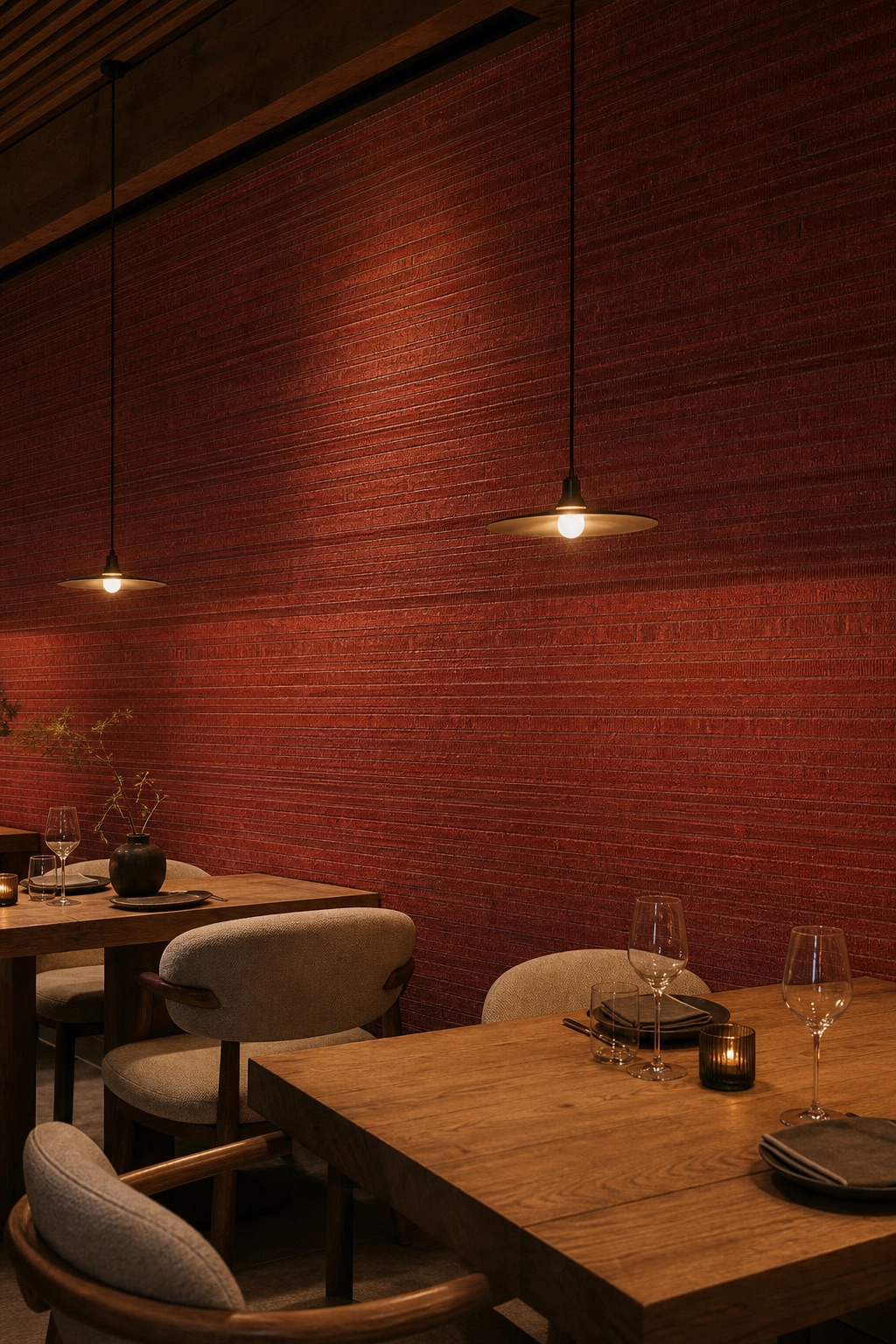
- Full-height feature walls in restaurant dining rooms and private dining spaces are a natural application; the earthy richness anchors a scheme and gives the eye a surface to rest on.
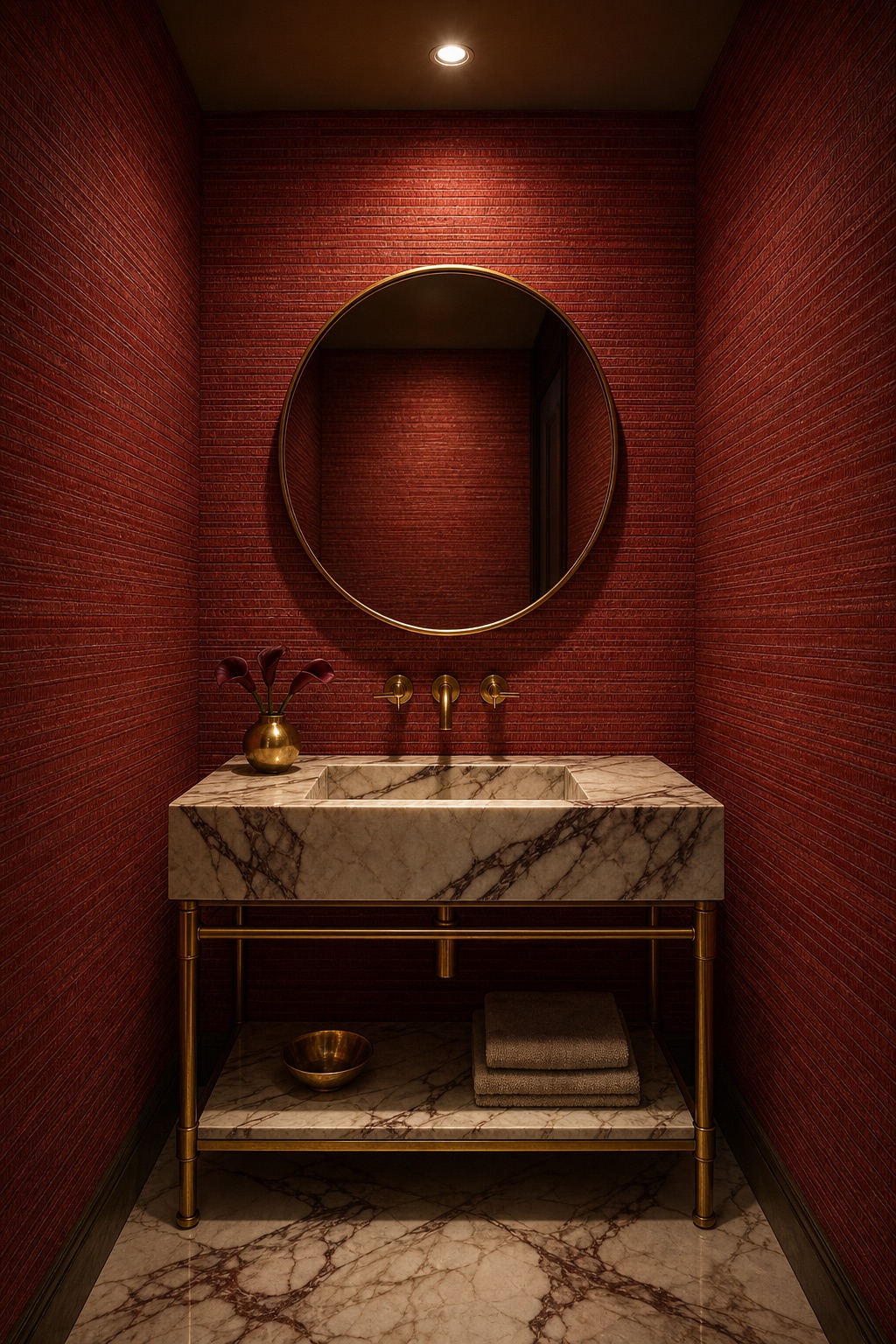
- Powder rooms reward a saturated wall, and the small scale keeps the roll count manageable for first-time trialling.
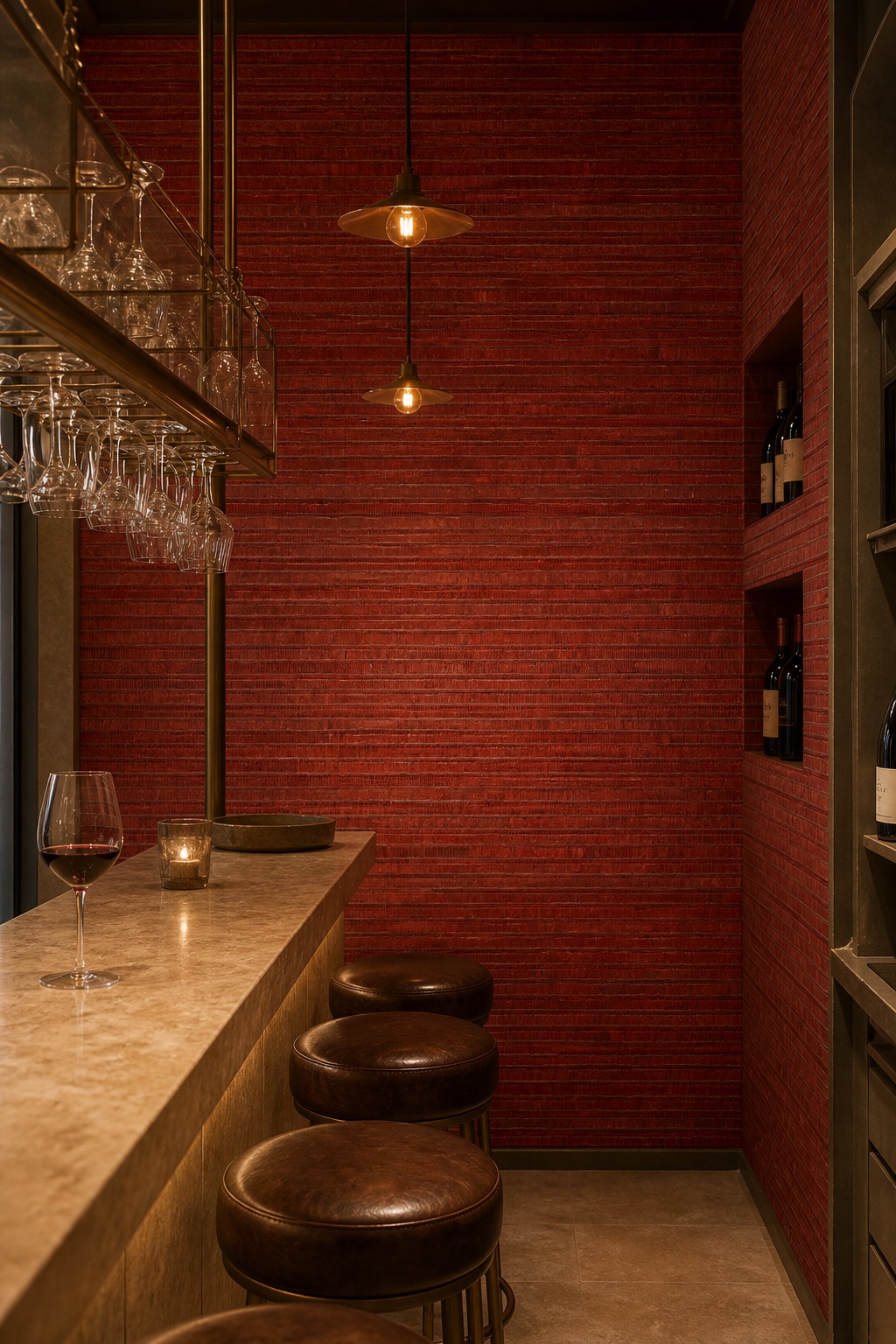
- Bar backs and lounge alcoves lit with pendant or cove lighting bring out the depth of the colour most effectively.
- Designers specifying north-facing rooms with exclusively cool daylight should request a physical sample and observe it on-site before confirming.
Terracotta has deep roots in hospitality design: it is enclosing, appetite-stimulating, and flattering under warm light, and this reed grasscloth wallpaper carries those qualities naturally. Full-height feature walls in restaurant dining rooms and private dining spaces are the most common application; the earthy richness anchors a scheme and gives the eye a surface to rest on between courses. Powder rooms work well because the intimacy of the space rewards a bold, saturated wall and the roll count stays manageable. Bar backs and lounge alcoves lit with pendant or cove lighting bring out the depth of the colour. Designers specifying north-facing rooms with exclusively cool daylight should request a physical sample and observe it on-site before confirming the specification.
Wabi-Sabi Clay and Organic-Modern Earth: Two Briefs This Reed Wallcovering Answers Naturally
- In wabi-sabi schemes, Ember Reed pairs with raw plaster, worn oak, and aged brass: materials sharing the language of imperfect, time-worn surfaces.
- Organic-modern briefs use the earthen tone as a grounding note; blackened steel, bouclé seating, and travertine all sit comfortably against this wall without competing.
- Against white trim or plaster ceilings, the colour carries confident presence; against warm neutrals (linen, natural oak, undyed cotton) it integrates and the room reads cohesive rather than statement-heavy.
- Terracotta is one of architecture's oldest wall colours; on a natural fibre surface it reads contemporary rather than heritage-referential.
- Love this weave but need your own hue? Our design studio engineers custom colourways, from a lighter dusty-clay to a deeper ochre-red, from your reference swatch or Pantone number.
Terracotta is one of architecture's oldest wall colours; this dyed reed grasscloth inherits that lineage and translates it into a contemporary material language. In wabi-sabi schemes, Ember Reed pairs naturally with raw plaster ceilings, worn oak joinery, and aged brass — materials that share the sensibility of imperfect, time-worn surfaces. Organic-modern briefs use the earthen tone as a grounding note: blackened steel, bouclé seating, and travertine all read comfortably against this wall without competing. Against white trim or plaster ceilings, the colour carries confident presence; against warm neutrals (linen, natural oak, undyed cotton) it integrates and the room reads cohesive rather than statement-heavy. Love this weave but need your own hue? Our design studio engineers custom colourways, from a lighter dusty-clay to a deeper ochre-red, from your reference swatch or Pantone number.
Why Batch Control Matters More for Saturated Pigments: Specifying Ember Reed Correctly
- Deeply saturated colours like this terracotta carry a higher batch-to-batch variation risk than pale neutrals; single dye-lot production is therefore essential for this colourway.
- Grasscloths supplies per-batch lot certificates with every order, giving specifiers documented traceability for phased or multi-room projects.
- Natural grasscloth seams are always visible; on a mid-value terracotta like this one, the seam rhythm reinforces the horizontal weave direction and reads as a deliberate textural element rather than a flaw.
- Reverse-hanging alternate drops softens any residual tonal variation between rolls, as with all dyed natural wallcoverings.
- For wall areas over 50 m², ordering a same-dye-lot buffer at the time of the original order is standard practice; the studio flags this recommendation at the proofing stage.
Deeply saturated colours like this terracotta carry a higher batch-to-batch variation risk than pale neutrals, because even a minor shift in dyeing time or temperature reads as a perceptible colour difference on the wall. Grasscloths addresses this through single dye-lot production: all rolls for a confirmed order are dyed in one batch and supplied with a per-batch lot certificate, giving specifiers documented traceability for phased or multi-room projects. Natural grasscloth seams are always visible; on a mid-value terracotta like this one, the seam rhythm reinforces the horizontal weave direction and reads as a deliberate textural element rather than an installation flaw. Reverse-hanging alternate drops softens residual tonal variation between rolls. For wall areas over 50 m², ordering a same-dye-lot buffer at the time of the original order is standard practice; the studio flags this at the proofing stage.
From Mood Board to Certified Roll: How Grasscloths Delivers Ember Reed to Specification
- Three full-time in-house designers at the Chengdu studio translate client references (Pantone codes, mood boards, architectural drawings) into production CAD for partner mills.
- The studio founder has worked in natural wallcovering since 2018; Ember Reed reflects accumulated knowledge of which dyeing processes hold saturated reed colours reliably through production.
- All specifications begin with a paid physical sample book, credited against the confirmed order.
- Custom colourway proofing is quoted individually and takes approximately one to two weeks; standard production runs four to six weeks after proof sign-off.
- Single dye-lot production and per-batch lot certificates are standard on every order; ocean freight is quoted separately and is at the buyer's account.
Grasscloths operates as a design studio and trading party, not a mill. Three full-time in-house designers at the Chengdu studio work between client references (mood boards, Pantone codes, paint chips, architectural drawings) and production briefs issued to partner mills. The studio's founder has worked in natural wallcovering since 2018, and Ember Reed reflects that accumulated knowledge of which dyeing processes hold saturated reed colours reliably through production and transit. Every specification begins with a paid physical sample book, credited against the confirmed order. Custom colourway proofing is quoted individually and takes approximately one to two weeks; standard production runs four to six weeks after proof sign-off, with specialty materials taking five to eight weeks. Single dye-lot production and per-batch lot certificates are standard on every order; ocean freight is quoted separately and is at the buyer's account.
Buying grasscloth for a project or a brand?
- Minimum order
- 50 rolls (about 250 m²) catalog · 100 rolls custom / private label
- Lead time
- 4–6 weeks standard · 5–8 weeks specialty, after sample approval and payment
- Terms
- EXW Chengdu · FOB, CIF, DDP on request
- Samples
- Free digital kit in 24 h · paid swatch pack, credited in full on your first order
- Reply
- Within 24 hours
Frequently asked
- Will terracotta grasscloth wallpaper fade in a room with direct sunlight?
- Deeply dyed natural fibres do fade with sustained UV exposure. Ember Reed performs best in rooms without prolonged direct sunlight, or where sheer window treatments filter the strongest UV hours. Our fading-prevention guide covers practical mitigation steps for designers specifying natural wallcoverings in high-light rooms: /guides/fading-prevention.
- How visible are seams on a deeply coloured reed wallcovering?
- Seams are always visible on natural grasscloth. On a mid-value terracotta, they read as part of the horizontal weave rhythm rather than as a defect. Reverse-hanging alternate drops and careful roll selection from a single dye lot minimise tonal discrepancy at seam lines; most specifiers and clients accept them as an inherent quality of the material.
- Is Ember Reed suitable for a restaurant or bar environment with humidity and heavy use?
- The reed fibre has moderate humidity tolerance and performs well on applied walls in climate-controlled hospitality environments. It is not recommended in direct-splash zones or over steam-generating equipment. Consistent air conditioning in restaurants and bars keeps the material stable in practice.
- Can I order Ember Reed in a lighter clay tone or a deeper burgundy colourway?
- Yes. Custom colourways are a core part of what the Grasscloths studio offers. Our designers work from a Pantone reference, paint chip, or mood-board image to engineer the target colour through partner mills. Details on the process and minimum quantities are in our custom colourway guide: /guides/custom-colorway.
- What are the minimum order quantities and payment terms for this wallpaper?
- Full commercial terms, including minimum order quantities by pattern type, payment terms, sample book credit, and freight options, are detailed on our process page: /process.