Sand Wide Reed Grasscloth Wallpaper
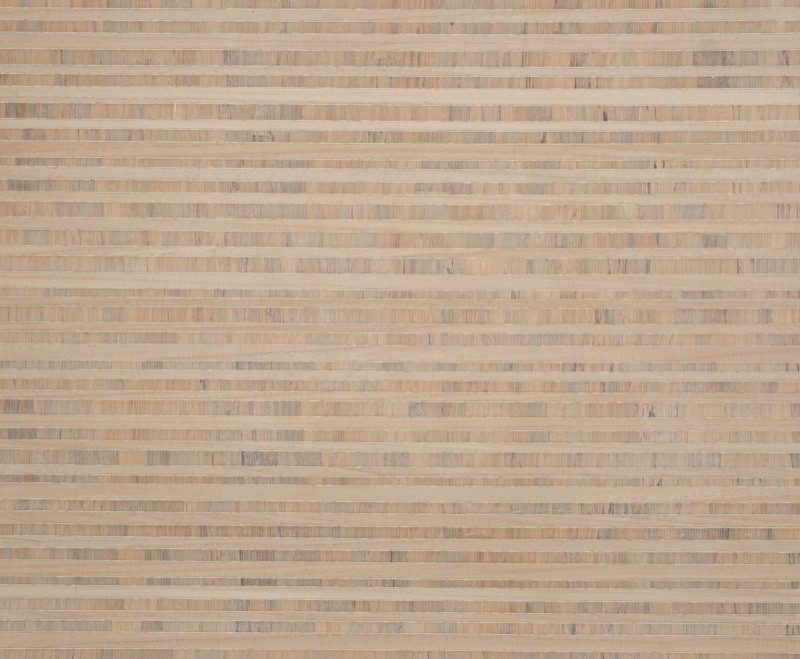
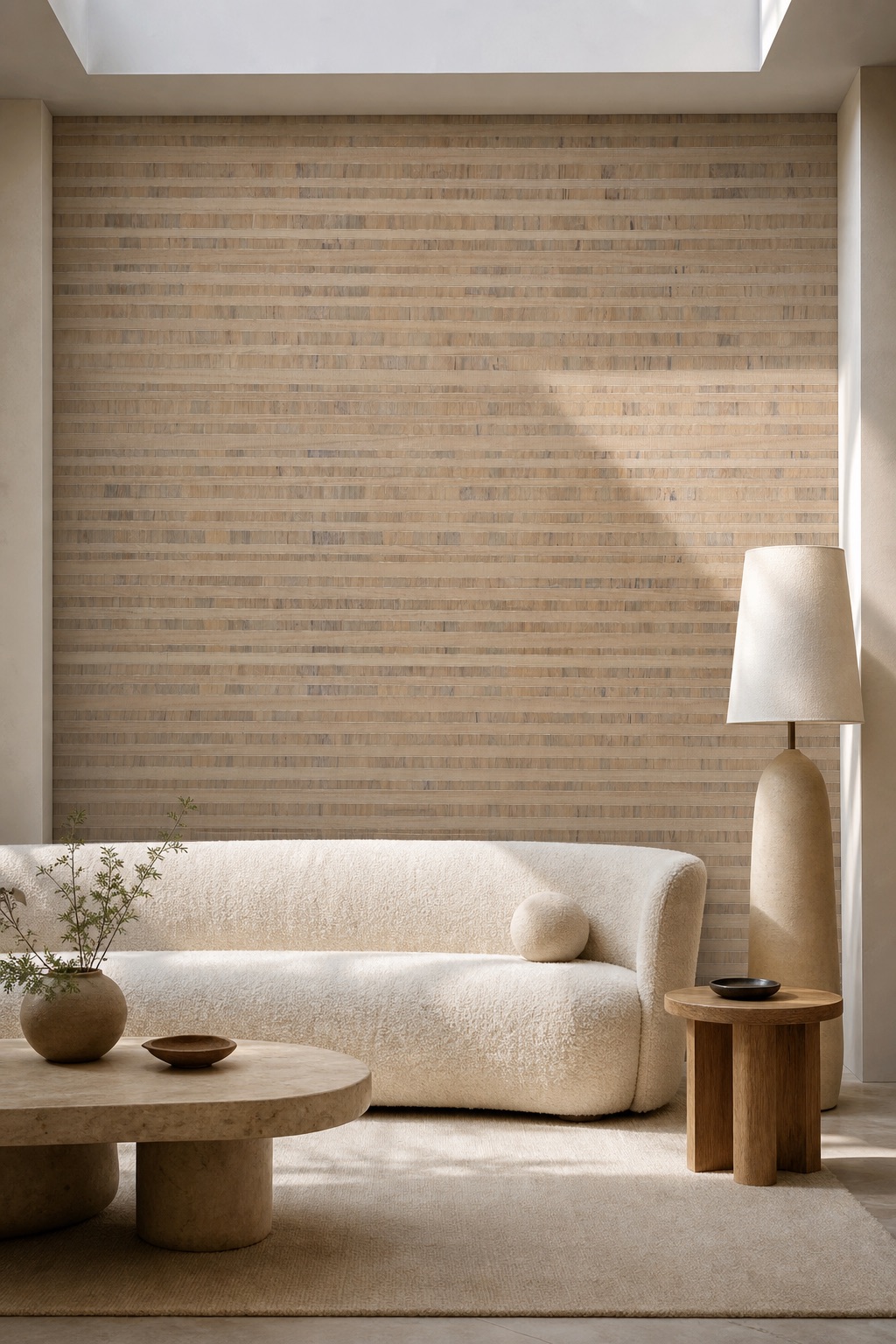
Shore Reed is a sand wide reed grasscloth wallpaper built on flat horizontal reed strips, their warm straw ground interrupted by fine grey-lavender weft threads that add quiet depth without disturbing the matte calm of the surface. The rhythmic horizontal banding comes from the material itself (no print, no embossing), so every length behaves slightly differently and every wall is genuinely one of a kind. Produced with our partner mills and supplied to designers and trade buyers from 50 rolls, it is a reliable organic neutral for japandi, wabi-sabi, and organic-modern interiors where surface authenticity matters.
The Wide Reed Band: How Flat Strips and Irregular Weft Build a Horizontal Surface
- Flat reed or rush strips are laid edge-to-edge horizontally, each band running the full 0.915 m roll width without interruption.
- Weft threads between the bands appear in a soft mix of grey-lavender and pale taupe, forming the subtle stripe through material structure rather than dye or print.
- Occasional darker fibre intrusions in the weft produce micro-variations that prevent the horizontal rhythm from reading as machine-regular.
- Texture scale is medium: the banding reads clearly from two to three metres and adds lateral visual cadence without competing with furnishings at close range.
- The surface is completely matte; it absorbs rather than reflects light, so the wall presents as tactile texture before it presents as colour.
The horizontal pattern in Shore Reed is entirely structural. Flat reed strips, each narrow and consistent in width, are bound together by an irregular weft of grey-lavender and pale taupe fibres that appear in the gaps between strips. Because the weft threads are natural and vary across the roll, no two sections are identical and no section reads as printed or machine-generated. At wall scale, the result is a subtle horizontal rhythm that adds visual weight and movement to a surface without competing with the furnishings placed in front of it.
Pale Straw and Grey Weft: How Shore Reed Reads from Morning to Evening
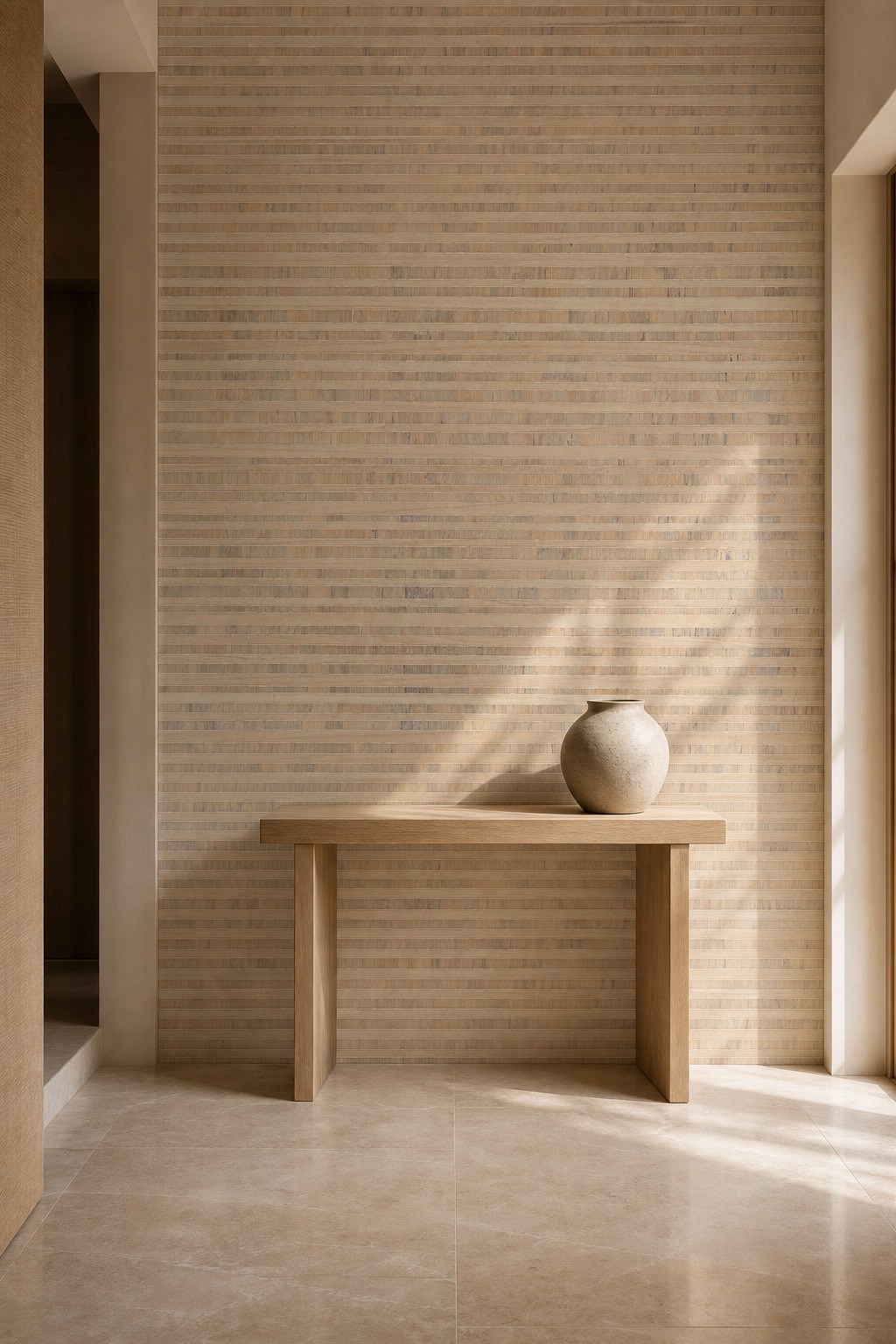
- The dominant warm sand and pale-straw base holds its warmth across most lighting conditions throughout the day.
- Raking light (low morning sun, side-on spotlights) catches the reed band edges, casting fine shadows that amplify horizontal relief.
- Diffuse midday light flattens the banding and brings the sand base forward as a clean, quiet neutral.
- In low-level evening lamplight, the grey-lavender weft threads recede and the warm straw tones read warmer still.
- North-facing rooms or consistently overcast conditions bring the grey weft more into play, shifting the overall read toward neutral; a physical sample observed in situ is the most reliable pre-specification check.
Shore Reed is not a fixed colour. The warm sand base and the grey-lavender weft threads are in constant negotiation depending on the direction, intensity, and colour temperature of the light reaching the wall. Under a bright morning window, the reed edges cast fine shadows that animate the horizontal banding; by evening lamplight, the surface settles into a uniform warm straw. Specifiers working with mixed or changing lighting conditions should request a physical sample and observe it at multiple times of day before confirming the colourway for production.
Hotel Suites, Spa Walls, and Living Rooms: Where Sand Wide Reed Grasscloth Wallpaper Performs
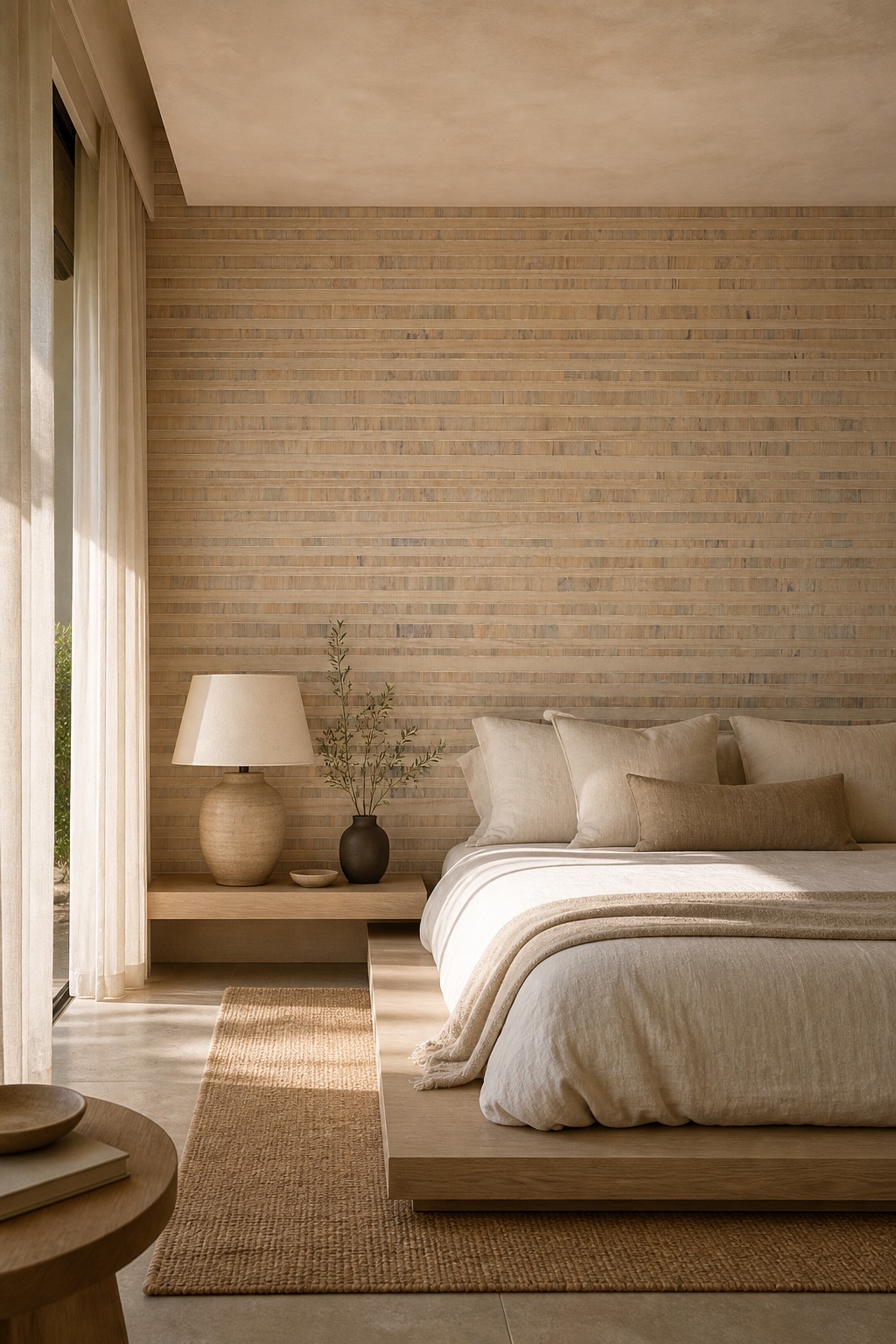
- Headwall and feature-wall applications in hotel rooms and suites: the horizontal banding adds visual width in narrow rooms without pattern overload.
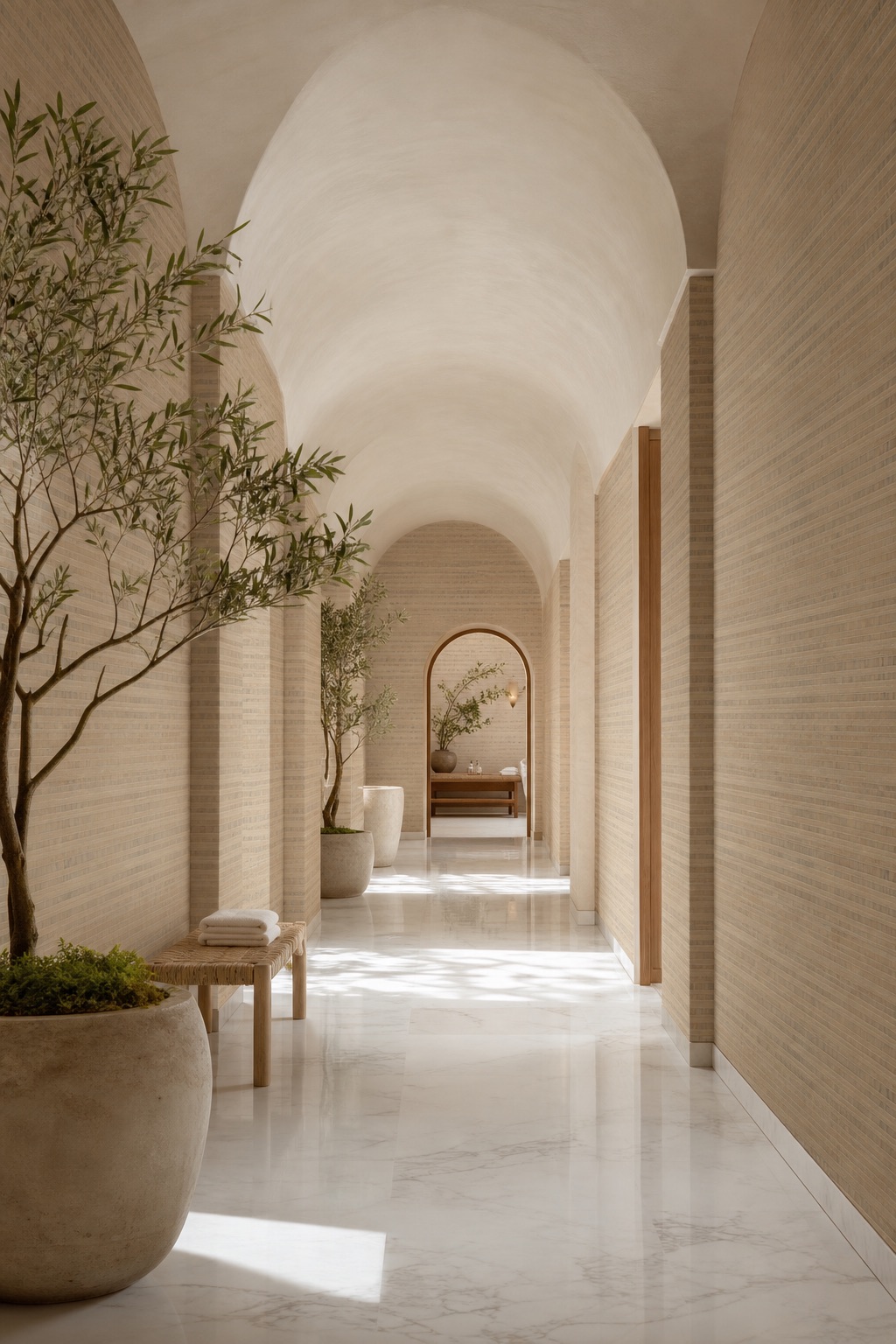
- Spa treatment areas and wellness corridors benefit from the fully matte, natural-material quality; the surface reads quiet and organic rather than clinical.
- Living rooms in japandi, wabi-sabi, or organic-modern directions: Shore Reed provides authentic surface texture where painted or synthetic-weave walls fall flat.
- Works at scale in hospitality corridors where directional lighting is carefully managed; raking light from wall-mounted fittings animates the texture as a considered design quality.
- Not suitable for direct water-splash zones such as shower enclosures or steam rooms; see the humidity-risks guide for full natural grasscloth installation guidance.
Sand wide reed grasscloth wallpaper reads as refined but unpretentious, a quality that translates across multiple application types. As a full-height hotel suite headwall it introduces lateral movement without drama; in a spa corridor or wellness room it adds biophilic warmth that hard-surface alternatives cannot replicate. For residential designers working with japandi or organic-modern briefs, Shore Reed provides the kind of authentic, touchable surface that distinguishes a considered interior from a merely stylish one.
Seam Registration in Horizontal Reed: What Installers Need to Plan For
- With any horizontal-band wallcovering, seam registration is more visible than with random-texture surfaces; adjacent drops must be hung so that reed bands align precisely at each seam line.
- The standard roll is 0.915 m wide by 5.5 m long (approximately 5 m² per roll); seam frequency on a full wall requires careful drop calculations before cutting begins.
- All rolls should be opened and band alignment checked before cutting; single dye-lot supply minimises between-roll colour variance, but slight natural material variation may still be present.
- Wall preparation must be smooth and primed to specification; the flat reed profile telegraphs surface irregularities that rougher textures would conceal.
- Reverse hanging is not required for this pattern but can help manage minor material variation across a roll set if variation is noted during pre-installation inspection.
Horizontal banding makes seam registration the central installation variable for Shore Reed. Because the eye follows the reed strips across the wall, any misalignment at a seam is immediately visible. Installers should establish a true horizontal reference line, confirm band alignment on the first drop, and maintain that registration across the full wall. Ordering all drops from a single production batch is the most reliable way to ensure band-to-band colour consistency; per-batch lot certificates are supplied with every order so that specification documentation is complete.
From Swatch to Certified Roll: How the Grasscloths Studio Works
- Physical sample books are available; confirmed orders receive credit against the sample cost (full commercial terms are set out on the process and pricing page).
- Custom colourway proofing takes approximately 1 to 2 weeks and is quoted up front; standard-material production follows at 4 to 6 weeks.
- Three in-house designers translate colour references, mood-board extracts, or existing palette specifications into production-ready CAD for partner-mill execution.
- Every order is produced as a single dye-lot; a per-batch lot certificate is issued with each shipment to support the buyer's own certification documentation.
- The studio's founder has worked in natural wallcovering supply since 2018; samples and full technical documentation are provided, while certification testing is carried out by the buyer as required for their project.
Every Shore Reed specification begins with a physical sample. Paid sample books are available and confirmed orders receive a credit against the sample cost (terms are covered in full on the process page). Custom colourway proofing takes approximately 1 to 2 weeks and is quoted up front, with production following at 4 to 6 weeks for standard natural materials. Love this weave but need your own colourway? Our design studio engineers custom colourways from your reference, translating mood-board extracts or paint-range specs into production-ready CAD. Each order ships as a single dye-lot with a per-batch lot certificate; we do not hold certifications ourselves, but we supply the documentation buyers need to carry the process forward.
Buying grasscloth for a project or a brand?
- Minimum order
- 50 rolls (about 250 m²) catalog · 100 rolls custom / private label
- Lead time
- 4–6 weeks standard · 5–8 weeks specialty, after sample approval and payment
- Terms
- EXW Chengdu · FOB, CIF, DDP on request
- Samples
- Free digital kit in 24 h · paid swatch pack, credited in full on your first order
- Reply
- Within 24 hours
Frequently asked
- Will the warm sand colour in Shore Reed fade if the wall receives direct sunlight?
- Natural reed fibres are susceptible to UV lightening over time. In rooms with prolonged direct sun exposure, UV-filtering window treatments slow the process considerably. Our fading-prevention guide for natural wallcoverings covers practical mitigation measures, including substrate and adhesive choices that affect long-term colour stability.
- The sample shows grey-lavender weft threads between the reed bands. Will those be as noticeable at full wall scale?
- At full wall scale the grey-lavender weft typically registers as a subtle secondary tone rather than a dominant stripe. The balance shifts with lighting angle: raking or side-on light amplifies the weft detail, while diffuse frontal light brings the warm sand base forward. Observing the physical sample in your intended lighting conditions before confirming production is the most reliable approach.
- Can Shore Reed be used in a hotel bathroom or spa treatment room where humidity is elevated?
- Shore Reed performs well in dry spa areas, hotel bathroom walls away from direct steam sources, and wellness corridors with controlled humidity. Direct water-splash zones and steam rooms are not suitable for natural reed wallcovering. Full installation and humidity guidance is covered in our humidity-risks guide for natural grasscloth.
- What is the minimum order for Shore Reed in a custom colourway, and how do lead times work?
- Custom colourways start from 50 rolls (approximately 250 m²); full lead times, proofing fees, and payment terms are set out on our process and FAQ page.