Sand Jute Wallpaper
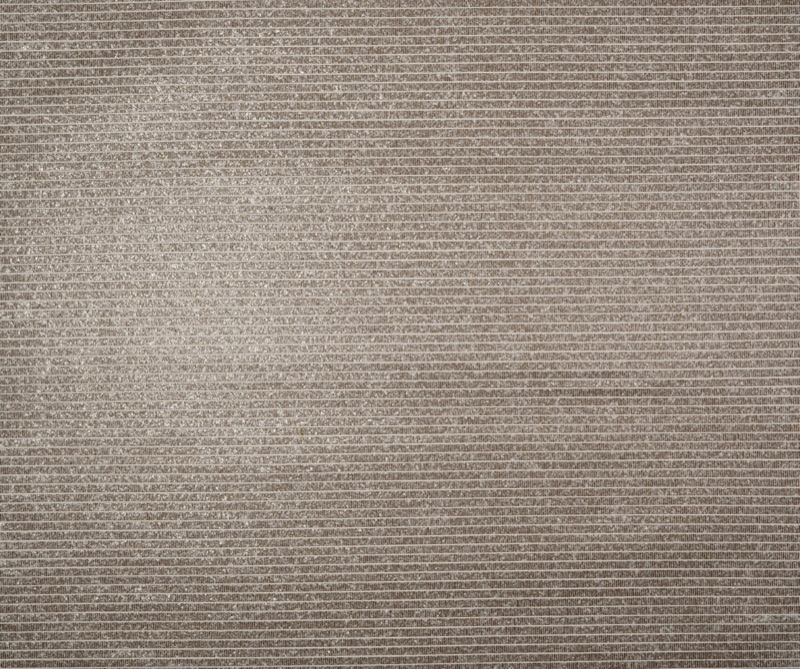
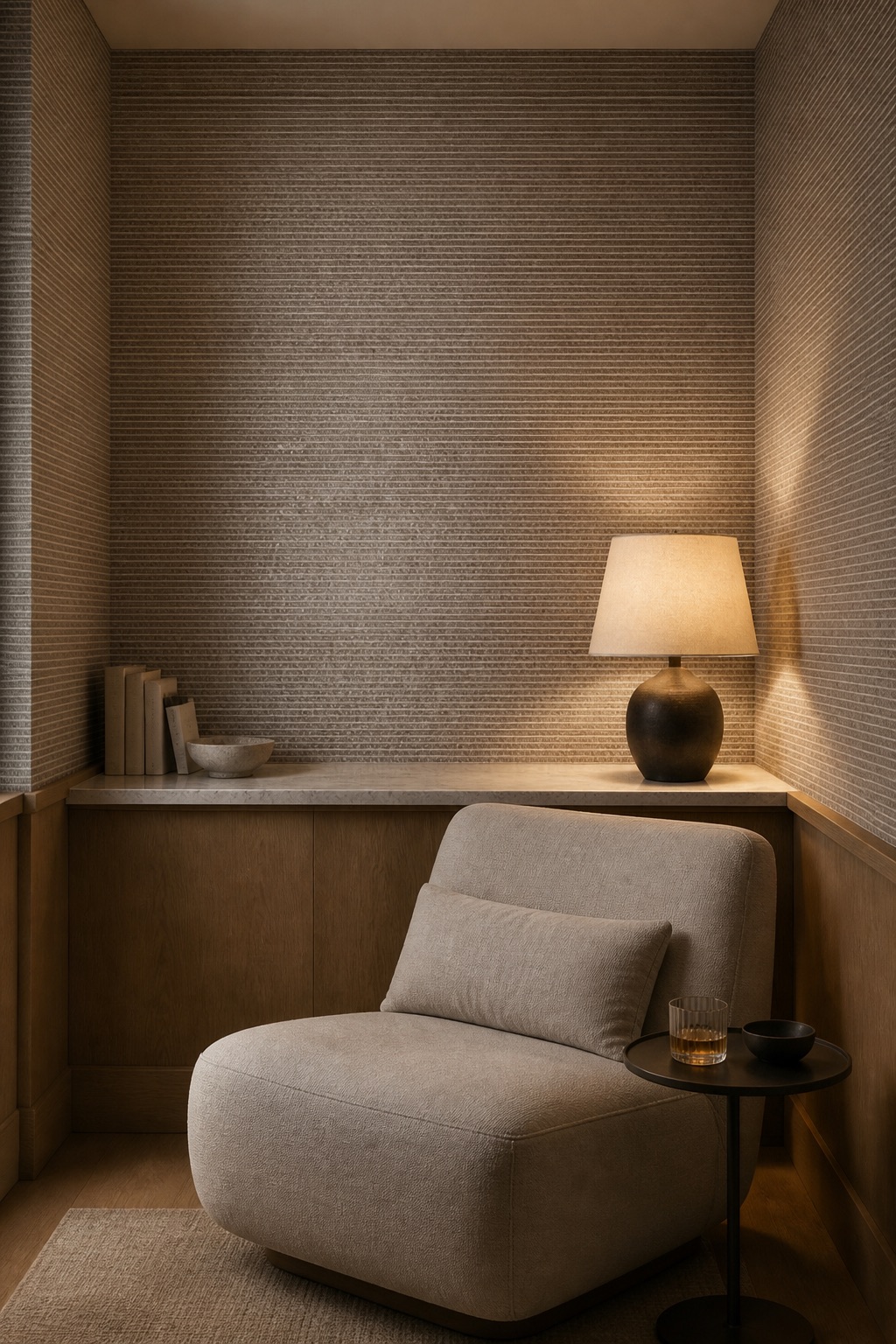
Sand Mist brings the quiet authority of sand jute wallpaper to a mid-value greige-taupe ground, its tight horizontal ribbing threaded with a diffuse silver shimmer that shifts as light moves across the wall. The warm undertone anchors rooms without weight, reading comfortably against plaster, travertine, and oak without competing with any of them. Produced with our partner mills and supplied to interior designers, hospitality buyers, and trade importers from 50 rolls, it suits commissions where texture must speak quietly and batch consistency must be documented.
Silver Drift in a Sand Ground: How the Shimmer Moves Across This Jute Wallpaper
- The shimmer is diffuse rather than specular: it reads as a soft glow drifting across the mid-tone field, not as a reflective metallic surface.
- Under raking daylight or an oblique track spot, the silver component reads more distinctly and briefly brightens the warm ground.
- In even or diffuse light (north-facing rooms, corridors), the shimmer recedes and the warm greige-taupe dominates, settling into a plain warm neutral.
- The shimmer effect is consistent across the full roll because it is inherent in the weave structure, not applied as a surface coating.
- No glare; the surface remains matte-adjacent at most viewing angles, making it appropriate for rooms where screen or artwork glare is a concern.
The most distinctive quality of Sand Mist is the way a faint silver shimmer drifts across the woven surface, appearing and retreating as light changes direction. This is not an applied finish; it is a quality of the weave itself, so the effect is uniform across every roll from the same batch. Under a strong oblique light, the wall reads as faintly luminous. In an even north-facing space, it settles into a quiet warm ground. Specifiers working on rooms with variable lighting conditions (morning daylight on one wall, pendant lamps on another) will find Sand Mist adapts without contradiction.
Tight Horizontal Rib at Wall Scale: What This Fine-Woven Jute Texture Delivers
- The ribbing runs in fine, closely spaced horizontal rows, visible at arm's length but not assertive at room distance.
- At 3 to 4 metres, the texture reads as a warm unified field with subtly layered depth, more tactile than graphic.
- Fine texture scale means the wallcovering works on narrow walls and full rooms alike, without the prominent banding effect of wider reed constructions.
- Natural fibre variation in strand thickness adds micro-irregularity that prevents the surface from reading as flat or machine-printed.
- The horizontal register gently elongates a room's perceived width, a practical benefit in spaces where ceiling height is moderate.
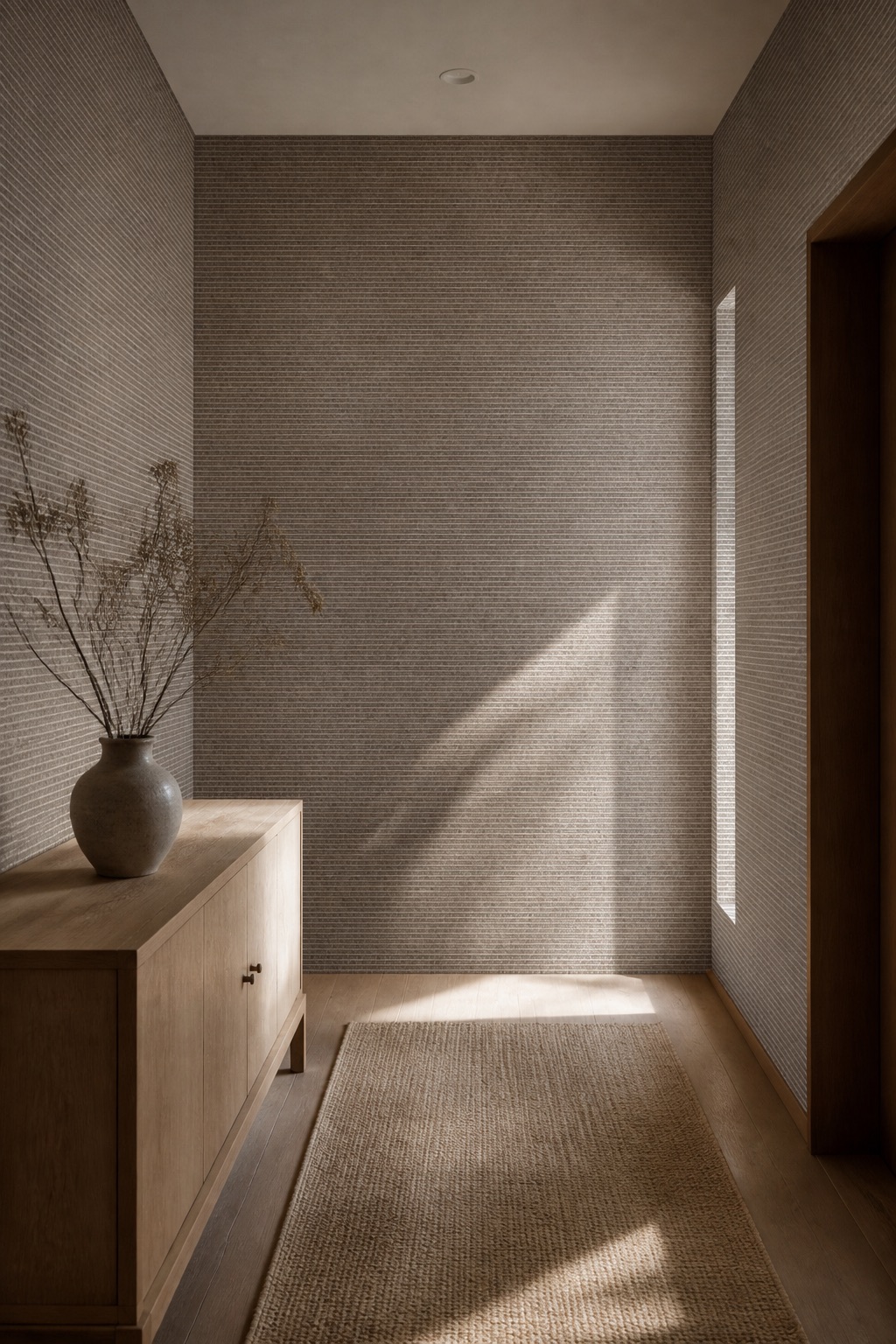
At close range, Sand Mist reveals a tight horizontal ribbing of natural jute strands, each row carrying slight variation in the way hand-processed fibres do — a quality that separates it from any printed texture simulation. Step back to room distance and the ribbing softens into a warm continuous field, the surface animated by micro-variation rather than pattern. This fine scale gives specifiers flexibility: it reads coherently on a narrow entrance wall without dominating, and across a full bedroom feature wall without monotony. The horizontal register also gently elongates the perceived width of a room, a practical effect when ceiling height is moderate.
Living Rooms, Hotel Suites, and Dining Walls: Where Sand Jute Wallpaper Performs
- Living rooms: the warm neutral and fine texture create a backdrop that recedes from furniture while adding depth that paint cannot replicate.
- Hotel suites: mid-value greige is a common hospitality brief; natural-fibre texture adds tactile value guests register; single dye-lot supply supports multi-room roll-outs.
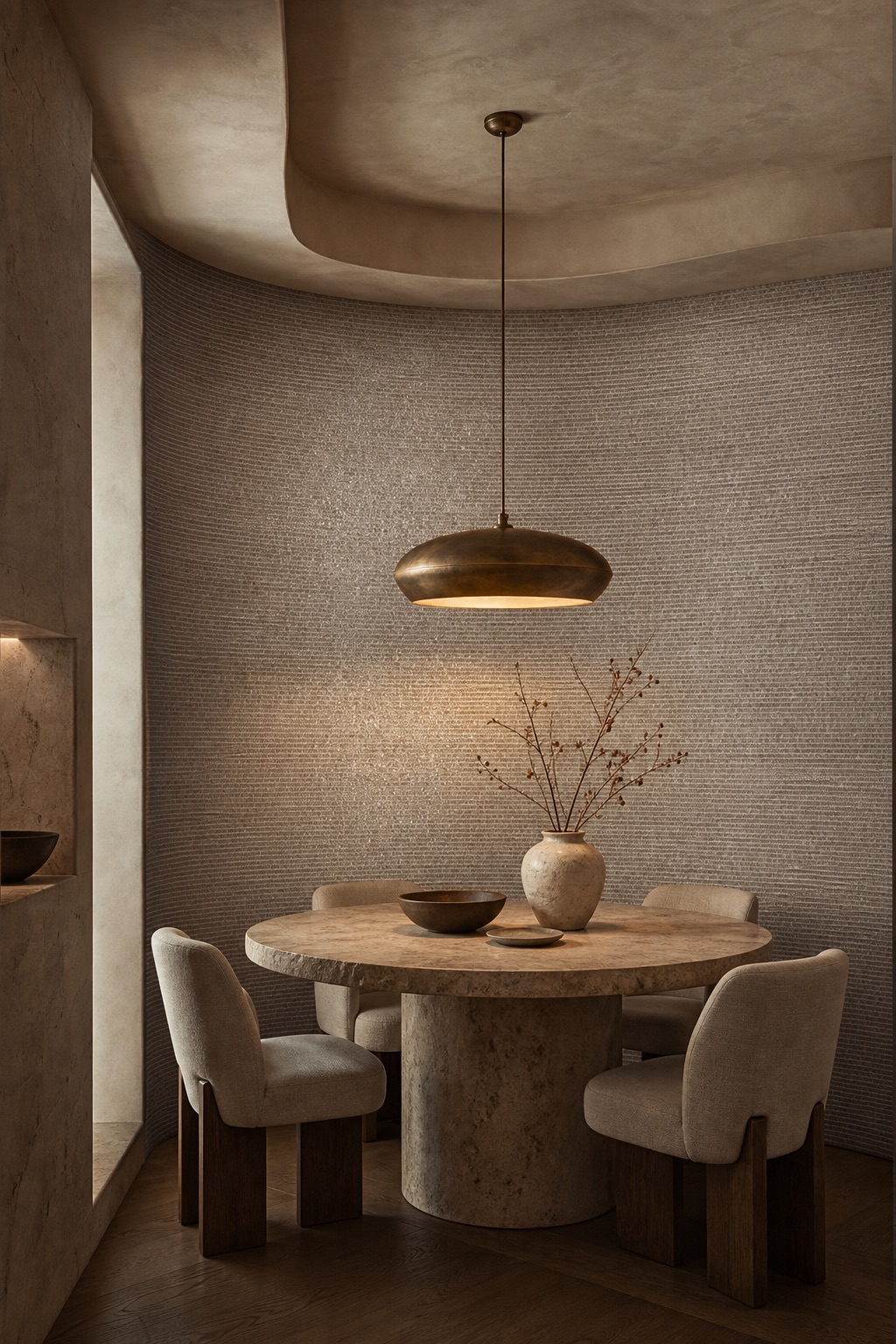
- Dining rooms and alcoves: the silver shimmer catches pendant and candlelight, adding low-level animation to an evening setting.
- Bedrooms: the matte-dominant surface is restful; the texture adds interest without visual stimulation.
- Entrance halls and corridors: fine horizontal rib handles minor substrate irregularities better than smooth papers; warm undertone is welcoming on arrival.
Sand jute wallpaper finds its widest use in rooms that need a textured neutral backdrop, warm enough to feel residential and consistent enough to pass a hospitality specification. In living rooms and hotel suites, the fine rib reads as intentional craftsmanship, receding behind furniture while holding the room's character. In dining settings, the diffuse silver shimmer earns its place under pendant or candlelight, where it contributes a quiet luminosity without demanding attention. Bedrooms and entrance halls benefit equally: the matte ground is restful; the natural-fibre variation is enough texture to justify the wallcovering over paint. Love this weave but need your own colour or scale? Our design studio engineers custom colourways from your reference; ask for a proof when you request your sample book.
Warm Greige Through the Day: Reading Sand Mist's Undertone Against Different Light Sources
- Primary colour is warm greige-taupe: a mid-value tone that bridges beige and grey without committing firmly to either.
- Under warm incandescent or warm LED light (2700–3000K), the beige component strengthens and the tone reads closer to sand.
- Under cooler daylight or north-facing natural light, the grey component comes forward and the surface reads as taupe-grey.
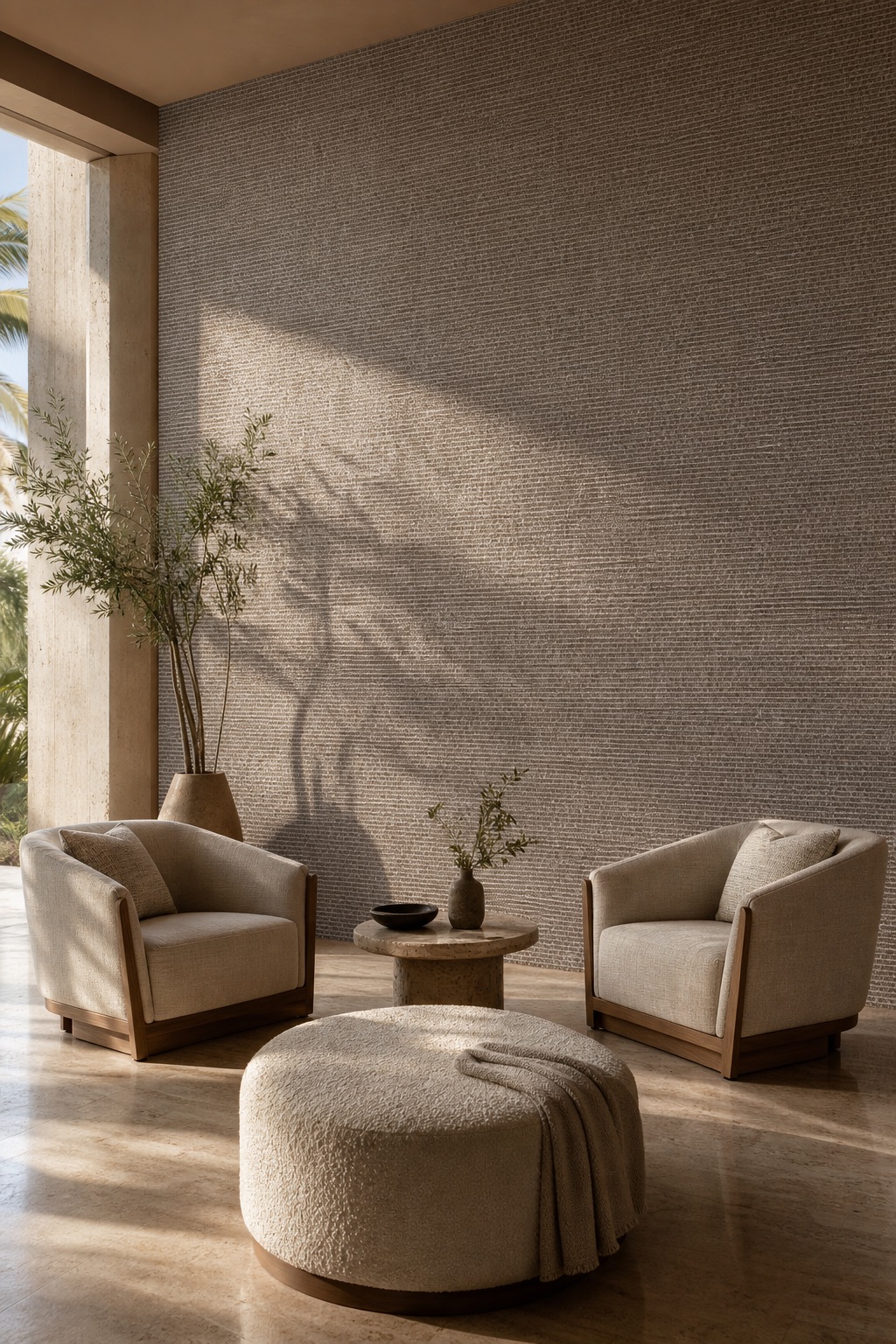
- Companion palette: travertine, raw linen, unfinished oak, dry plaster — all share warm neutrality and let Sand Mist anchor the scheme.
- Works against darker accents (blackened steel, dark oak, charcoal upholstery) without losing its warmth.
- Mid-value tone means it neither significantly brightens a dark room nor darkens a light one, a reliable baseline for multi-surface schemes.
Sand Mist occupies the calm mid-register between warm beige and cool taupe, shifting perceptibly depending on light source. Under warm filament-style LEDs, the sandy component rises and the wall reads as soft caramel-greige. On a bright overcast morning, the undertone shifts slightly towards warm grey (still approachable, never cold). This dual behaviour is an asset in multi-light spaces such as hotel suites and open-plan living rooms, where the wall must hold through different hours and moods. Travertine, raw linen, unfinished oak, and dry plaster are natural companions; blackened steel or dark oak provide contrast without conflict.
Sample Approval, Paid Proofing, and Batch Documentation: The Studio Process Behind Sand Mist
- Physical sample books are available for trade clients; the cost is credited against a confirmed order (up to 10% of order value).
- Custom colourways are quoted as paid proofing before any production commitment; proofing typically takes 1–2 weeks.
- Three full-time in-house designers work from a buyer's reference (paint code, fabric swatch, stone sample) and translate it into factory-ready CAD.
- Production runs on a single dye-lot per order; each batch is accompanied by a lot certificate for traceability.
- Standard production lead time is 4–6 weeks; ocean freight is separate and at buyer's cost; FOB, CIF, and DDP terms available.
- Our founder has worked in natural wallcovering since 2018; partner mills are sourced relationships developed over multiple seasons, not spot buys.
Every Sand Mist order begins with a physical sample (not a digital render), so specifiers can confirm the shimmer and greige tone under their actual project lighting before committing. Sample books carry a cost credited against your confirmed order. If the standard colourway does not match your brief, our three in-house designers work from your reference (a paint code, a fabric, a stone sample) and translate it into factory-ready CAD before any production is committed. Orders proceed on the terms confirmed on the pro-forma invoice, production runs on a single dye-lot with a lot certificate supplied per batch, and standard lead time is 4–6 weeks from approval. Our founder has worked in natural wallcovering since 2018, and our partner mills are sourced relationships developed over multiple seasons, providing the consistency your project specification depends on.
Buying grasscloth for a project or a brand?
- Minimum order
- 50 rolls (about 250 m²) catalog · 100 rolls custom / private label
- Lead time
- 4–6 weeks standard · 5–8 weeks specialty, after sample approval and payment
- Terms
- EXW Chengdu · FOB, CIF, DDP on request
- Samples
- Free digital kit in 24 h · paid swatch pack, credited in full on your first order
- Reply
- Within 24 hours
Frequently asked
- Will the silver shimmer in Sand Mist fade over time, particularly near windows?
- The shimmer is structural to the weave rather than applied as a surface coating, so it does not fade or flake independently. Standard grasscloth UV caution applies: direct prolonged sun on natural fibre can shift the ground colour over years. Our fading prevention guide covers specification advice on window orientation and blind selection.
- How visible are seams on a fine horizontal-rib jute wallcovering?
- Fine horizontal ribbing is among the more forgiving grasscloth constructions for seam management: the regular horizontal register draws the eye across the wall rather than toward joins. A reverse-hang approach (alternating the direction of successive rolls) further softens seam contrast in the greige-taupe field. We provide installation guidance with every trade order.
- Is Sand Mist appropriate for humid environments such as bathrooms or coastal properties?
- Natural jute fibres are moisture-sensitive: sustained high humidity can cause dimensional shift and promotes mould risk. Sand Mist is well suited to climate-controlled interiors (living rooms, bedrooms, hotel suites) but we do not recommend it for uncontrolled-humidity spaces or exterior-adjacent walls in coastal climates without adequate continuous ventilation.
- Does Sand Mist suit a Japandi or organic-modern design brief?
- Yes. The silver shimmer and fine horizontal structure lift Sand Mist above a purely earthy register, while the warm greige-taupe keeps it from reading as cool or industrial. It pairs consistently with the plaster, linen, and travertine palette common to both Japandi and organic-modern briefs.
- What is the minimum order quantity, and how does a first trade order work?
- Custom colourways begin at 50 rolls; stock patterns carry a lower minimum for trial orders. Full detail on MOQ, proofing fees, payment terms, and lead times is on our process and pricing page.