Sand Grasscloth Wallpaper
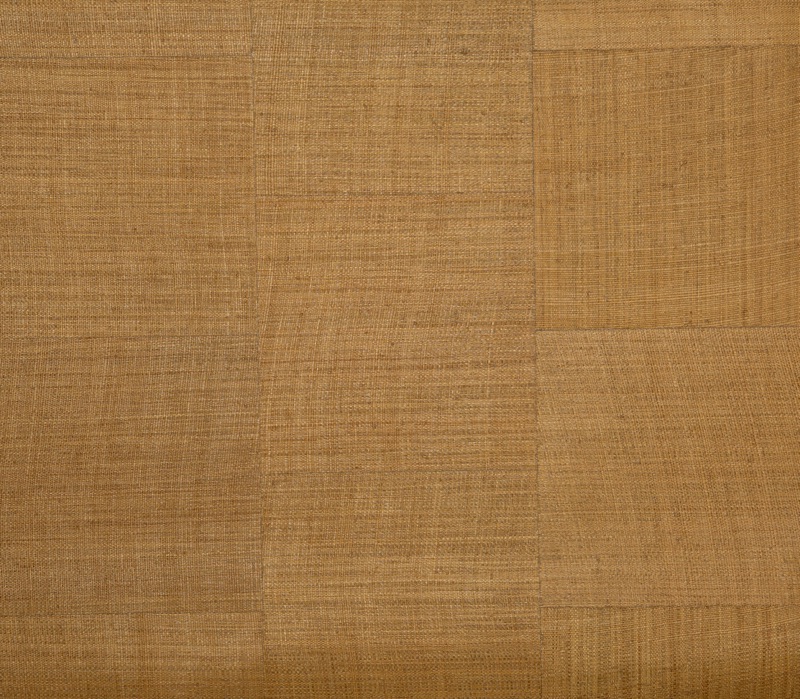
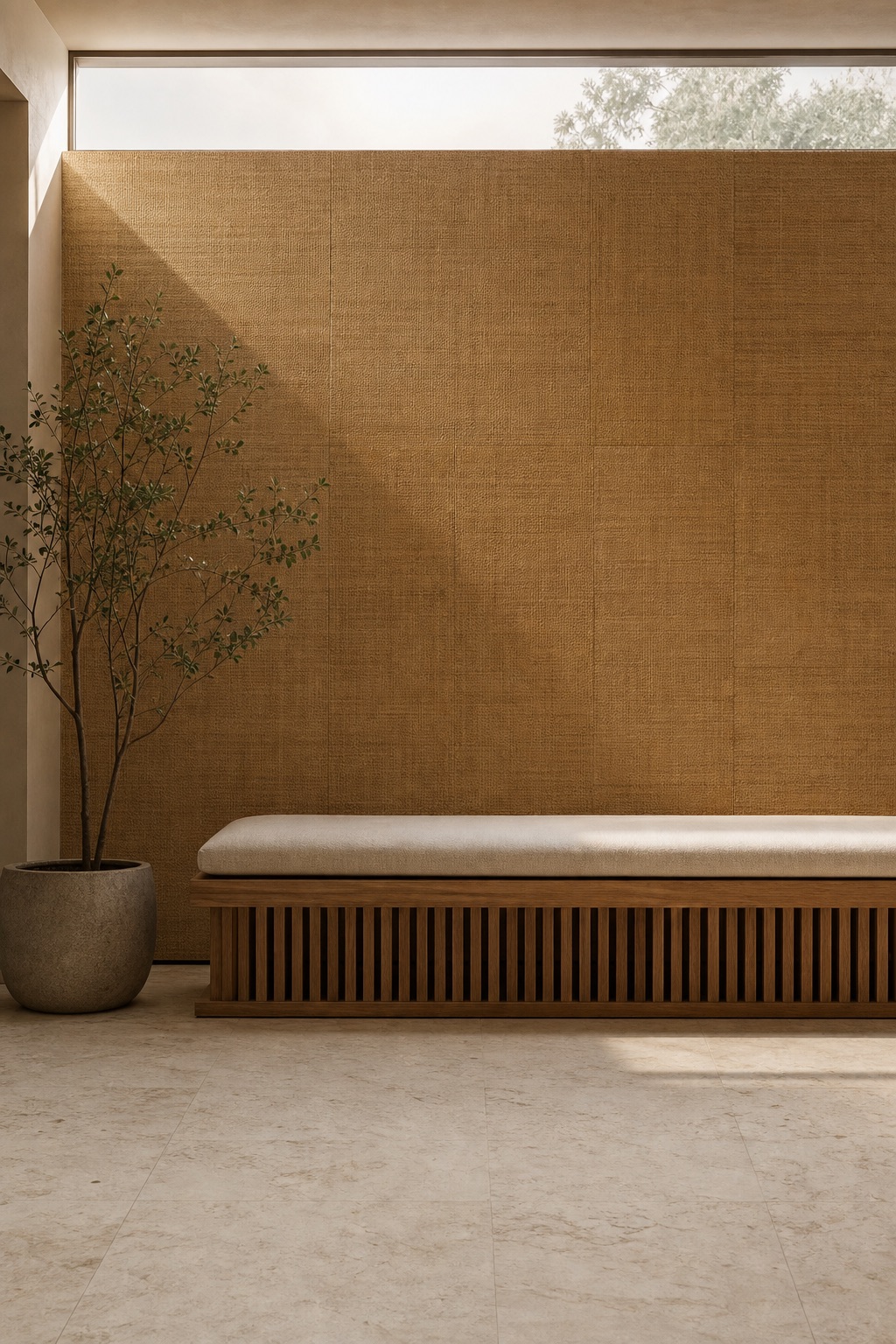
Amber Parquet is a medium-gauge grasscloth in warm honey-tan, woven in rectangular blocks with each panel's warp set perpendicular to its neighbour, producing a quiet parquet grid that appears and softens as the light shifts. This sand grasscloth wallpaper is supplied to interior designers and trade buyers from 50 rolls, making it a workable specification for feature walls, full-room wraps, and hospitality guestroom programmes. The tone sits at the centre of the beige-tan family: warm enough for northern exposures, restrained enough to anchor a full wall without competing with furniture or art.
The Parquet Effect: How Alternating Warp Blocks Generate Pattern Without a Single Printed Line
- Pattern comes entirely from weave structure: adjacent rectangular blocks have their warp threads set at 90 degrees to each other, with no printing, embossing, or additional dye involved.
- Under raking or directional light, opposing grain orientations catch and deflect differently, producing a visible tonal grid across the wall surface.
- Under diffused or overhead light, the grid quiets and the wall reads as a unified warm field.
- The matte surface finish absorbs rather than reflects light, so texture reads as depth rather than sheen.
- Because colour and pattern are structurally independent, a custom colourway can change the wall tone without altering the parquet geometry.
The parquet effect on Amber Parquet is entirely structural: each rectangular woven block has its warp threads oriented perpendicular to those of its neighbour, with no printing, embossing, or additional dye involved. Under raking or directional light, opposing grain directions catch and deflect differently, producing a visible grid of gentle tonal contrast across the full wall. Under diffused or overhead light, the grid quiets and the surface reads as a single warm field. Because colour and pattern are structurally independent, a custom colourway can change the wall tone without altering the parquet geometry.
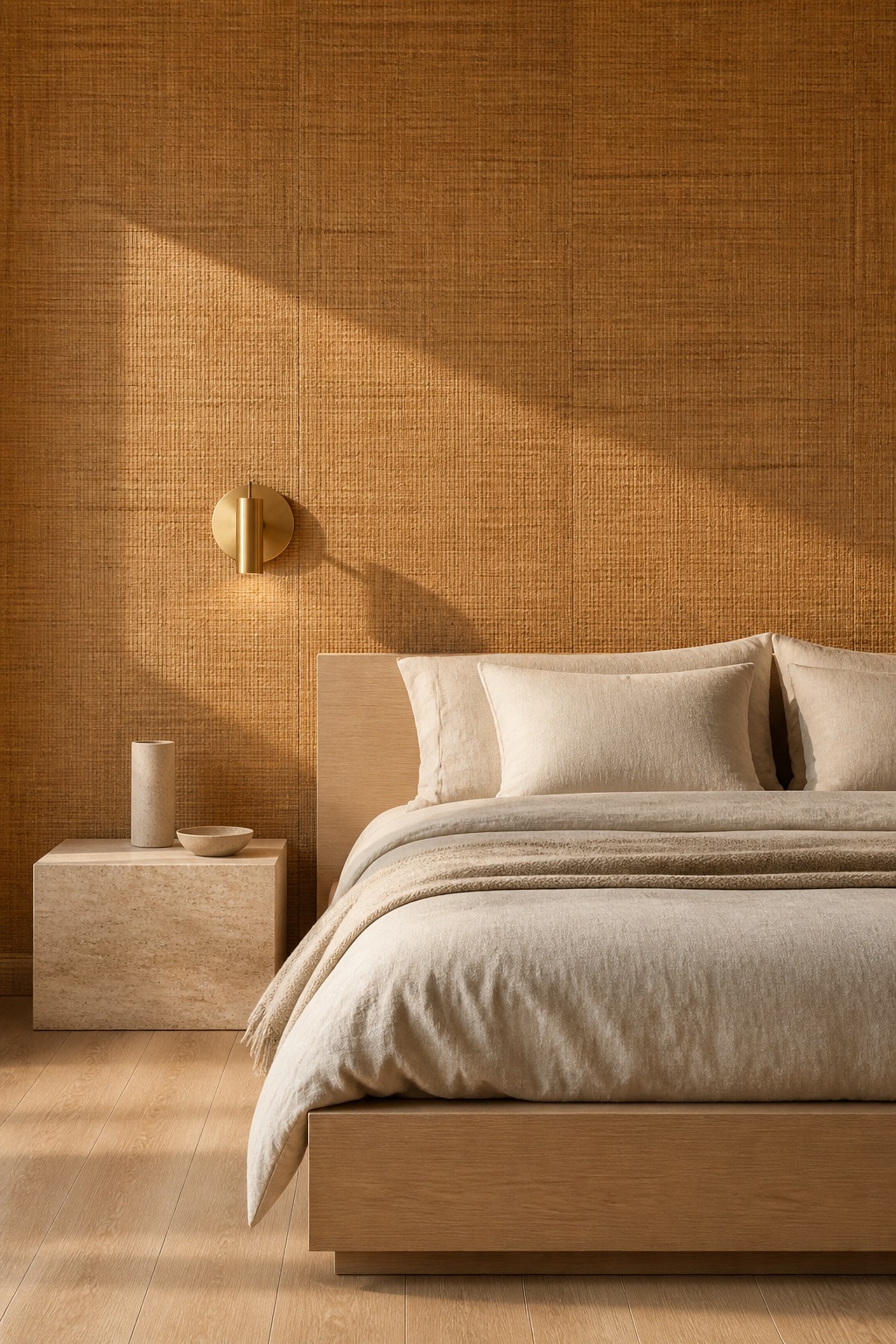
Honey-Tan Against Stone, Timber, and Warm Metal: Companion Materials for Amber Parquet
- Travertine, warm limestone, and pale or bleached oak share the same warm-neutral register and sit naturally alongside the honey-amber tone.
- Brass and unlacquered bronze in lighting fixtures or hardware reflect the amber frequencies in the weave, building material coherence without obvious colour-matching.
- Linen and undyed cotton upholstery read as a lighter ground, against which the grasscloth appears deeper and more structured.
- Cool-toned stones such as grey marble create intentional contrast rather than tonal harmony, a useful compositional choice in high-contrast schemes.
- Matte plaster and off-white limewash on adjacent walls or ceilings amplify the weave's warmth without adding a competing texture.
The honey-amber undertone in Amber Parquet responds well to travertine, warm limestone, and pale or bleached oak, all of which share the same warm-neutral register without competing. Against linen or undyed cotton upholstery, the grasscloth reads as a slightly deeper, more structured ground. Brass and unlacquered bronze in lighting or hardware reflect the amber frequencies in the weave, creating material coherence without obvious colour-matching. If contrast is the intent, cool-toned grey marble creates a considered tension rather than harmony. Matte plaster and off-white limewash on adjacent walls amplify the grasscloth's warmth without adding competing texture.
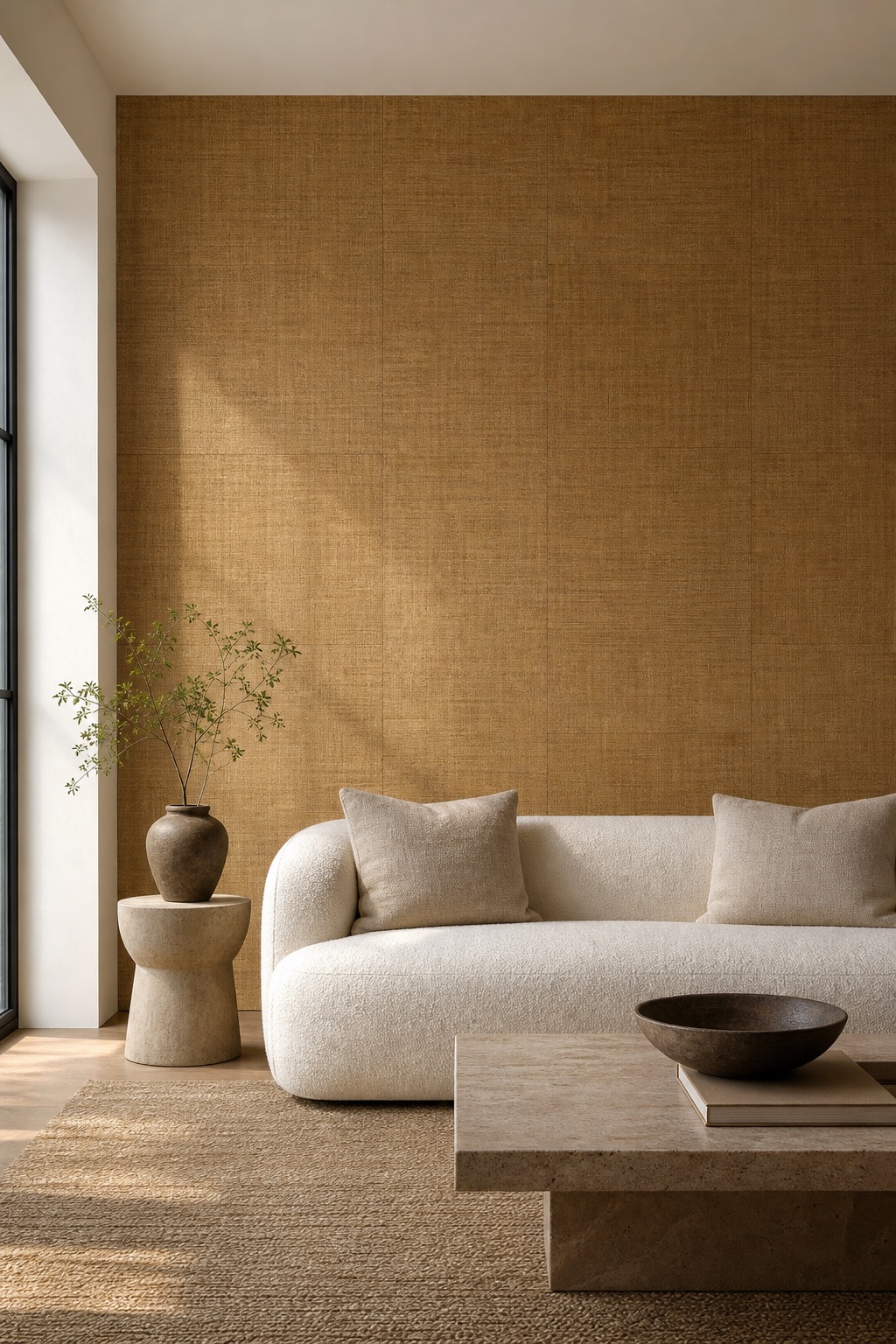
Hotel Guestrooms to Residential Living Spaces: Specifying Sand Grasscloth Wallpaper
- In hotel guestrooms and suites, sand grasscloth wallpaper delivers neutral warmth that reads consistently under both artificial lighting and daylight photography.
- On a residential feature wall behind a bed or seating arrangement, the parquet block pattern adds architectural interest without the visual commitment of a printed graphic.
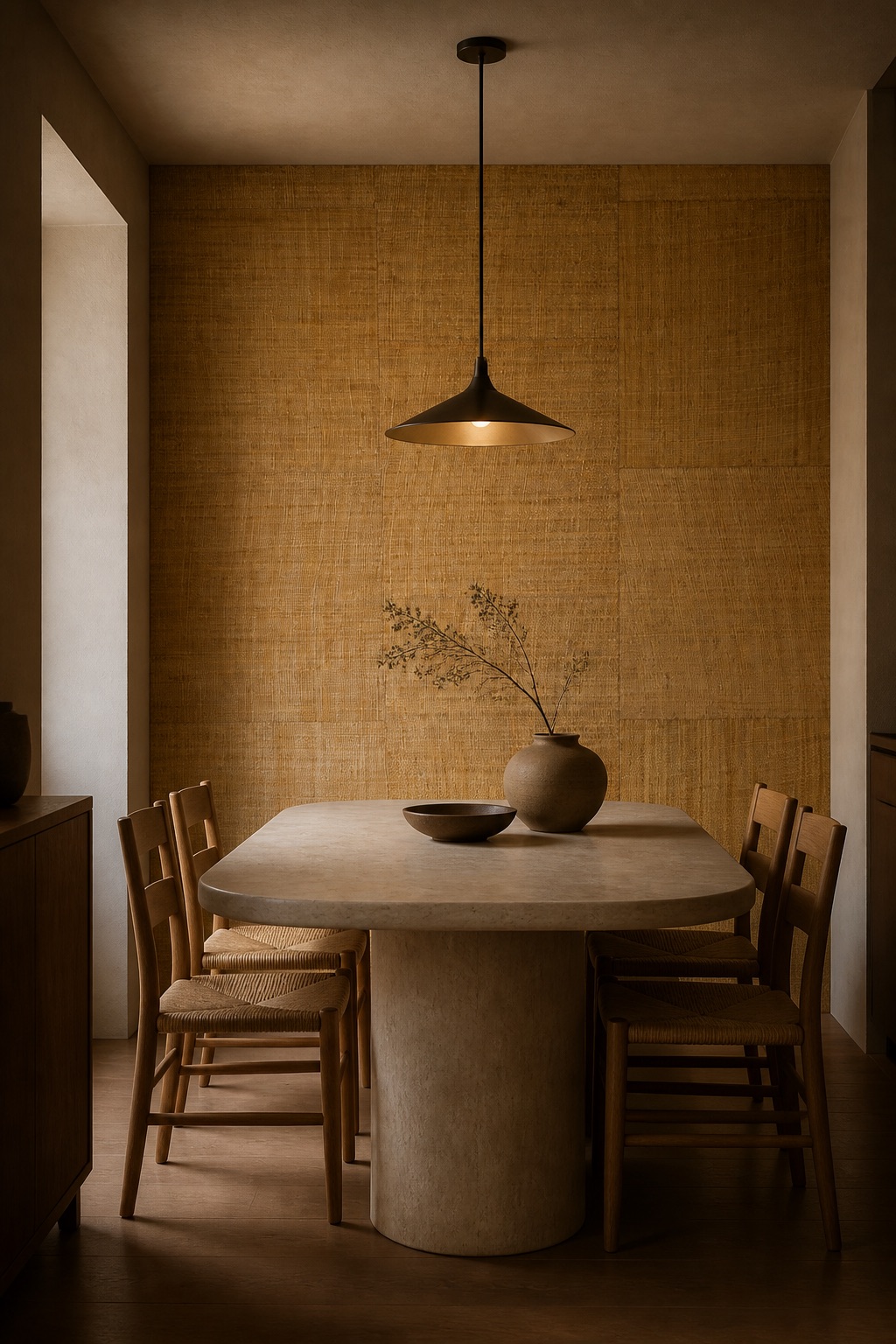
- Full-room wrap applications work particularly well in bedrooms and private dining areas, where enclosure and warmth are primary objectives.
- Roll format is 0.915 m wide by 5.5 m long, covering approximately 5 m² per roll; precise roll quantity calculation before ordering avoids dye-lot discrepancies mid-project.
- Appropriate for conditioned interiors within normal ambient humidity; persistent moisture or steam environments are not suitable for natural grasscloth.
In hospitality, sand grasscloth wallpaper delivers the neutral warmth that reads consistently under both artificial lighting and daylight photography, making it a reliable specification for hotel guestrooms and suites. On a residential feature wall, the parquet block pattern adds quiet architectural interest without the visual commitment of a printed or graphic design. Full-room wraps are particularly effective in bedrooms and private dining areas, where texture creates enclosure. Each roll covers approximately 5 m², and precise roll calculation before ordering avoids dye-lot discrepancies mid-project. This material is suitable for conditioned interiors with normal ambient humidity; bathrooms and steam rooms are not appropriate environments.
Three Designers, One Dye Lot: The Studio Process Behind Every Amber Parquet Order
- The process begins with a paid sample book, credited against the eventual order, allowing specifiers to assess the material under project lighting conditions.
- Three in-house designers are available for reference matching, CAD-based colour briefs, and partner-mill liaison throughout the project.
- A paid proof is produced in approximately 1 to 2 weeks before any production commitment; the cost is quoted up front.
- Standard grasscloth production runs 4 to 6 weeks from payment; ocean freight is separate and at the buyer's cost.
- Every batch ships with a per-batch lot certificate, ensuring colour traceability across all rolls in a confirmed order.
- The studio's founder has been working in natural wallcovering since 2018, partnering with 1 to 3 specialist mills.
A paid sample book comes first, its cost credited against the eventual order, giving specifiers the opportunity to assess Amber Parquet under actual project lighting before committing. Three in-house designers are available throughout the process for reference matching, CAD-based colour briefs, and mill liaison. Once a sample is approved, a paid proof is produced in approximately 1 to 2 weeks (quoted up front) before any production run begins. Standard grasscloth materials go into production within 4 to 6 weeks of payment, with ocean freight quoted separately and at the buyer's cost. Every batch ships with a lot certificate, and single dye-lot supply ensures colour consistency across all rolls in the confirmed order.
Working With Our Design Team to Adjust Tone or Scale on the Parquet Block Structure
- Custom colourways on this parquet block structure require a minimum of 50 rolls (approximately 250 m²).
- A physical shade card or material sample from the buyer is the preferred starting point for colour matching.
- A paid proof is produced before any production run, with its cost quoted up front alongside the production estimate.
- Block scale and proportion can be explored with the design team as part of a custom brief, subject to mill capability confirmation.
Love this weave but need your own colour or scale? Our design studio engineers custom colourways from your reference, working from a physical shade card or material sample you provide. Custom orders on the parquet block structure start at 50 rolls (approximately 250 m²) and proceed through a paid proof before any production run begins. Block scale and proportion can be explored as part of a custom brief, subject to confirmation with our partner mills. The full process is outlined in our custom colourway guide.
Buying grasscloth for a project or a brand?
- Minimum order
- 50 rolls (about 250 m²) catalog · 100 rolls custom / private label
- Lead time
- 4–6 weeks standard · 5–8 weeks specialty, after sample approval and payment
- Terms
- EXW Chengdu · FOB, CIF, DDP on request
- Samples
- Free digital kit in 24 h · paid swatch pack, credited in full on your first order
- Reply
- Within 24 hours
Frequently asked
- Will the honey-tan tone in Amber Parquet shift noticeably in a south-facing room with strong direct sunlight?
- Natural grasscloth fibres can develop a slightly cooler, more muted patina under sustained direct sunlight over time. UV-filtering window treatments significantly slow this process. For a full assessment of fading risk in natural wallcovering, see our guide at /guides/fading-prevention.
- How visible are the seams on a block-panel grasscloth applied to a large wall?
- Seam visibility depends on installation alignment and whether roll joins coincide with or cut across the woven block boundaries. Professional hanging and reverse-hang technique are commonly specified to reduce optical seam lines; our guides at /guides/handle-seams and /guides/reverse-hang cover both approaches in detail.
- Is sand grasscloth wallpaper a reliable choice for a room in a consistently humid climate?
- Natural grasscloth is cellulose-based and susceptible to dimensional movement and, in persistently damp conditions, mould growth. It performs well in conditioned interiors within normal ambient humidity ranges; unconditioned tropical spaces or rooms without climate control carry higher risk. See /guides/humidity-risks for a fuller assessment.
- What are the minimum order quantity and lead-time terms?
- Stock patterns carry a lower minimum for first trials; custom colourways require 50 rolls (approximately 250 m²). Full payment terms and lead-time details are on our process page at /process.
- Can the studio supply documentation to support fire or environmental certification requirements?
- Fire rating and environmental compliance are certified by the buyer or their installer for the relevant jurisdiction. We provide samples and available documentation from our partner mills to support that certification process.