Dark Wood Wallcovering
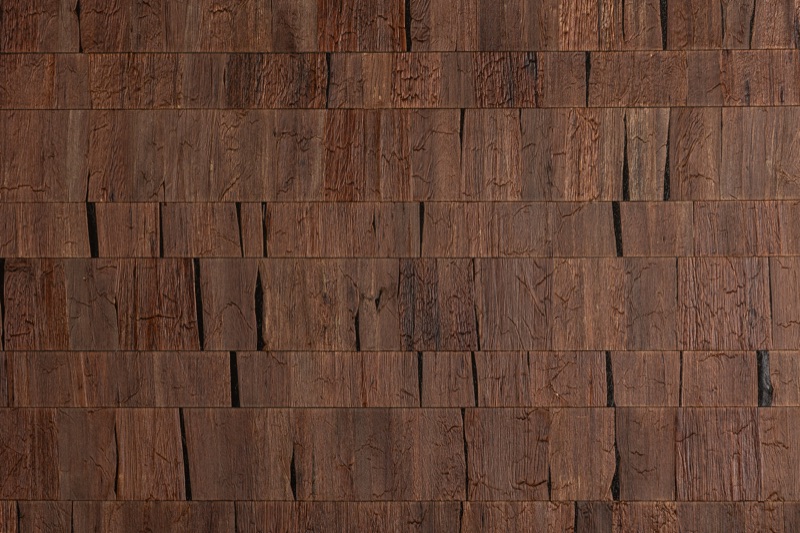
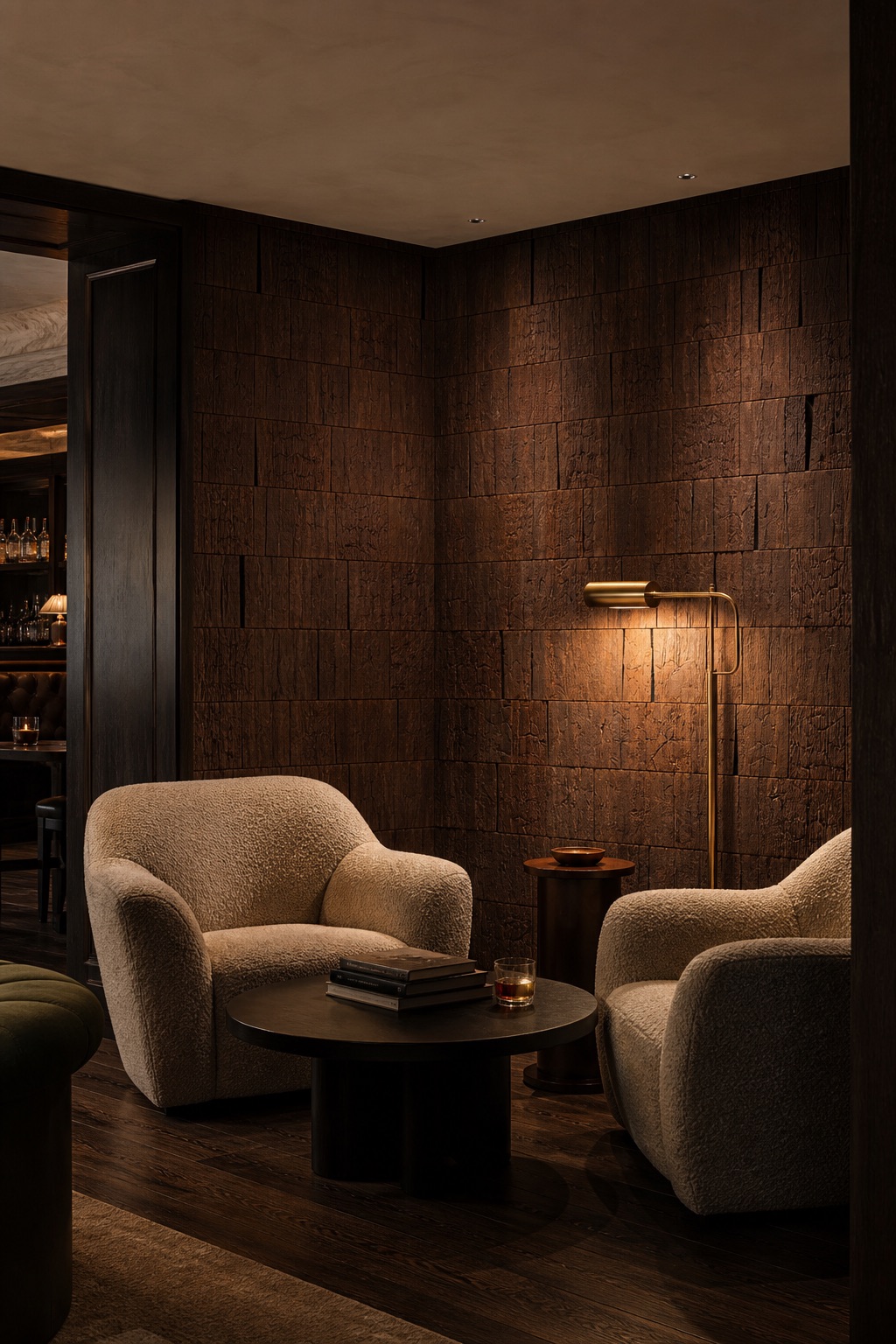
Cleft Mahogany Course is a dark wood wallcovering built from split rectangular panel units stacked in horizontal courses, each piece carrying its own grain striations and tonal shift between deep espresso and warm reddish-brown. The fully matte surface absorbs rather than reflects light, letting the grain and the fine shadow gaps between course rows carry the visual weight. Produced with our partner mills to Grasscloths studio specifications, it is supplied to interior designers, architects, and hospitality buyers from 50 rolls (≈250 m²), with per-batch lot certificates included on every confirmed order.
Shadow and Grain: How Split-Plank Courses Read Across a Full Wall
- Each panel unit is a short, slightly irregular rectangle with grain striations running longitudinally along the piece
- Thin shadow gaps between course rows create genuine dimensional depth — not a printed shadow effect but real physical relief of a few millimetres
- Individual pieces vary in tone from deep espresso to warm reddish-brown, producing natural variegation across the wall plane rather than flat uniformity
- At close range the hewn surface reads as tactile, textured timber; at three or more metres of viewing distance the coursed rhythm resolves into a bold architectural pattern
- The fully matte finish suppresses specular reflection entirely, so the surface reads consistently under changing light angles throughout the day
- Bold texture scale makes this most effective as a full-width feature wall or complete room installation rather than a narrow panel or column
The stacked courses create a consistent horizontal rhythm across the wall, not the stiffness of coursed masonry but the organic cadence of hand-laid timber shingles. At close range no two panels read identically: grain striations, minor tonal shifts between pieces, and slightly uneven edges are inherent to the split-wood character of the surface. Step back a few metres and those individual details resolve into a unified dark-warm field, punctuated by the fine recessed lines between rows. That layered reading at different scales is what separates this surface from printed wood-effect wallcovering or flat timber veneer.
Bars, Feature Walls, and Dining Rooms: Where Dark Wood Wallcovering Performs
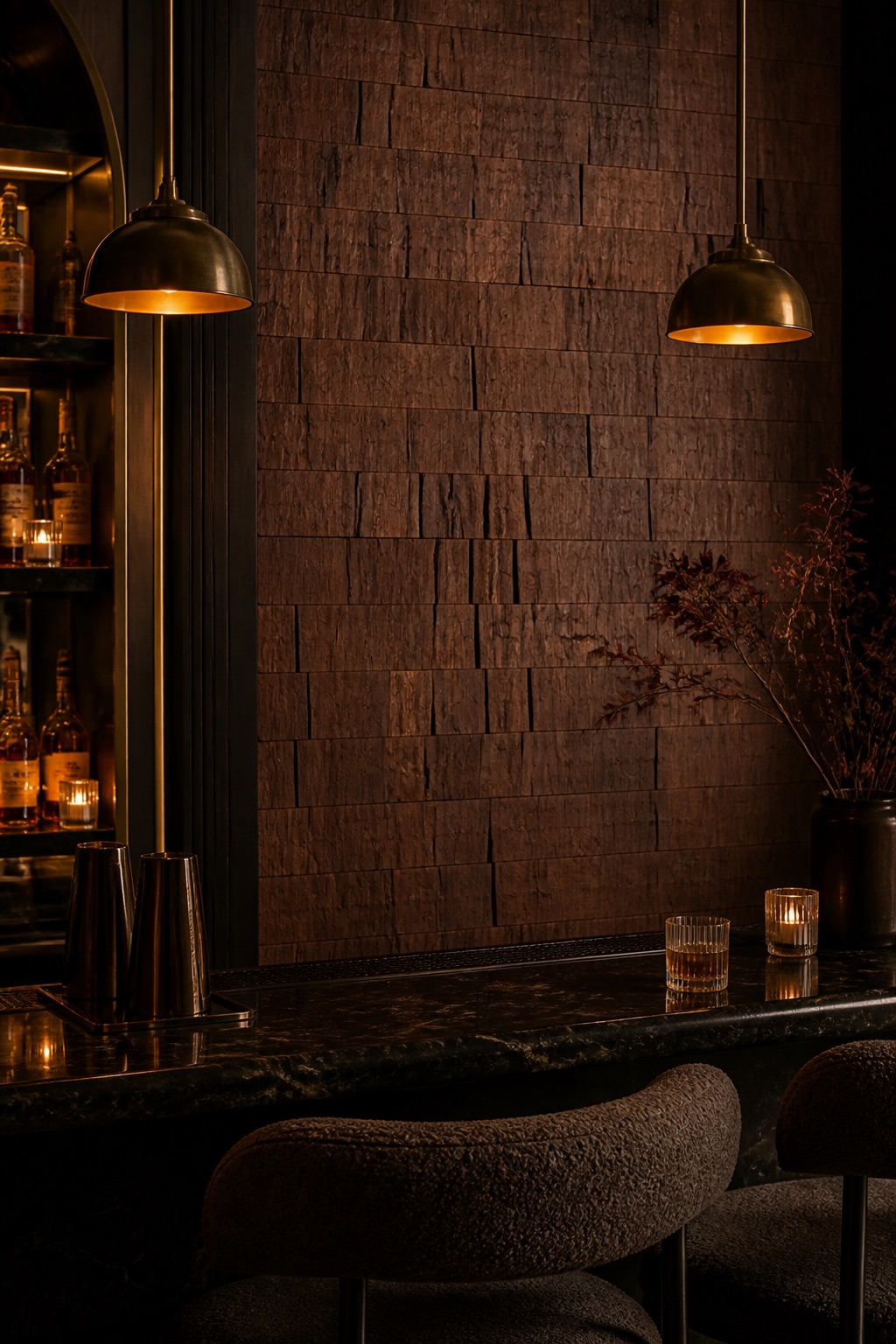
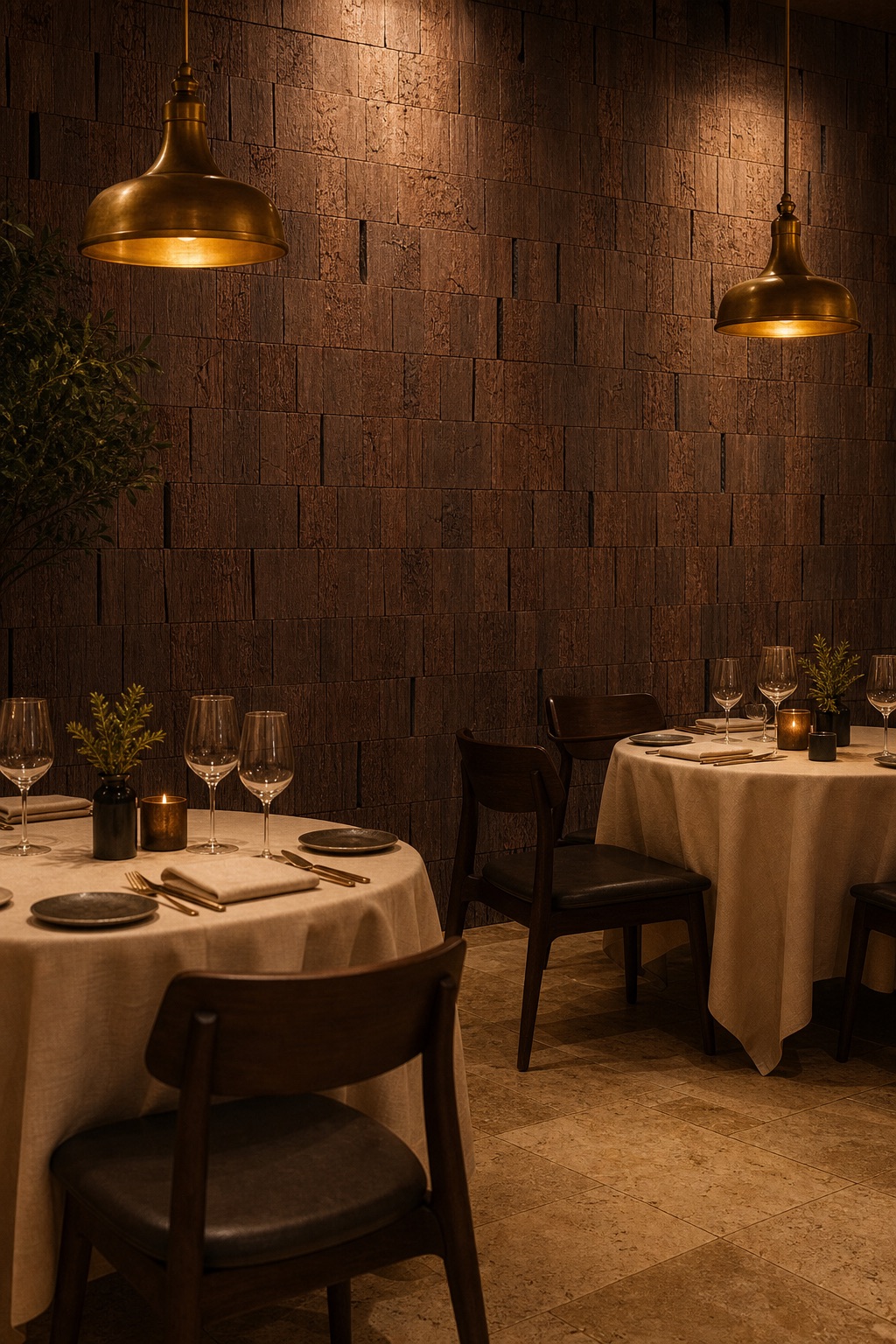
- Ideal as a full-height feature wall in hotel bars, private dining rooms, and members' club lounges where strong visual presence is the brief
- The warm reddish-brown palette anchors brass, blackened steel, and dark oak companion materials with minimal additional styling required
- Warm pendant and wall-washer fixtures draw out the mahogany registers in the surface tone; this is a surface designed to intensify under evening light
- Works equally in residential applications including living-room accent walls, home libraries, and wine room feature walls
- Hospitality buyers frequently specify dark wood wallcovering for back-bar and host-stand walls where textural richness is needed without acoustic treatment complexity
The depth of the mahogany tones intensifies under warm artificial light, making this surface a strong candidate for back-bar installations, private dining alcoves, and corridor feature walls where the architecture needs weight. In residential projects it is most effective as a single accent wall, with companion materials kept to brass, blackened steel, linen, and plaster rather than competing pattern or colour. Avoid placing high-gloss surfaces directly adjacent; the contrast between a reflective finish and this matte relief tends to fight rather than complement.
Warm Reddish-Brown in Changing Light: Colour Behaviour Through the Day
- Under cool north daylight, the primary tone reads closer to dark espresso-brown with minimal red inflection
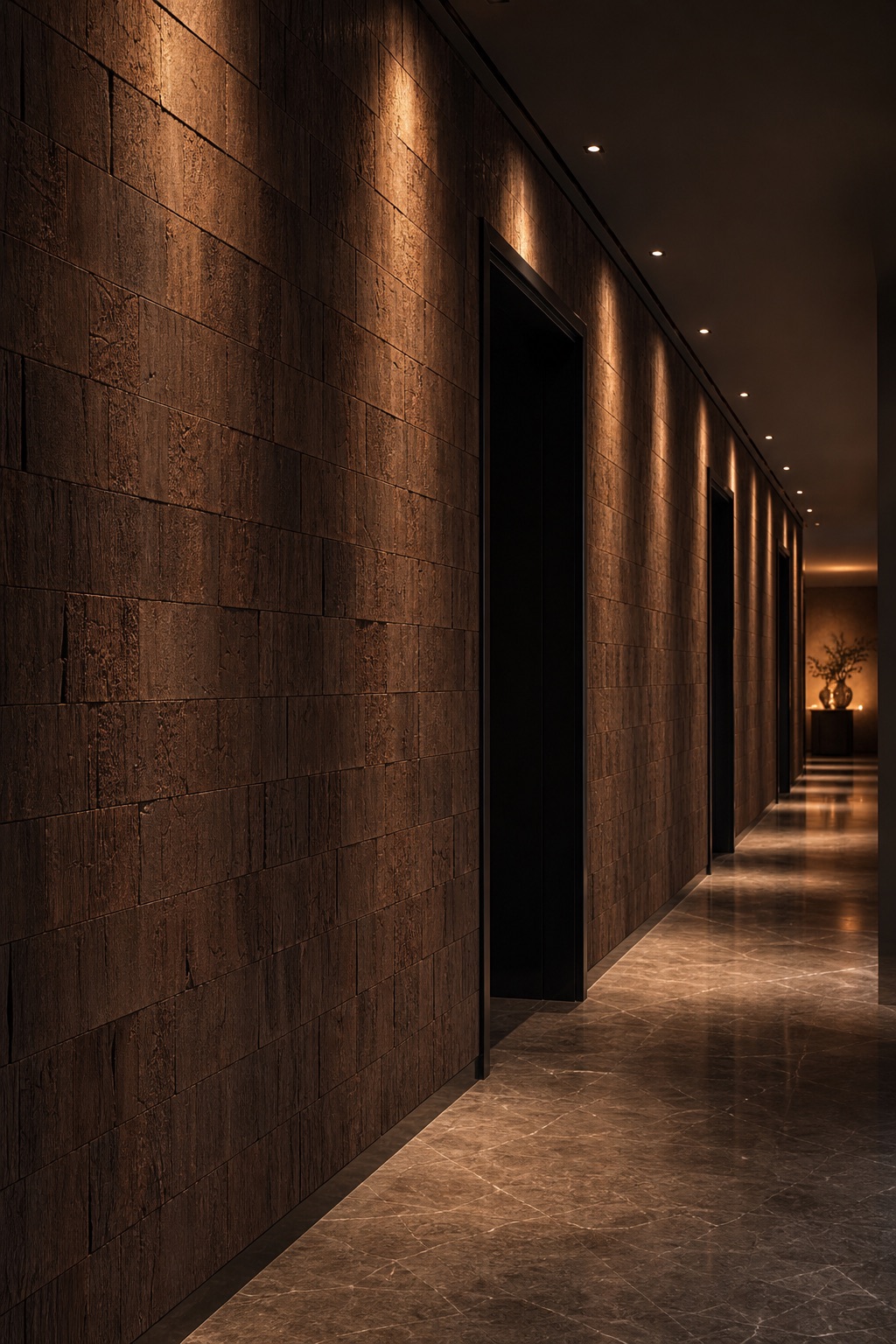
- Under warm incandescent or LED sources at 2700–3000 K, the mahogany and reddish-brown registers intensify markedly
- The fully matte finish means no glare shift or hotspot as light angles change; colour reads consistently across the full wall plane
- Natural tonal variation between individual panel pieces becomes more apparent in bright daylight and recedes in low-light conditions, creating a different character at different times of day
- The dark value absorbs rather than reflects ambient light, producing a more intimate, enclosed spatial feel — a deliberate effect in bar and dining contexts
Without a reflective component competing with the material tone, the surface reads as pure wood colour across the entire wall plane. In daylight the dominant impression is a cool, deep brown; as ambient light transitions to warmer evening sources, the reddish and mahogany registers come forward. Specifiers commissioning this surface for dimly lit hospitality spaces should hang a full-roll sample in situ under the proposed fixture specification before sign-off, as the shift between daylight and warm-lamp readings on a dark wood wallcovering is significant enough to influence the final specifying decision.
Dark Wood Wallcovering in Commercial Spaces: Durability and Surface Care
- Spot-cleanable with a dry or barely damp cloth; avoid abrasive cleaners and solvents on the panel face
- Not rated for wet areas or high-humidity environments such as commercial kitchens or shower rooms; specify in dry, climate-controlled interiors only
- In air-conditioned hospitality environments with stable relative humidity (40–60%), the surface performs reliably over time
- The panel units have real physical relief; a professional installer experienced with dimensional wallcovering is recommended, applying adhesive to the substrate rather than the panel face
- We can supply a small sample quantity for your installer to test adhesive compatibility before the main production run is committed
This is a surface with genuine physical relief: the panel units project slightly from the substrate, and the shadow gaps between courses are real depth rather than a printed illusion. That dimensionality makes installation more demanding than flat wallcovering. Adhesive application, corner treatment, and seam management all require a practitioner with dimensional-surface experience. For large commercial runs, we recommend requesting a trial roll for adhesive testing with your installer prior to committing the full production order.
From Swatch to Lot Certificate: How Grasscloths Brings a Specification Together
- Sample books are available to trade clients; the sample book cost is credited against a confirmed order, up to 10 percent of order value
- Custom proofing is quoted per brief and takes approximately 1–2 weeks from brief sign-off
- Confirmed production orders run approximately one month, with ocean freight arranged and quoted separately
- Every production run ships as a single dye lot, with a per-batch lot certificate supplied for your project records
- Three in-house designers translate client references, finish boards, and paint chips into production-ready CAD specifications for custom colourways
- The studio's founder has worked in natural wallcovering supply since 2018, serving export buyers across the US, Europe, and Australia
Grasscloths operates as a design-and-supply partner, not a mill. Once you have a swatch and are ready to proceed, we provide a proofing quote upfront with the full cost stated before any commitment. Payment terms are confirmed on the pro-forma invoice at order placement; FOB, CIF, and DDP arrangements are available depending on your logistics and trade terms. Love this surface but need your own colour or panel scale? Our design studio engineers custom colourways from your reference: a finish board, a paint chip, or a material sample is enough to start.
Buying wood for a project or a brand?
- Minimum order
- 50 rolls (about 250 m²) catalog · 100 rolls custom / private label
- Lead time
- 4–6 weeks standard · 5–8 weeks specialty, after sample approval and payment
- Terms
- EXW Chengdu · FOB, CIF, DDP on request
- Samples
- Free digital kit in 24 h · paid swatch pack, credited in full on your first order
- Reply
- Within 24 hours
Frequently asked
- Will the reddish-brown tones fade noticeably over time under interior lighting?
- Natural wood wallcovering does mellow slowly over years of interior use. Warm LED fixtures at normal interior intensities (2700–3000 K) are the most sympathetic choice and produce the least bleaching effect. Prolonged direct sunlight should be mitigated with UV-blocking glazing or film.
- How do vertical seams behave across a horizontal-course panel wallcovering?
- Because the plank units run in defined horizontal courses, vertical seams can be staggered between rows to achieve a more natural, less mechanical appearance. We recommend requesting a full-roll sample for a dry-hang test with your installer before the live installation begins.
- Is Cleft Mahogany Course suitable for a commercial bar installation?
- It performs well in climate-controlled bar environments with stable relative humidity. It is not rated for direct moisture exposure; back-bar positions with condensation risk should be assessed with your contractor before specifying.
- Can the panel colour be adjusted to a lighter tone or a cooler grey-brown for a different palette direction?
- Yes. Our design studio works from client references to engineer alternative colourways across the same panel format. Contact us with your reference and we will provide a proofing quote and timeline.
- Where can I find full details on MOQ, payment terms, and production lead times?
- Complete ordering terms are covered on our process and FAQ page; visit /faq for the full breakdown.