Health & Safety
VOC Emissions & Indoor Air Quality for Natural Wallcovering
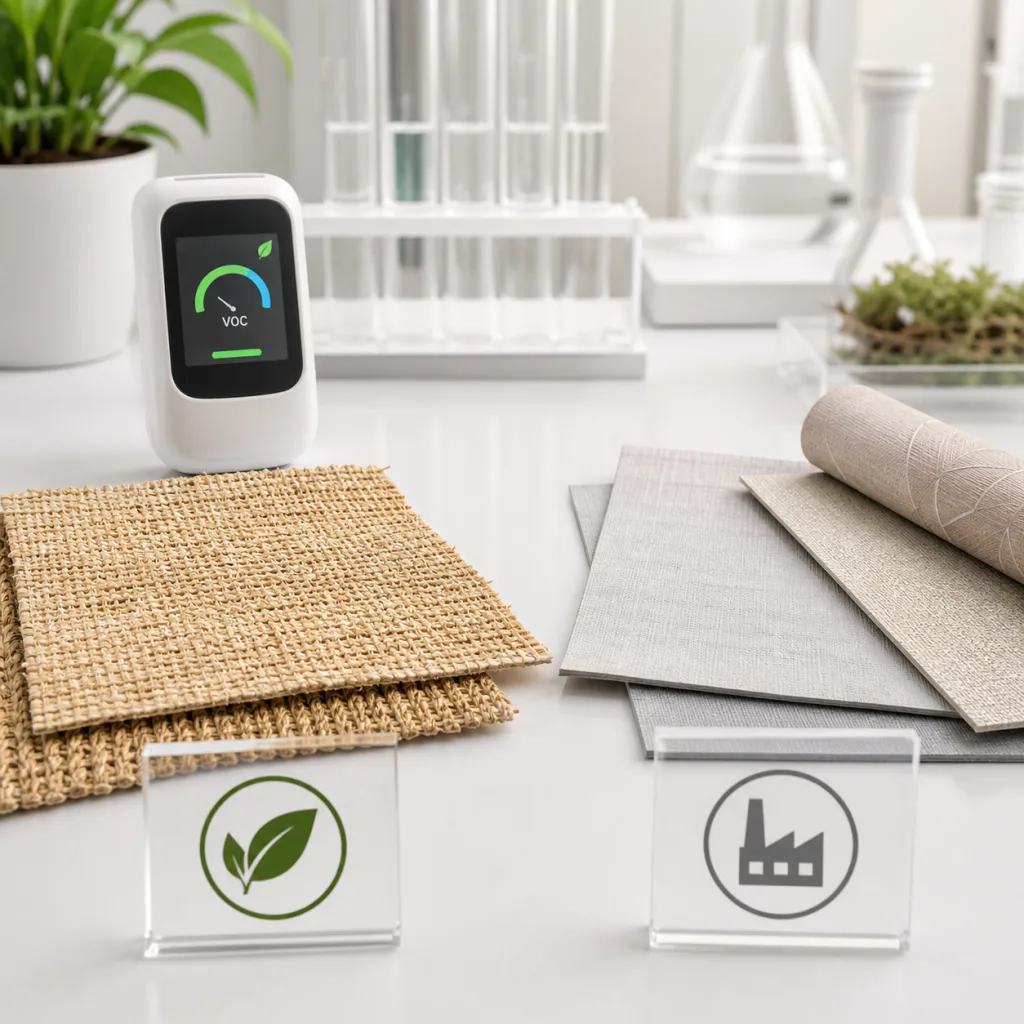
Natural wallcovering is inherently low-VOC — made from plant fiber, not petrochemicals. Here is how it compares to vinyl and paint for indoor air quality, what certifications to look for and how to specify for healthy spaces.
Key Takeaways
- See detailed sections below.
How Do Natural vs Synthetic Wallcoverings Compare for VOC?
| Material | VOC Level | Why |
|---|---|---|
| Natural grasscloth/sisal | Very low | Plant fiber, minimal chemical processing |
| Cork | Very low | Natural bark, no PVC or plasticizers |
| Paper weave | Low | Paper + plant fiber base |
| PVC vinyl (Type II) | Moderate-High | Contains plasticizers, may off-gas for months |
| Solvent-based paint | High | Petroleum solvents evaporate during curing |
| Low-VOC latex paint | Low | Water-based, minimal solvents |
What Certifications Matter?
| Certification | What It Tests | Relevance |
|---|---|---|
| GREENGUARD Gold | Total VOC, formaldehyde, individual chemicals | Gold standard — required for many LEED/WELL projects |
| FloorScore | Indoor air quality emissions | Common for hard surfaces, applicable to wallcovering |
| OEKO-TEX Standard 100 | Harmful substances in textiles | Relevant for textile-backed wallcovering |
| Declare Label | Material ingredients transparency | Living Building Challenge, transparency-focused projects |
How Do You Specify for Healthy Indoor Air?
- Choose natural fiber: Grasscloth, sisal, cork — inherently low-VOC base materials
- Specify low-VOC adhesive: Clay-based or starch-based paste — avoid solvent-based adhesives
- Request test reports: Ask for GREENGUARD or equivalent VOC emission test documentation
- Ventilate during installation: Open windows for 48-72 hours after installation to clear any residual emissions from adhesive
- Document for certification: For LEED/WELL, maintain material documentation in project files — see LEED guide and WELL guide
Frequently Asked Questions
Is natural wallcovering low-VOC?
Yes — inherently. Natural wallcovering is made from plant fibers (grass, sisal, jute, cork) with minimal chemical processing. VOC emissions are significantly lower than PVC vinyl or solvent-based paints.
What certifications should I look for?
GREENGUARD Gold is the gold standard for low-emission materials. Also look for FloorScore, OEKO-TEX or manufacturer VOC test reports. For LEED and WELL projects, material health documentation is required.
Is the adhesive also low-VOC?
It should be. Specify low-VOC or zero-VOC clay-based adhesive. The adhesive can be a larger VOC source than the wallcovering itself if not specified correctly.