Sand Grasscloth Wallpaper
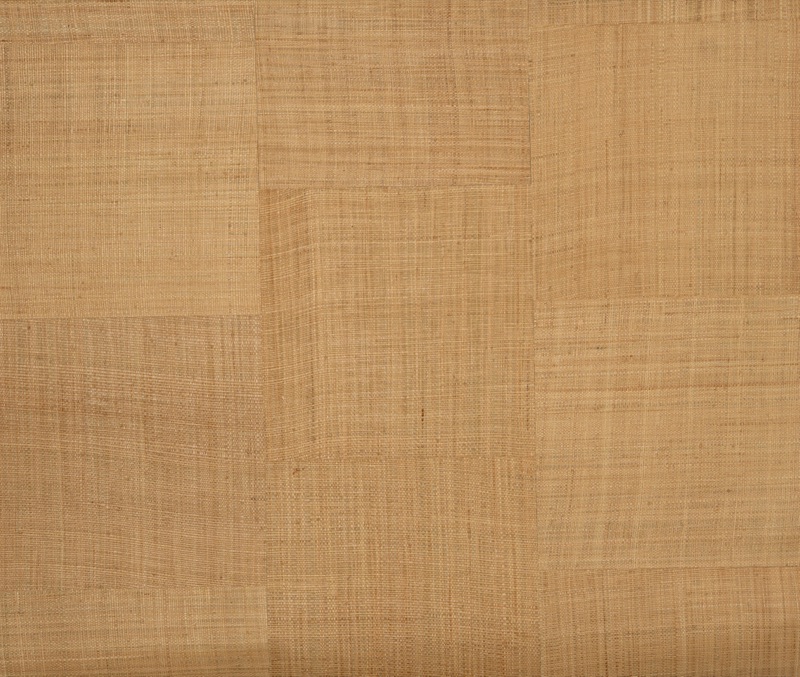
Dune Parquet is a plain tabby grasscloth in warm honey tan: its offset brick-bond panel grid registers as a quiet, architectural rhythm across any wall, without colour drama or sheen to compete. Woven from loosely twisted medium-gauge natural strand, every fibre is visible at close range and dissolves into a warm, unified ground at room distance. Supplied to designers, hospitality buyers, and trade importers from 50 rolls, it is a foundational sand grasscloth wallpaper for projects that need a natural neutral with measurable depth.
Up Close, a Weave; Across the Room, a Grid: How Dune Parquet Reads at Wall Scale
- The offset brick-bond panel joints run horizontally at staggered heights, creating a low-contrast geometric rhythm across the full wall surface
- At close range, individually twisted strands and their crosshatch are fully legible, each fibre visible within the tabby structure
- At two metres and beyond, the weave softens into a warm textured field with the block-panel grid as its quiet organising logic
- Because the joints are tonal (same honey-tan fibre, slightly denser seam line) rather than contrasting, the grid reads as organised texture, not bold geometry
- This dual register suits feature walls where movement is wanted without pattern weight that competes with furniture or art
- Panel joins fall at manufacturer seams; professional installation and consistent plumb-setting are required to maintain the brick-bond rhythm across roll breaks
The defining characteristic of Dune Parquet is its brick-bond block structure, a pattern formed where panel seams fall at offset horizontal intervals and create a low-contrast grid across the wall. At close range the individually twisted natural strands are fully legible, their warm honey-tan fibres revealing the crosshatch of the weave. Step back to room distance and those details dissolve: what remains is a warm, softly gridded ground, more atmospheric than decorative. Because the joints are tonal rather than high-contrast, the effect reads as organised texture rather than bold geometry, a distinction that matters when specifying against complex furniture arrangements or richly patterned soft furnishings.
Morning Warmth to Amber Evening: How This Honey-Tan Ground Reads Through a Day
- Under cool north or overcast light the honey tan reads closer to pale straw, a dry neutral with mild warmth
- Under warm afternoon or incandescent light the secondary golden-straw tones activate, pushing the ground toward a richer amber
- The fully matte surface eliminates specular hot-spots, so colour reads consistently across large wall areas even under uneven lighting
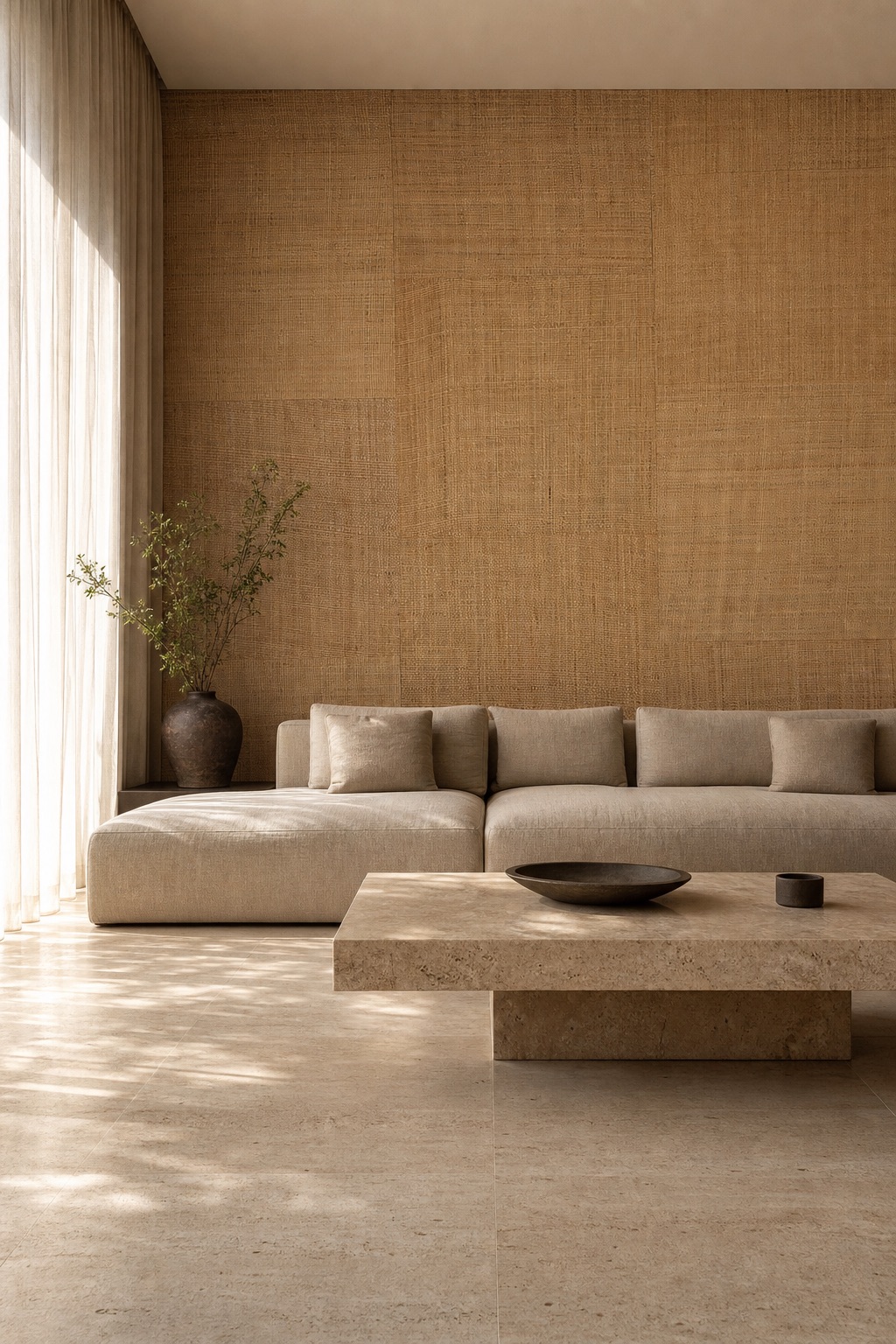
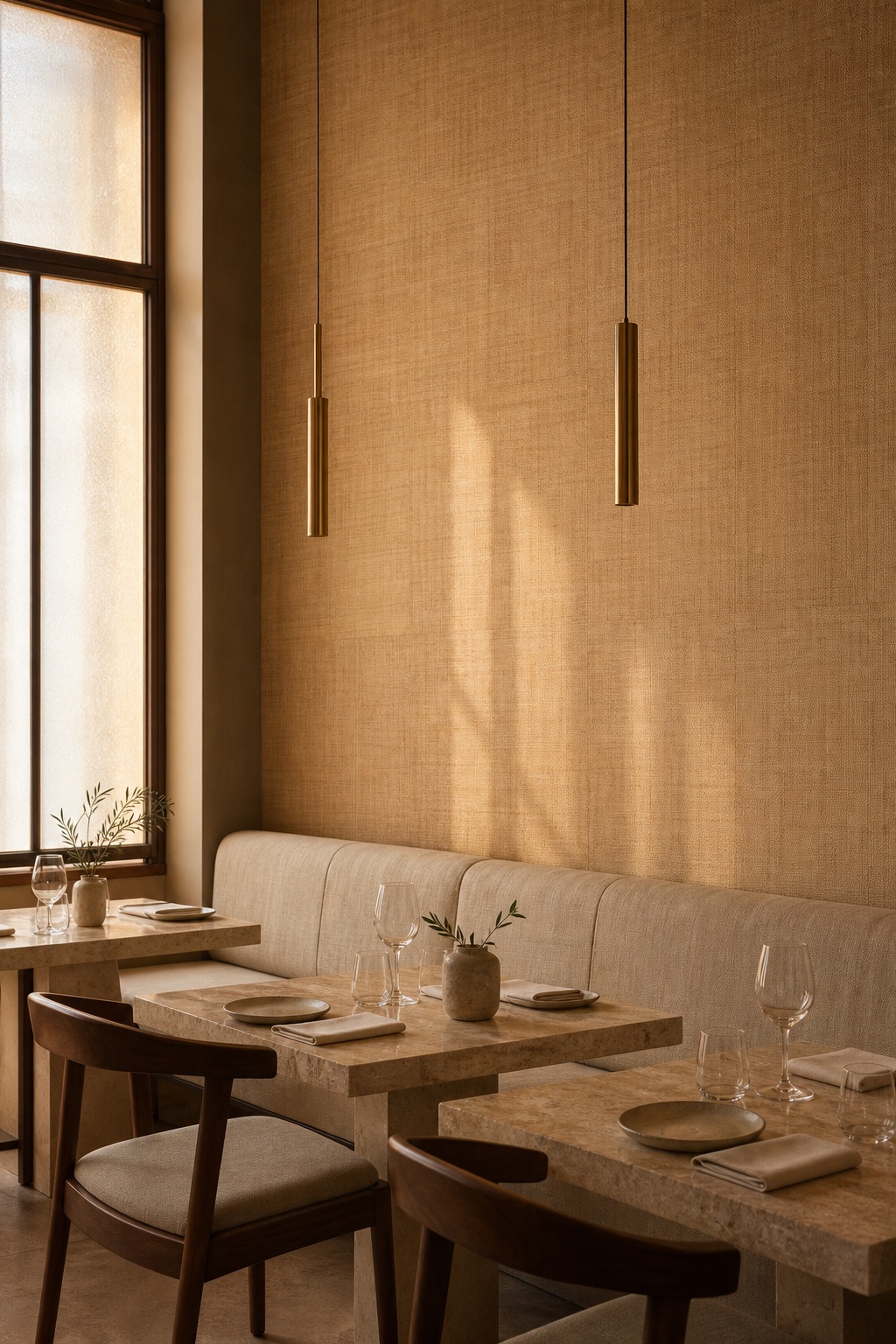
- Against warm white walls or linen furnishings the sand tone acts as an anchor; against travertine or pale oak it sits within a continuous warm-neutral palette
- Performs predictably under warm LED and halogen, which are standard in hospitality environments where this product is frequently specified
Sand tones are among the most context-sensitive naturals: the same honey-tan strand reads as pale straw under a cool overcast sky and as a richer golden ochre beneath warm halogen. Dune Parquet behaves accordingly, its warm undertone latent at midday and present in the evening. The matte surface is the critical stabiliser: without sheen to amplify directional light, the colour holds its value uniformly across a full wall panel, with no hot-spots at the centre or dulled edges at the corners. Designers specifying it in mixed-light environments will find the tone robust without being assertive, an asset in hotel corridors and residential dining rooms where both daylight and artificial sources are active.
Neutral but Not Flat: Specifying Sand Grasscloth Wallpaper in Hospitality and Residential Interiors
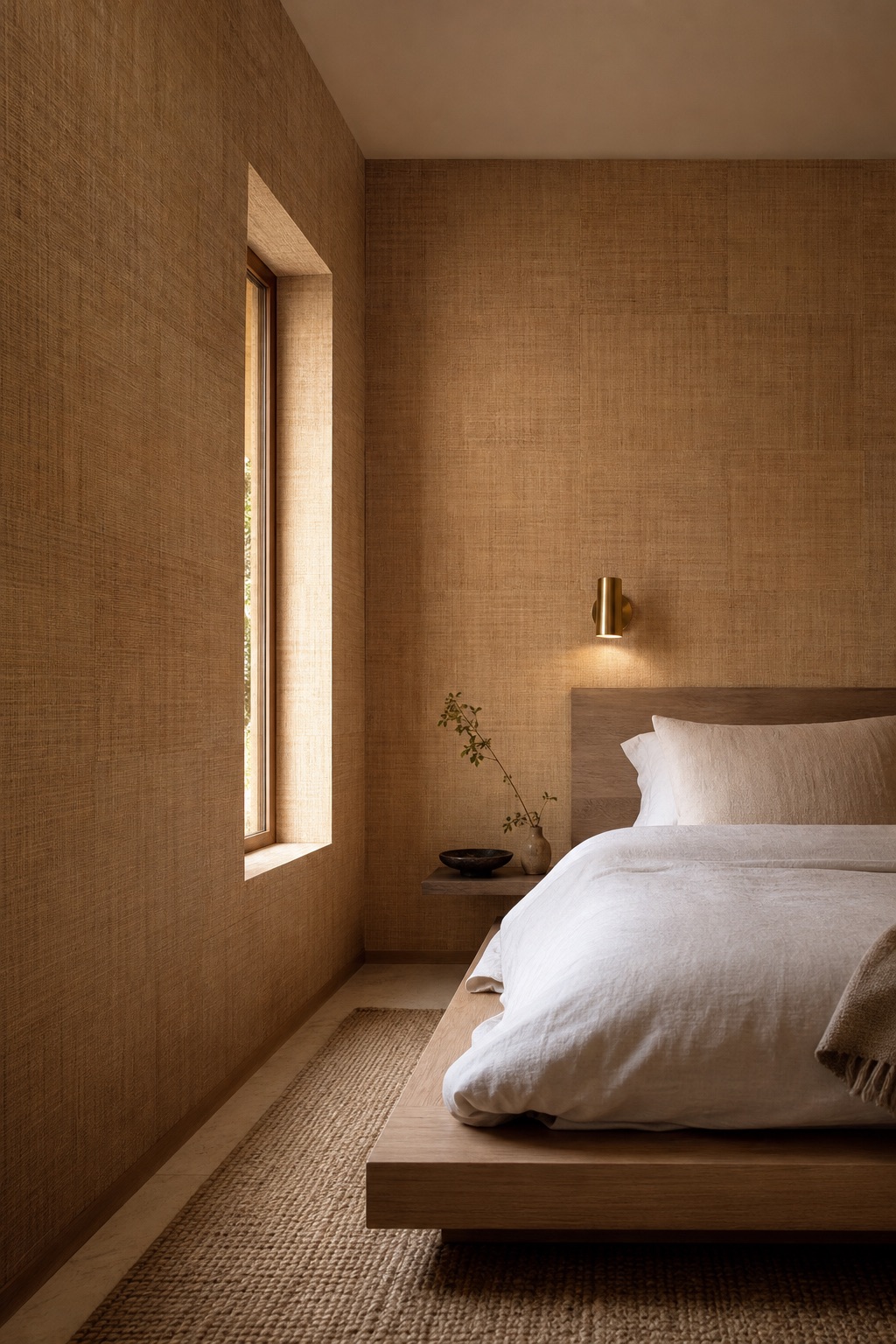
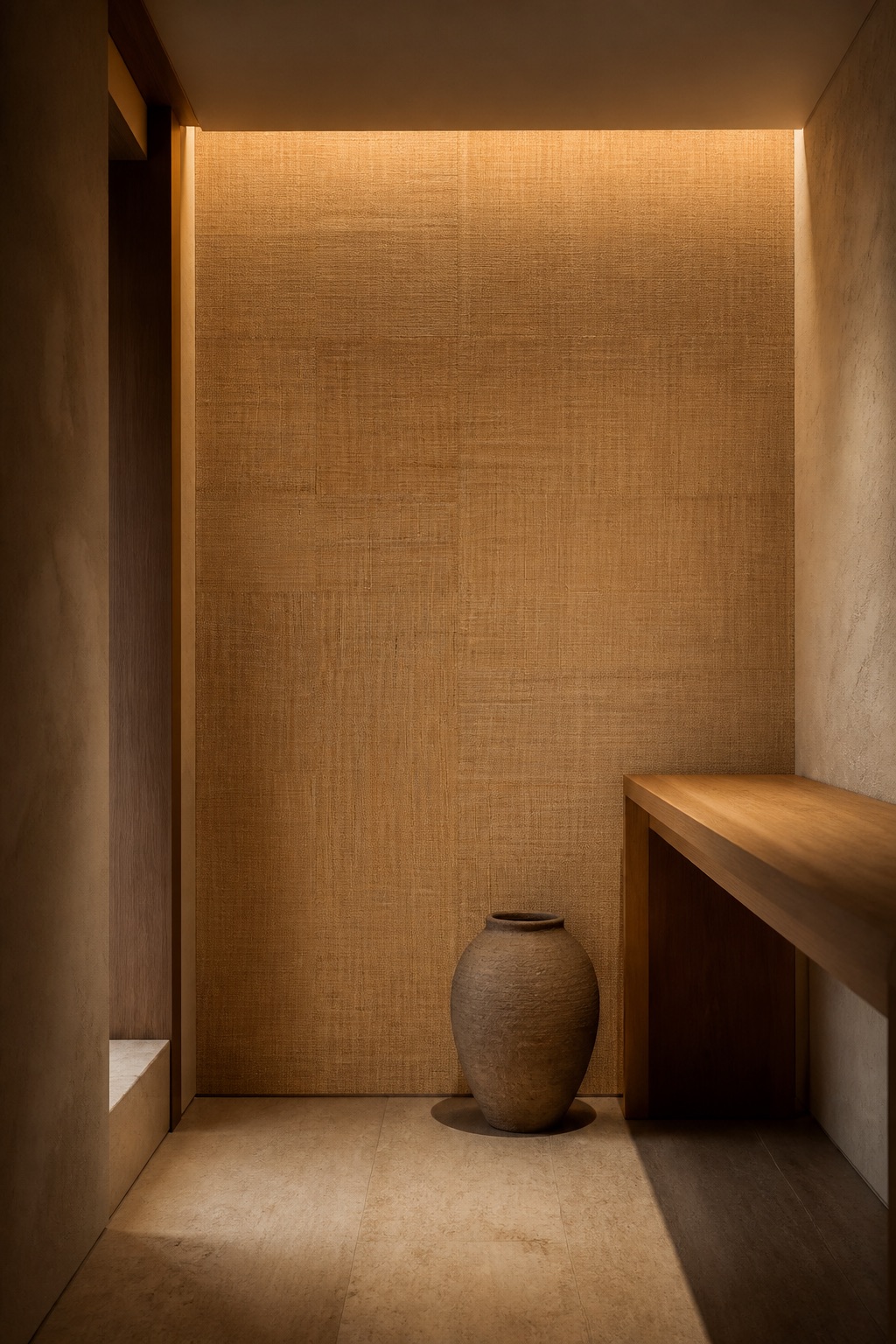
- Sand grasscloth wallpaper works as a full-wall treatment in hotel bedrooms, living rooms, dining rooms, and residential entry halls where a warm neutral ground unifies competing elements
- In hospitality settings, the natural fibre texture adds tactile interest without imposing a decorative colour on the FF&E palette
- Suitable for climate-controlled, dry spaces; not recommended for bathrooms, indoor pool areas, or rooms with persistently high ambient humidity
- As a feature wall behind a bed or sofa, the block-panel grid provides architectural articulation that flat paint and smooth wallcoverings cannot replicate
- Pairs naturally with travertine, pale oak, linen, and brushed brass; the warm undertone keeps it coherent within Japandi and organic-modern palettes
- Works as a full-room wrap in compact spaces, where the warm honey-tan ground creates an enveloping, cocooning atmosphere
Sand grasscloth wallpaper is among the most versatile specifications a designer can carry: it introduces natural texture without committing to a decorative colour, so it can anchor projects across hospitality and residential programmes. Dune Parquet earns its place behind a hotel bed headboard, on a residential dining feature wall, in a boutique lobby entry, or as a full-room wrap in a compact sitting room. The block-panel grid gives the wall an architectural identity that flat paint and smooth wallcoverings cannot replicate. One practical note: like all natural fibre wallcoverings, it is suited to climate-controlled, dry spaces, and high ambient humidity will degrade the fibre over time.
What Happens Between Sample Request and Delivered Rolls: The Studio Process at Grasscloths
- The process begins with a physical sample book, its cost credited against a confirmed order
- Once a sample is approved, a paid proof is produced in approximately one to two weeks, allowing colour confirmation under project conditions before bulk commitment
- Production on standard grasscloth materials runs four to six weeks from payment
- Every production run ships as a single dye-lot; a per-batch lot certificate accompanies each order so contractors can verify consistency on-site
- Three in-house designers handle CAD conversions, repeat adjustments, and reference matching; the studio has been working in natural wallcovering since 2018
- Order structure: confirmed on the pro-forma invoice; freight is at the buyer's cost with FOB, CIF, and DDP options available
Every order at Grasscloths follows the same structure, designed to give specifiers and procurement teams a firm basis at each stage. A physical sample book comes first, its cost credited against a confirmed order. If the sample is approved, a paid proof is produced in around one to two weeks, letting you verify dye-lot colour under your project's actual lighting before committing to bulk. Production on standard grasscloth runs four to six weeks from payment. The rolls that ship carry a per-batch lot certificate, so contractors can cross-check material consistency on-site. Our founder has worked in natural wallcovering since 2018, and our three in-house designers turn each brief into production-ready specifications; CAD conversions, custom colourway matching, and specification support are handled in-house, not outsourced.
Love the Weave, Need a Different Tone? Custom Colourways on the Block-Panel Structure
- The block-panel tabby structure is available in custom colourways from a 50-roll minimum (approximately 250 m²)
- The design studio can engineer a custom colour from a paint chip, fabric swatch, or digital reference; dye-lot consistency is part of the studio brief
- OEM orders (private-label selvedge, branded lot certificates) are available from 50 rolls
- Lead time for custom colourway production is four to six weeks after proof approval on standard natural strand
- A paid proof is always produced before any bulk production begins, ensuring the custom colour is signed off before commitment
Love this weave but need your own colour or scale? Our design studio engineers custom colourways from your reference — whether that is a painted wall chip, a fabric swatch, or a digital HEX. The same block-panel tabby structure is available in a commissioned colour from a 50-roll minimum (approximately 250 m²), with a paid proof produced before any bulk order begins. Custom colourways and OEM specifications are handled by our three in-house designers, with a single dye-lot certificate issued with each production run.
Buying grasscloth for a project or a brand?
- Minimum order
- 50 rolls (about 250 m²) catalog · 100 rolls custom / private label
- Lead time
- 4–6 weeks standard · 5–8 weeks specialty, after sample approval and payment
- Terms
- EXW Chengdu · FOB, CIF, DDP on request
- Samples
- Free digital kit in 24 h · paid swatch pack, credited in full on your first order
- Reply
- Within 24 hours
Frequently asked
- Will the warm honey-tan colour fade in rooms with significant natural light?
- Natural grasscloth fibres can shift under prolonged UV exposure: direct, unfiltered sunlight will gradually lighten and yellow the warm tan tones over time. Window film or UV-filtering glazing significantly extends colour life; see our guide to fading prevention at /guides/fading-prevention for practical mitigation steps.
- How visible are the panel seams once the wallcovering is installed?
- The offset seams are intentional and tonal, reading as a quiet architectural grid rather than a visible patch join. A professional installer working to consistent plumb lines and even pressure will keep the rhythm even. Seams become more legible when viewed at a shallow angle under raking light, a characteristic of all panel-laid grasscloth that should be factored into lighting layout decisions.
- Is this grasscloth better suited to a full-room wrap or a single feature wall?
- Both work well. A full-room wrap in the warm honey-tan creates an enveloping atmosphere well suited to bedrooms and smaller dining rooms. A single feature wall behind a bed or sofa provides a textured neutral anchor without committing the whole room. The block-panel grid adds more visual articulation in full-room applications than a plain-laid grasscloth would, which can be an advantage or something to test in sample before committing.
- What is the minimum order quantity, and how does the sampling process work?
- Custom colourways require 50 rolls (approximately 250 m²); for full details on sampling, proofing, and lead times, visit our process and FAQ page at /faq.
- Can this product be specified for commercial and hospitality projects, and does it come with documentation for spec approval?
- Yes — Dune Parquet is a trade-supplied product, produced with our partner mills and regularly specified in hotel suites, restaurant dining rooms, and boutique lobbies. A per-batch lot certificate ships with every order to support your project's documentation requirements. For fire-rating and compliance queries specific to your jurisdiction, see our fire rating guide at /guides/fire-rating-guide.