Cream Paperweave Wallcovering
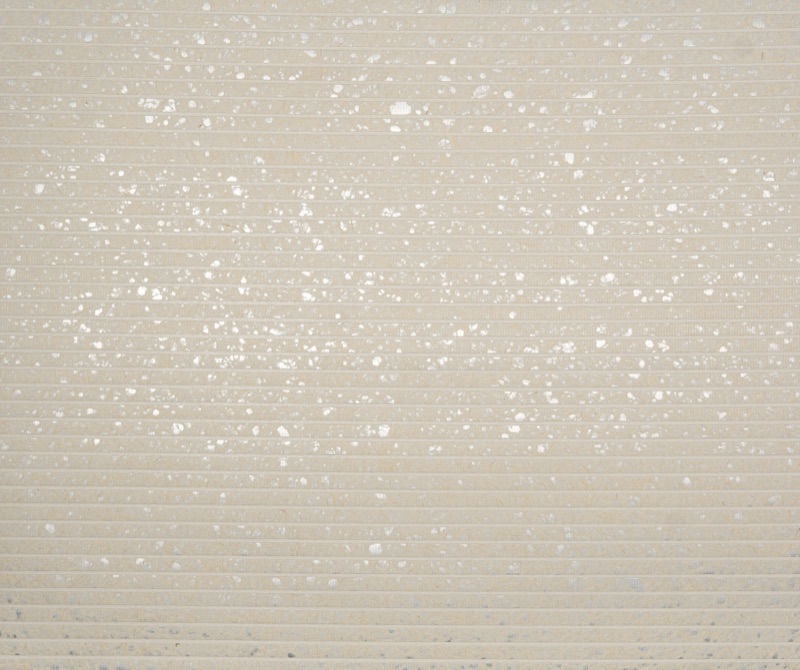
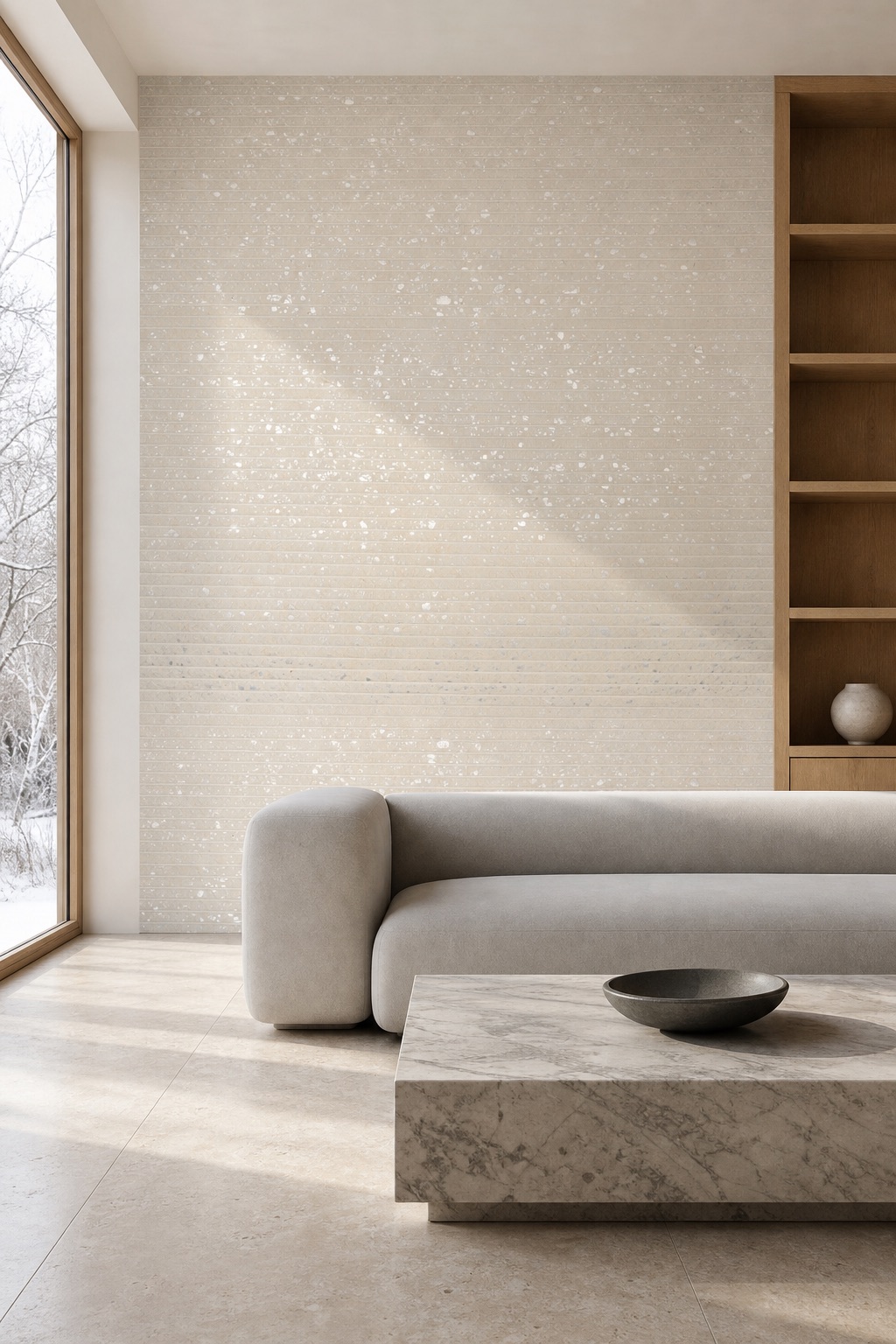
Pearl Reed is a warm cream paperweave wallcovering with a fine horizontal reed structure and a scattered iridescent fleck across its surface, supplied to designers and trade buyers from 50 rolls. The off-white ground reads as serene and quietly resolved from across a room; the pearl fleck introduces a surface movement that prevents the cream from flattening under artificial light. Available as a stock colourway or engineered to a custom reference, it is produced with our partner mills to the specification of our Chengdu design studio.
Horizontal Rhythm and Iridescent Scatter: Pearl Reed's Surface Logic at Full-Wall Scale
- The weave consists of fine horizontal reed strands compressed into uniform, close-pitched rows, creating a clean linear banding visible from across a room.
- Scattered across the cream ground are irregular iridescent flecks, each returning a brief pearl shimmer when light strikes at an oblique angle.
- At close range the surface reads as two distinct elements (banding and fleck); at 2 to 3 m reading distance, they fuse into a coherent textured field.
- The fleck density is generous without being metallic: the effect reads closer to crushed shell or mineral scatter than to foil, luminous without announcing itself.
- Standard roll: 0.915 m wide by 5.5 m long, approximately 5 m² per roll.
- Single dye-lot production ensures the cream ground tone and fleck density remain consistent across every roll within a given order.
The cream ground of Pearl Reed is composed of fine horizontal reed strands, each row pressed tight to the next to form a clean linear banding that registers as quiet structure from across a room. What prevents this surface from reading as plain is the scatter of iridescent fleck distributed irregularly across it: each fleck catches oblique light and returns a brief, cool shimmer against the warm cream ground, closer in quality to crushed shell than to metallic foil. At 2 to 3 metres of reading distance, the two elements fuse into a surface that holds the eye without announcing itself. Standard rolls measure 0.915 m wide by 5.5 m long (approximately 5 m² per roll), with single dye-lot production ensuring consistent ground tone and fleck density across every roll in an order.
A Cream That Refuses to Flatten: Light Behaviour and the Pearl Fleck Effect
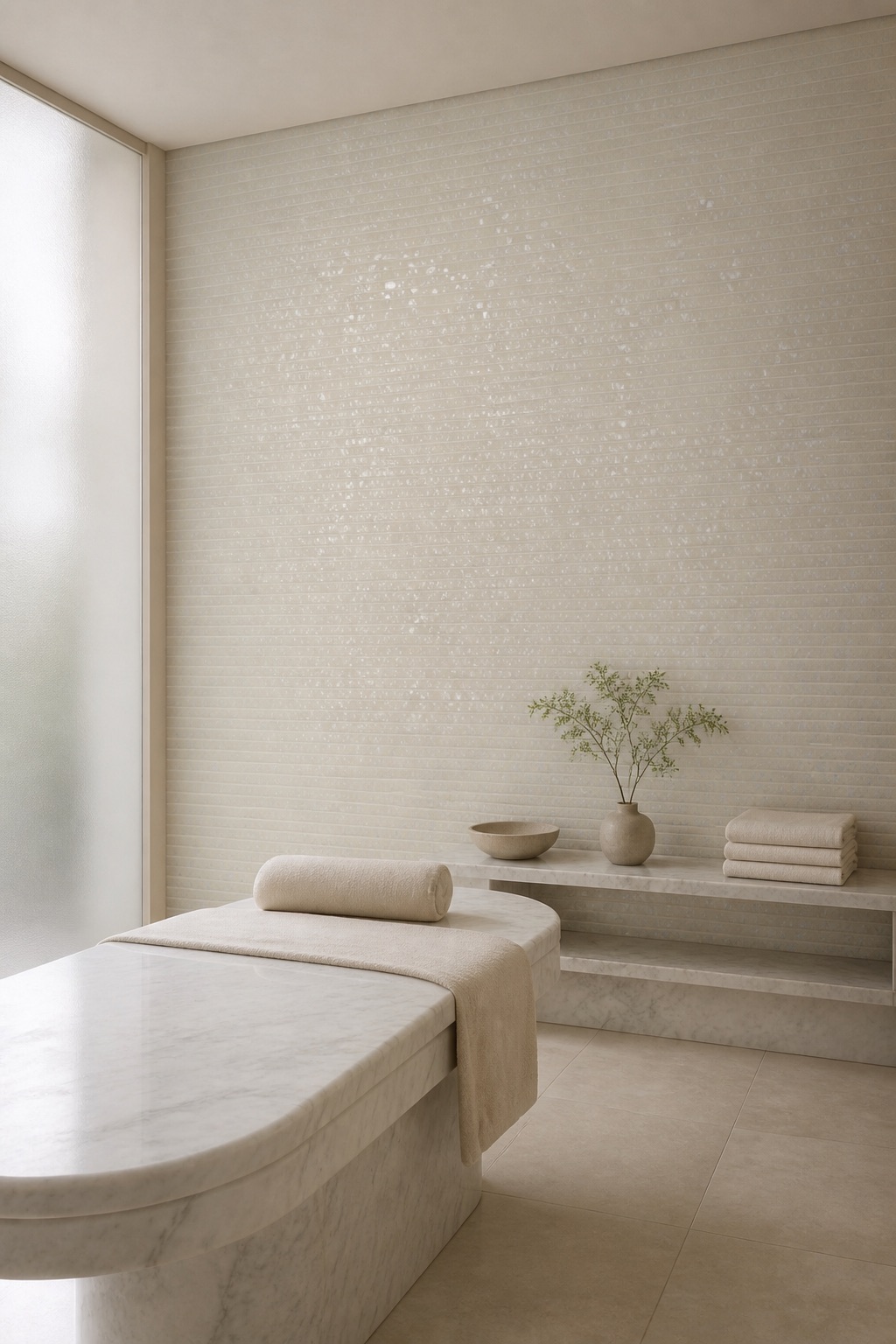
- Under flat, even illumination such as recessed LED or overcast window light, the fleck lies low and the surface reads as a refined warm off-white.
- When raking light enters at an angle from a lamp, late-afternoon sun, or a picture light, the iridescent particles activate and the surface acquires a gentle luminous lift.
- The warm undertone in the cream ground prevents the wall from reading cool or clinical, including in rooms with northern or eastern exposure.
- In hospitality settings that transition between natural and artificial light through the day, Pearl Reed maintains a consistent premium character across both conditions.
- The effect is perceptibly different from metallic grasscloth or gold-foil wallcoverings: quieter, more neutral, and usable at large scale without visual fatigue.
Under flat, even illumination such as recessed LED or an overcast window, the fleck lies low and this cream paperweave wallcovering reads as a refined warm off-white. When raking light enters at an oblique angle from a table lamp, a low afternoon sun, or a picture light directed toward an adjacent surface, the iridescent particles activate and the surface acquires a quiet luminous lift. The warm undertone in the cream ground keeps the wall from reading cool or clinical even in rooms with northern exposure. In hospitality settings that move from bright natural to warm artificial light through the course of a day, this dual register makes Pearl Reed a dependable specification at scale, without the visual fatigue that heavier metallic or foil wallcoverings can introduce over large runs.
Minimalist Hotels, Spa Suites, and Japandi Residences: The Right Contexts for Cream Paperweave Wallcovering
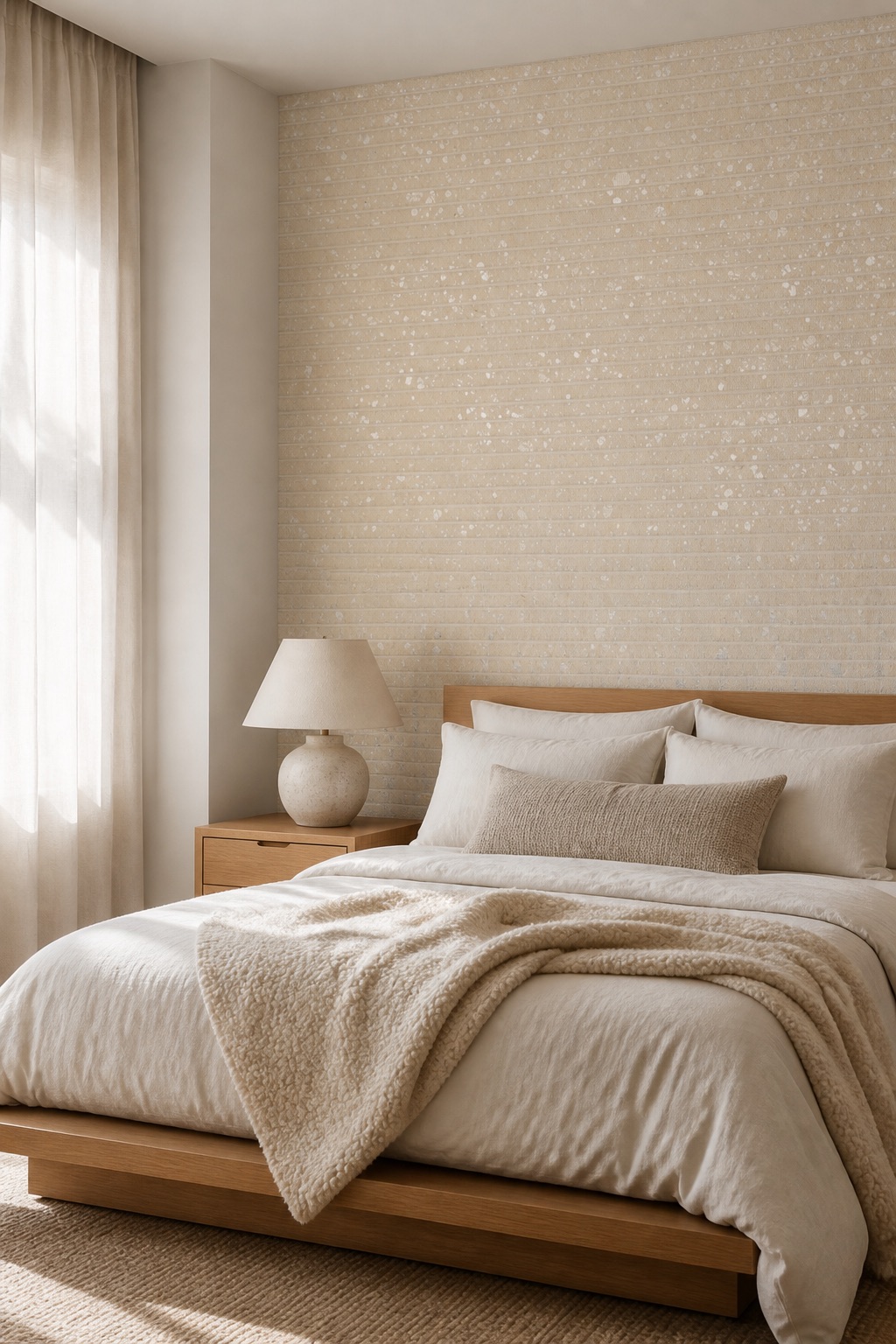
- Suited to spaces where the wall provides warmth and background depth rather than a decorative statement: hotel suite headwalls, spa reception walls, serviced apartment corridors.
- In residential work: Japandi and organic-modern bedrooms, dressing rooms, home offices in pale palettes, and living rooms where natural materials direct the scheme.
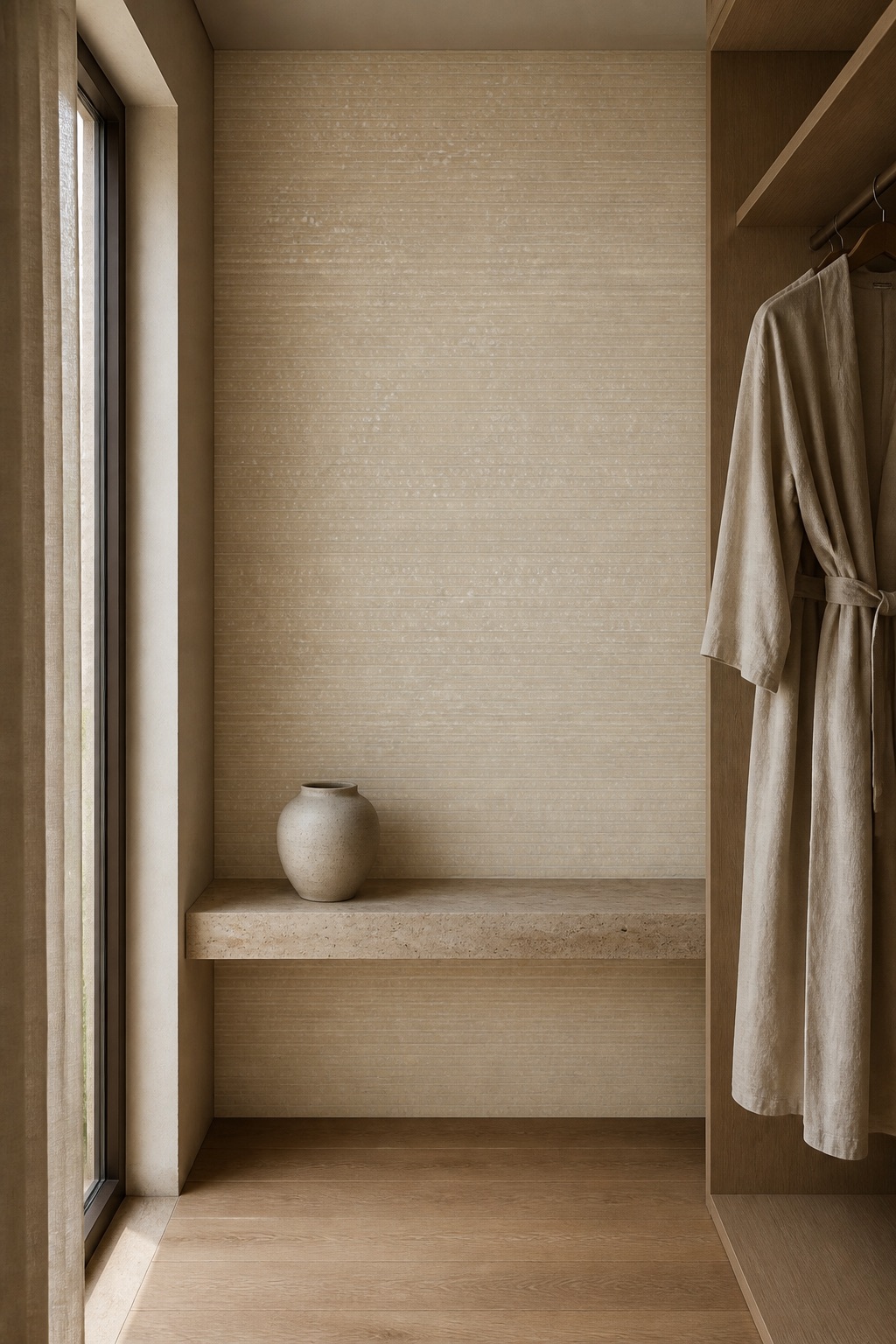
- Best companion materials: travertine, plaster, oak, marble, linen, and bouclé. High-contrast materials such as blackened steel or deep brass pull against the surface's quiet character.
- The continuous horizontal banding aligns naturally with the low, horizontal furniture lines common in Japandi and organic-modern schemes.
- As a background wallcovering, Pearl Reed allows artwork, furniture, and textiles to anchor the room without a competing pattern on the wall.
Pearl Reed's combination of cream ground and pearl fleck performs best in spaces where the wall is expected to provide warmth and background depth rather than carry a decorative statement. In hospitality, that translates to spa reception walls and relaxation suites, hotel suite headwalls, and serviced apartment corridors where a premium-neutral is required across large runs. In residential work, the scale and tone fit Japandi and organic-modern bedrooms, dressing rooms, pale-palette living rooms, and home offices. Companion materials sit in a narrow register: travertine, oak, plaster, marble, linen, and bouclé all support the swatch well; high-contrast pairings such as blackened steel or deep brass would compete with the surface's quiet character. The horizontal reed structure also aligns naturally with the low, continuous furniture lines common in Japandi schemes.
What Paperweave Is and Why Interior Specifiers Choose It Over Woven Jute for Pale Palettes
- Paperweave uses compressed and woven paper strands, typically derived from natural-fibre pulp, giving a refined surface regularity unlike woven jute or sisal.
- The consistent strand diameter and tight pitch produce a cleaner colour presentation in pale colourways, avoiding the shadow-pocketing common in coarser natural weaves.
- Installation follows standard natural wallcovering practice: butt-join seaming, proper substrate preparation, and climate-controlled indoor environments.
- Not recommended for wet rooms or areas with direct moisture contact; appropriate for well-ventilated interiors including hotel corridors, bedrooms, and spa reception areas.
- For specifiers comparing this cream paperweave wallcovering against woven-jute alternatives in a fine or hotel-grade finish, paperweave typically achieves a noticeably higher surface refinement at the same colour family.
Paperweave is produced from compressed and woven paper strands, typically drawn from natural-fibre pulp, giving the surface a refined regularity quite different from the visible grain of woven jute or sisal. In pale colourways, that distinction matters: the consistent strand diameter and tight weave pitch prevent the colour variation and shadow-pocketing that accumulate in coarser natural weaves, presenting a cleaner, more resolved surface at the same tone. Installation follows standard natural wallcovering practice, with butt-join seaming and proper substrate preparation; direct moisture exposure is not recommended, but well-ventilated interiors including hotel corridors, spa reception areas, and bedrooms are appropriate settings. For specifiers weighing this cream paperweave wallcovering against woven-jute alternatives at the same colour, paperweave typically delivers a noticeably higher level of surface refinement for fine or hotel-grade applications.
Custom Colourways, Studio Review, and Dye-Lot Integrity: Ordering Pearl Reed with Confidence
- Specification begins with a paid sample book; the cost credits toward any subsequent production order.
- A paid colour proof is quoted before production begins, typically returned within 1 to 2 weeks, allowing colour confirmation before committing to a full run.
- Three full-time in-house designers at our Chengdu studio translate colour references (paint chips, Pantone codes, fabric swatches) into production-ready CAD files for our partner mills.
- Each production run is a single dye lot; per-batch lot certificates are issued with every shipment for buyers' documentation requirements.
- Standard paperweave production lead time: 4 to 6 weeks, plus ocean freight at buyer's cost.
- Our founder has worked in natural wallcovering supply since 2018; custom colourways from 50 rolls (approximately 250 m²), with first-trial stock patterns available at lower minimums.
Every Pearl Reed specification begins with a paid sample book; the cost credits toward any subsequent production order. Once colour direction is confirmed, our studio quotes a paid proof run before production begins, typically returned within 1 to 2 weeks. Three full-time in-house designers at our Chengdu studio translate colour references (paint chips, Pantone codes, fabric swatches) into production-ready CAD files for our partner mills; each run is produced as a single dye lot, and per-batch lot certificates are issued with every shipment for buyers' documentation. Production orders are placed once the pro-forma invoice is settled. Our founder has worked in natural wallcovering supply since 2018. Love this structure but need your own colour or a different fleck character? Our design studio engineers custom colourways from your reference.
Buying paperweave for a project or a brand?
- Minimum order
- 50 rolls (about 250 m²) catalog · 100 rolls custom / private label
- Lead time
- 4–6 weeks standard · 5–8 weeks specialty, after sample approval and payment
- Terms
- EXW Chengdu · FOB, CIF, DDP on request
- Samples
- Free digital kit in 24 h · paid swatch pack, credited in full on your first order
- Reply
- Within 24 hours
Frequently asked
- Will the warm cream ground yellow or shift noticeably with age and light exposure?
- Like all natural-fibre wallcoverings, Pearl Reed's cream ground will warm and mellow gradually over time, most noticeably in rooms with significant direct sunlight. The change is characteristic of natural material rather than a defect; specifying window treatments to manage UV exposure is the most practical mitigation in high-sun rooms. Our guide to fading prevention at /guides/fading-prevention covers protective measures in more depth.
- Does the scattered pearl fleck affect seam visibility during installation?
- The irregular, random distribution of the fleck is actually an advantage at seams: because there is no repeat pattern to align, a well-executed butt join reads as a continuous field. Standard overlap-and-trim technique applies; the irregular fleck scatter conceals the join line more forgivingly than a regular geometric pattern would.
- Can cream paperweave wallcovering be specified for spa bathrooms or other humid environments?
- Paperweave performs well in climate-controlled interiors without direct moisture contact. Wet rooms, steam rooms, and areas prone to condensation are not suitable. Well-ventilated spa reception areas, relaxation suites with controlled humidity, and hotel corridors are appropriate applications; where any doubt exists about moisture levels, a consultation with the installation contractor before specification is advisable.
- What is the minimum order quantity for a custom colourway on this structure?
- Custom colourways from 50 rolls, with first-trial stock patterns available at lower minimums; full details on sampling, proofing, lead times, and commercial terms are on our FAQ page (/faq).