Brown Wood Wallpaper: Checkerboard Wood Veneer Tile
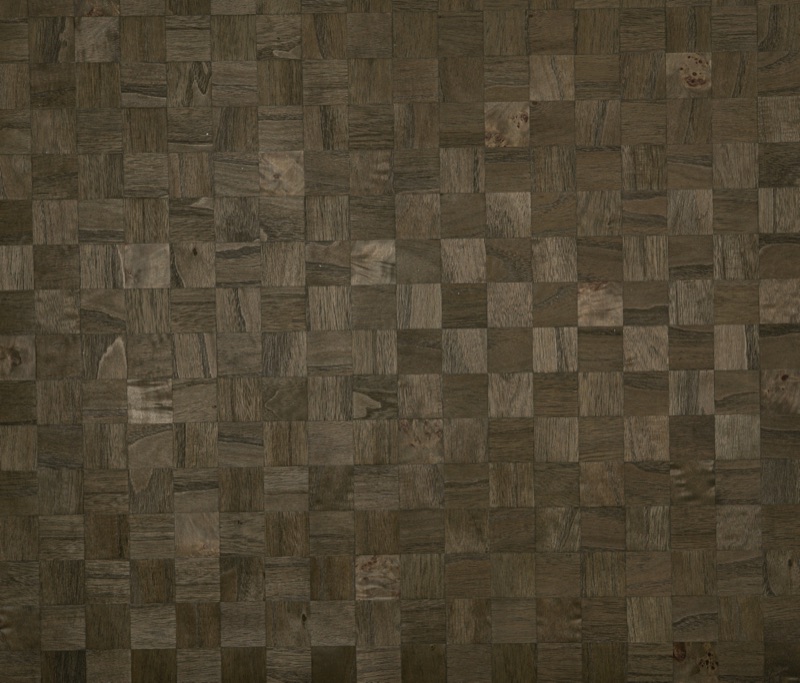
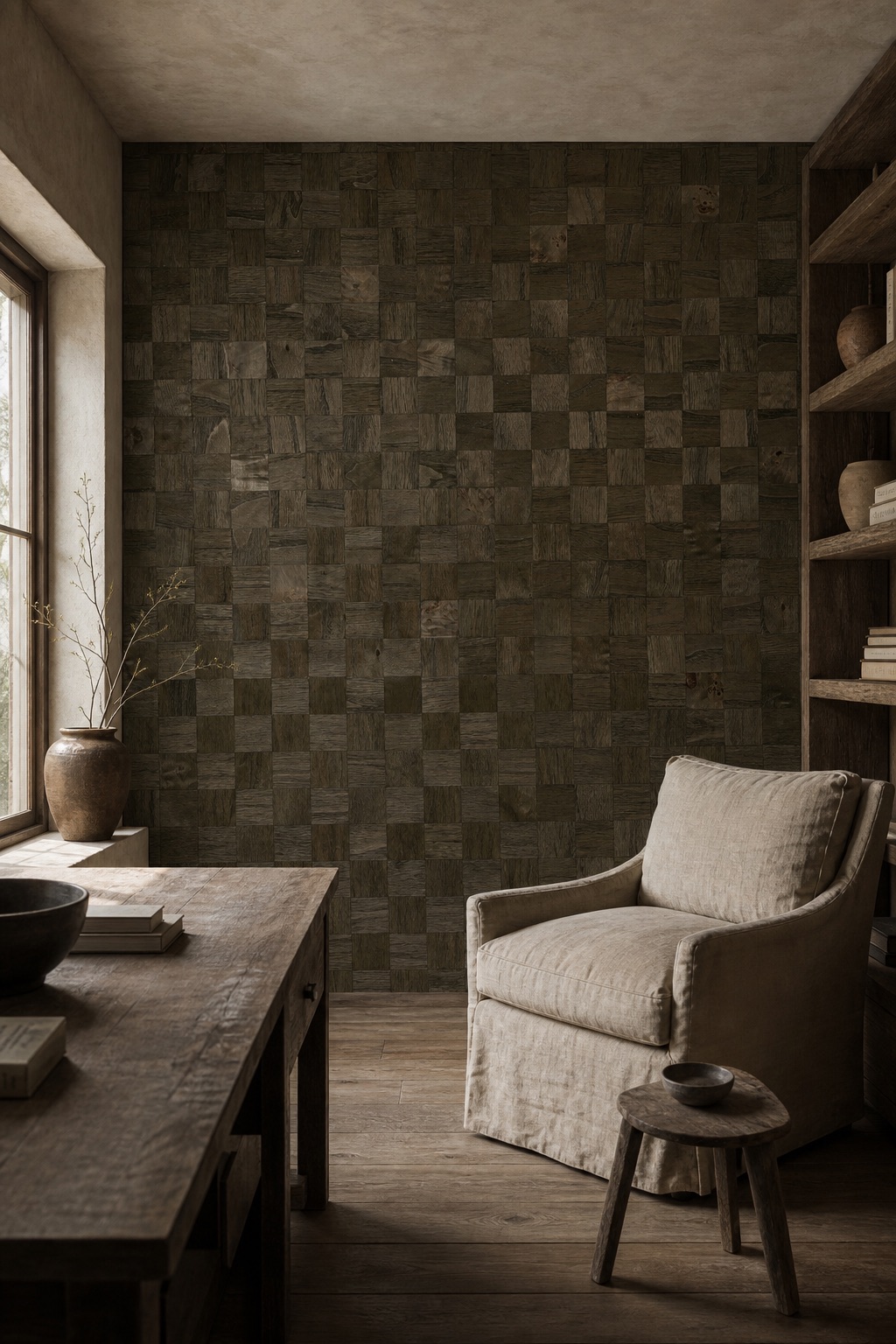
Shadow Mosaic is a brown wood wallpaper built from a checkerboard mosaic of dark olive-brown veneer tiles, each square carrying its own grain direction, knot frequency, and natural figure. The surface reads as a unified deep earth-brown at distance, then opens into warm grey-brown, taupe, and occasional reddish-brown as you step closer. Fully matte, with no gloss to moderate its organic presence, it performs as a feature wall material in bars, hotel suites, private dining rooms, and studies where grounded materiality takes priority over surface decoration. Produced with our partner mills and supplied to designers and trade buyers from 50 rolls, it is also available in custom colourways engineered by our in-house design studio.
Tile by Tile: How Each Grain-Cut Square Reads Up Close and Across a Room
- Each veneer square is individually cut, showing its own grain direction: some face-grain tiles carry tight parallel lines; others run at an angle or display swirling figure.
- A subset of tiles show prominent knots or burled grain, providing organic punctuation within the regular grid.
- The alternating tile orientation creates a subtle checkerboard of tone even on a fully matte surface: adjacent squares read slightly lighter or darker depending on grain density and direction.
- At distance, differences collapse into a single dark olive-brown field; at arm's length, the field opens into warm grey-brown, muted taupe, and occasional reddish-brown highlights.
- The bold tile scale means a single feature-wall application reads as a complete design statement rather than a background texture.
- Love this arrangement but need a different tone or tile scale? Our design studio engineers custom colourways from your reference.
The checkerboard logic of Shadow Mosaic means every square sits in quiet competition with its neighbours. Some tiles carry tight, parallel grain running vertically; the adjacent square may have it horizontal or angled. A few tiles display a prominent knot or a swell of burled figure, reading almost darker and richer than those alongside them. At distance, those differences collapse into a single deep olive-brown field. Step closer and the field opens: warm grey-brown here, muted taupe there, an occasional square where a knot sits within a reddish-brown run of grain. The scale of the individual tiles is bold enough that a single-wall application feels complete before it becomes busy. Love this arrangement but need a different tone or tile scale? Our design studio engineers custom colourways from your reference.
What a Dark Matte Surface Does to Light: Shadow Mosaic Through the Day
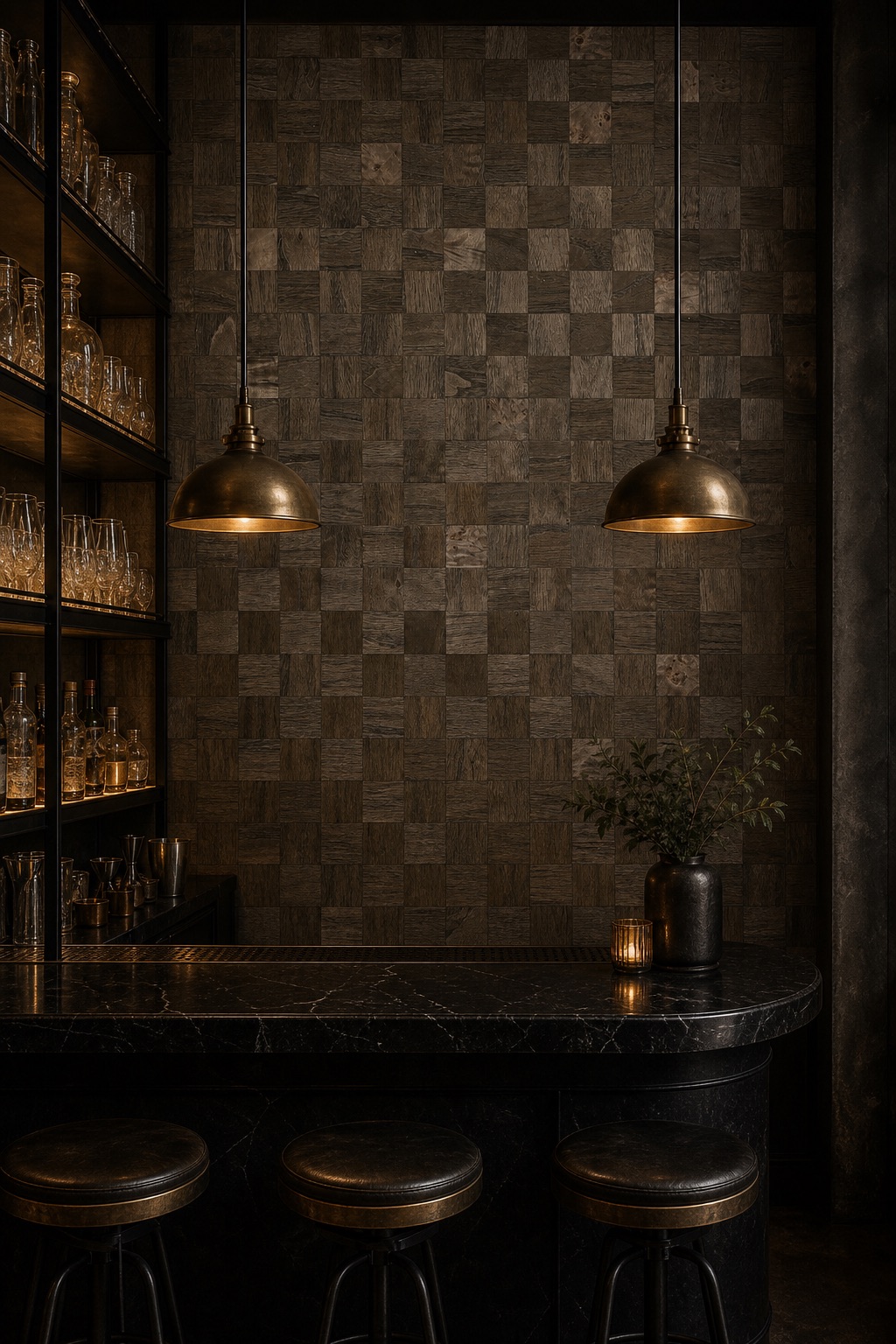
- Fully matte finish means no specular highlight, no glare, and no pooling reflections under directional lighting.
- In broad natural daylight, the olive undertone is visible: the wall reads as complex earth-brown rather than flat chocolate.
- Under warm incandescent or candlelight, the grey-brown undertones recede and the surface settles into a deeper amber-brown.
- Under cool north-facing light, the olive component strengthens and the overall value deepens noticeably.
- The dark overall value means this surface absorbs more light than it returns, creating a sense of enclosure and intimacy suited to controlled-atmosphere spaces.
A fully matte wood surface gives nothing back. Shadow Mosaic absorbs what falls on it and returns only the honest reading of its own tone. In broad natural daylight the olive component is visible: the wall reads as complex earth, not flat chocolate, with a cool depth that shifts toward warmer brown as afternoon light yellows. Under incandescent pendant lamps and taper candles, the grey notes recede and the surface settles into a deeper amber-brown. Under cool, north-facing light, the olive strengthens and the value deepens. This behaviour suits spaces where the lighting is controlled and intentional: bars, private dining rooms, hotel suites, rather than rooms that rely on a pale wall to bounce ambient daylight. On a full-room application, plan for supplementary lamp light positioned at lower levels.
Bars, Hotel Suites, and Private Dining: Where Brown Wood Wallpaper Performs at Its Best
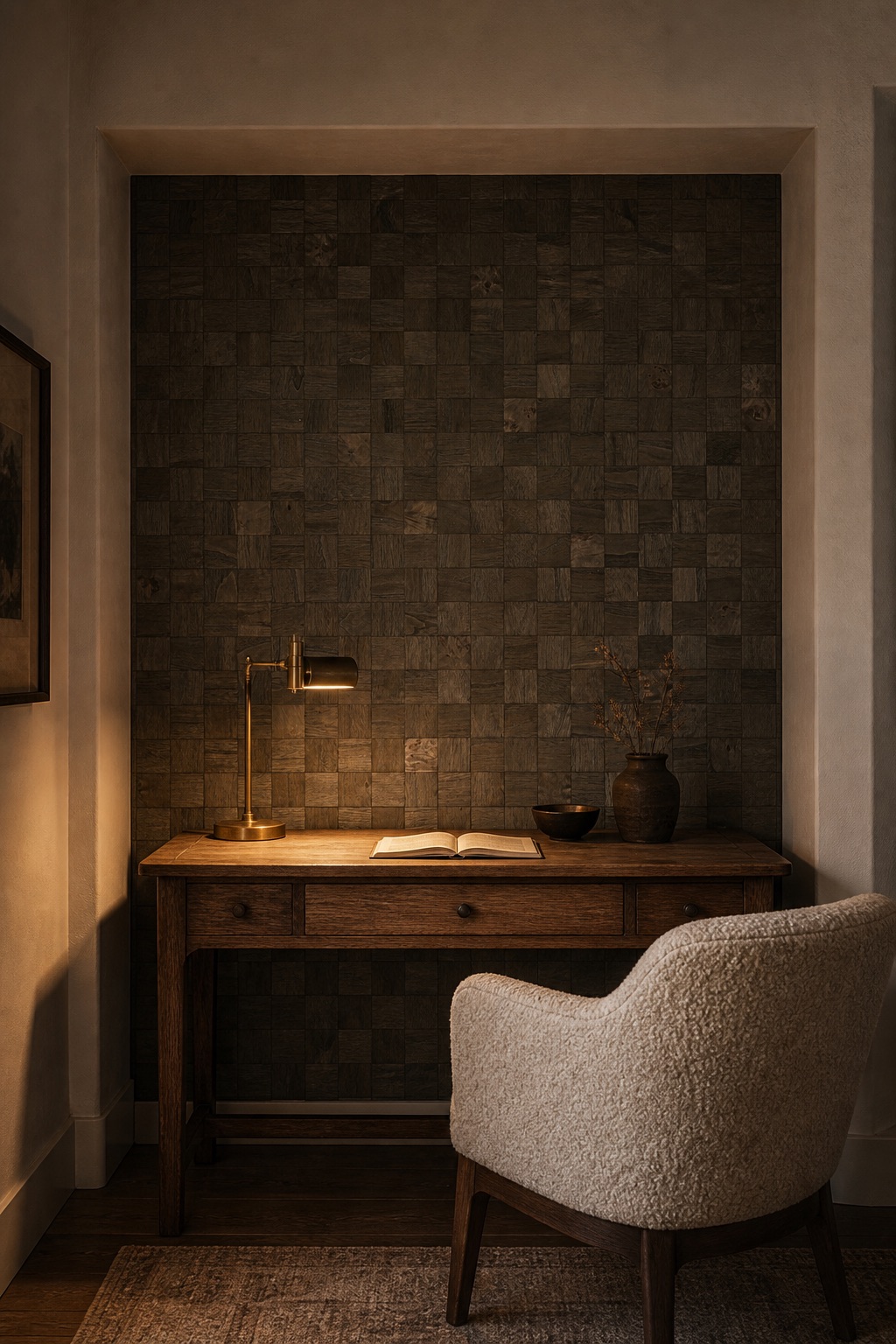
- Bar back walls: the dark matte tone recedes behind shelving and lighting without competing with displayed glassware or bottles, while the tile geometry adds visual rigour.
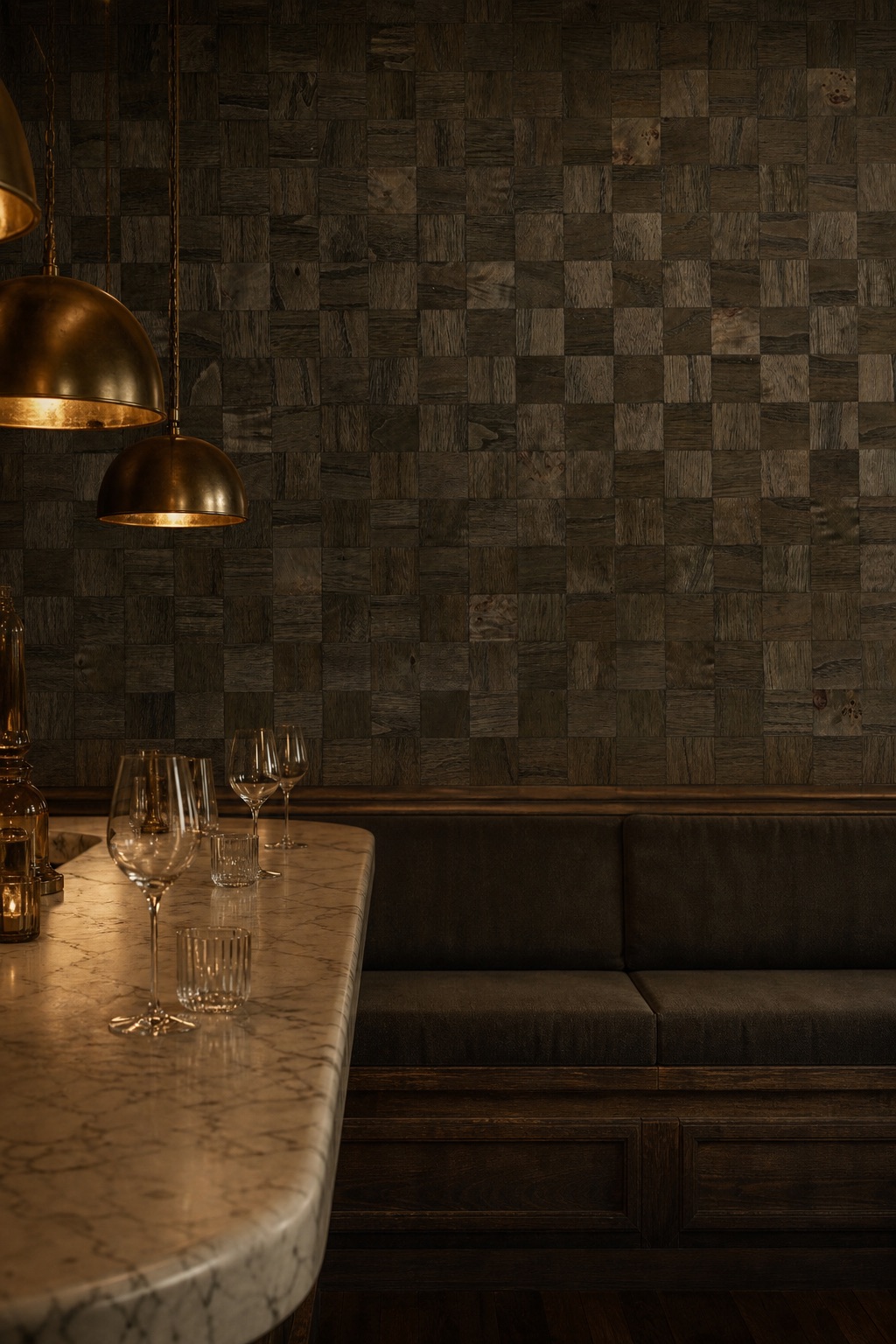
- Private dining rooms: the wood tile surface provides structured warmth without the formality of full timber panelling.
- Hotel suite headwalls: natural figure and knot variation deliver visual interest at the close reading distance experienced from a bed or lounge chair.
- Residential studies and libraries: the wabi-sabi character belongs in rooms organised around books, objects, and worn materials.
- Suitable as a single feature wall or full-room wrap; on full-room applications, specifying a lighter adjacent surface in plaster or travertine gives the eye a resting point.
Shadow Mosaic finds its most natural home in spaces built around controlled atmosphere. Bar back walls are a strong placement: the dark, matte surface recedes behind shelving and lighting without competing with displayed glassware or bottles, and the tile grid adds rigour without visual noise. Private dining rooms gain structured warmth from the wood tile surface without the formal stiffness of full timber panelling. In hotel suites, a headwall application gives guests something to read from across the room, each tile subtly different from its neighbour, without the surface ever demanding attention. Residential studies and libraries respond well to the wabi-sabi character: knots and grain variation belong in rooms organised around books, leather, and worn objects. Shadow Mosaic (like any brown wood wallpaper at this weight and tile scale) works as a single feature wall or as a full-room wrap; in the latter case, specifying at least one lighter adjacent surface in plaster or travertine helps the eye find relief.
Wood Veneer on the Wall: Humidity Tolerance, Cleaning, and Long-Term Care
- Best suited to standard conditioned interior environments; not recommended for unventilated bathrooms, kitchen splashback zones, or direct steam exposure.
- Surface cleaning: soft dry cloth for light dust; avoid wet wiping, solvent-based cleaners, or abrasive materials on the tile faces.
- A professional installer familiar with natural wallcoverings is recommended; standard wallpaper adhesives apply to the paper or fabric backing.
- Grain direction, colour depth, and knot frequency vary between tiles and between batches; single dye-lot production and per-batch lot certificates are provided for specification projects.
- Prolonged direct sun can lighten veneer surfaces over time; UV-filtering glazing is the most reliable long-term protection for south-facing or high-sun walls.
Understanding how a brown wood wallpaper like Shadow Mosaic behaves over time starts with recognising that it is genuine wood veneer on a wallcovering backing, not a printed simulation. The surface performs reliably in all standard conditioned interior spaces, including air-conditioned hotel rooms and climate-controlled restaurants. Direct moisture, steam, and unventilated bathrooms fall outside its range. For cleaning, a soft dry cloth handles light dust; wet wiping and solvent-based products should be avoided on the tile faces. Grain direction, colour depth, and knot frequency vary naturally between individual tiles and between production batches. On specification projects this variation is managed through single dye-lot production: every Shadow Mosaic order ships as one lot, with per-batch lot certificates included for your documentation requirements. For walls with prolonged direct sun exposure, UV-filtering glazing provides the most effective long-term protection.
From the First Sample to a Single Dye Lot: The Studio Workflow Behind Every Brown Wood Wallpaper Order
- Sample books are available (paid, credited against orders up to 10%): the actual veneer tile surface, not a digital proxy.
- Custom colourways: submit a reference (paint chip, fabric swatch, or mood board); our three in-house designers produce a CAD specification and a physical proof, quoted upfront, in approximately one to two weeks.
- Orders proceed on the terms confirmed on the pro-forma invoice; freight is at the buyer's cost and can be quoted FOB, CIF, or DDP.
- Wood veneer runs on the specialty production timeline: five to eight weeks from confirmed order; ocean freight is quoted separately.
- Every order ships as a single dye lot with per-batch lot certificates to support commercial specification documentation.
- Our founder has been active in natural wallcovering supply since 2018; the studio employs three full-time in-house designers and works with a carefully selected group of partner mills, coordinating proofing and per-batch QC on every run.
The process begins with a physical sample: the actual tile surface in your hands, positioned against your scheme. Once you have confirmed direction, paid proofing is available for custom colourways; our three in-house designers take your reference and produce a CAD specification, then a physical proof, with the cost quoted upfront and a turnaround of approximately one to two weeks. Production orders proceed on the terms confirmed on the pro-forma invoice. Freight is at the buyer's cost and can be quoted FOB, CIF, or DDP depending on your logistics setup. Wood veneer sits on the specialty production timeline: five to eight weeks from confirmed order, with ocean freight quoted separately. Every Shadow Mosaic order ships as a single dye lot, with per-batch lot certificates included to support your documentation requirements on commercial specifications. Our founder has been active in natural wallcovering supply since 2018, and the studio maintains three full-time in-house designers. We work with a small number of carefully selected partner mills, coordinating proofing and per-batch QC on every run.
Buying wood for a project or a brand?
- Minimum order
- 50 rolls (about 250 m²) catalog · 100 rolls custom / private label
- Lead time
- 4–6 weeks standard · 5–8 weeks specialty, after sample approval and payment
- Terms
- EXW Chengdu · FOB, CIF, DDP on request
- Samples
- Free digital kit in 24 h · paid swatch pack, credited in full on your first order
- Reply
- Within 24 hours
Frequently asked
- Will Shadow Mosaic's dark olive-brown tone fade near bright or south-facing windows?
- Wood veneer can lighten with prolonged UV exposure. UV-filtering glazing is the most reliable mitigation; we provide physical samples so you can assess the material in your specific lighting conditions before committing to a full production run.
- How visible are the seams between rolls on a finished wall?
- Wood veneer wallcovering produces a seam at each roll edge, as with any wallcovering. The checkerboard tile grid means seam alignment is particularly important; professional installation and a reverse-hang technique are recommended, and our installation guide covers the alignment process in detail.
- Is Shadow Mosaic suitable for a bar or restaurant dining room that may have elevated humidity or cooking proximity?
- Shadow Mosaic performs well in conditioned front-of-house hospitality environments, including bars, private dining rooms, and hotel suites operating at standard interior humidity levels. Cooking-line proximity, direct steam, and unventilated back-of-house areas fall outside its recommended range.
- What is the minimum order quantity and how does the ordering process work?
- Custom colourways start from 50 rolls (approximately 250 m²); stock pattern MOQs are lower for first trials — full details on proofing and payment structure are on our process page at /process.