Industry Guide
Wallpaper vs Wallcovering: What Is the Difference?
The terms are used interchangeably but they mean different things — especially in commercial specification. Here is why the distinction matters and how to use the correct terminology.
Key Takeaways
- See detailed sections below.
How Do They Differ?
| Aspect | Wallpaper | Wallcovering |
|---|---|---|
| Typical use | Residential, decorative | Commercial + residential, functional + decorative |
| Materials | Printed paper, some vinyl | Vinyl, textile, natural fiber, specialty |
| Performance specs | Minimal — aesthetics-focused | ASTM tested — fire, abrasion, stain, colorfastness |
| Fire rating | Often not rated | ASTM E84 Class A/B/C |
| Durability standard | No standard test | ASTM F793 (Type I/II/III) |
| Industry term | Consumer/retail | Trade/specification/commercial |
What Are the Commercial Wallcovering Types?
| Type | Weight | Use Case |
|---|---|---|
| Type I | Light (7-13 oz/sq yd) | Light commercial — offices, conference rooms |
| Type II | Medium (13-22 oz/sq yd) | Standard commercial — hotels, hospitals, retail |
| Type III | Heavy (22+ oz/sq yd) | Heavy-duty — corridors, public areas, elevators |
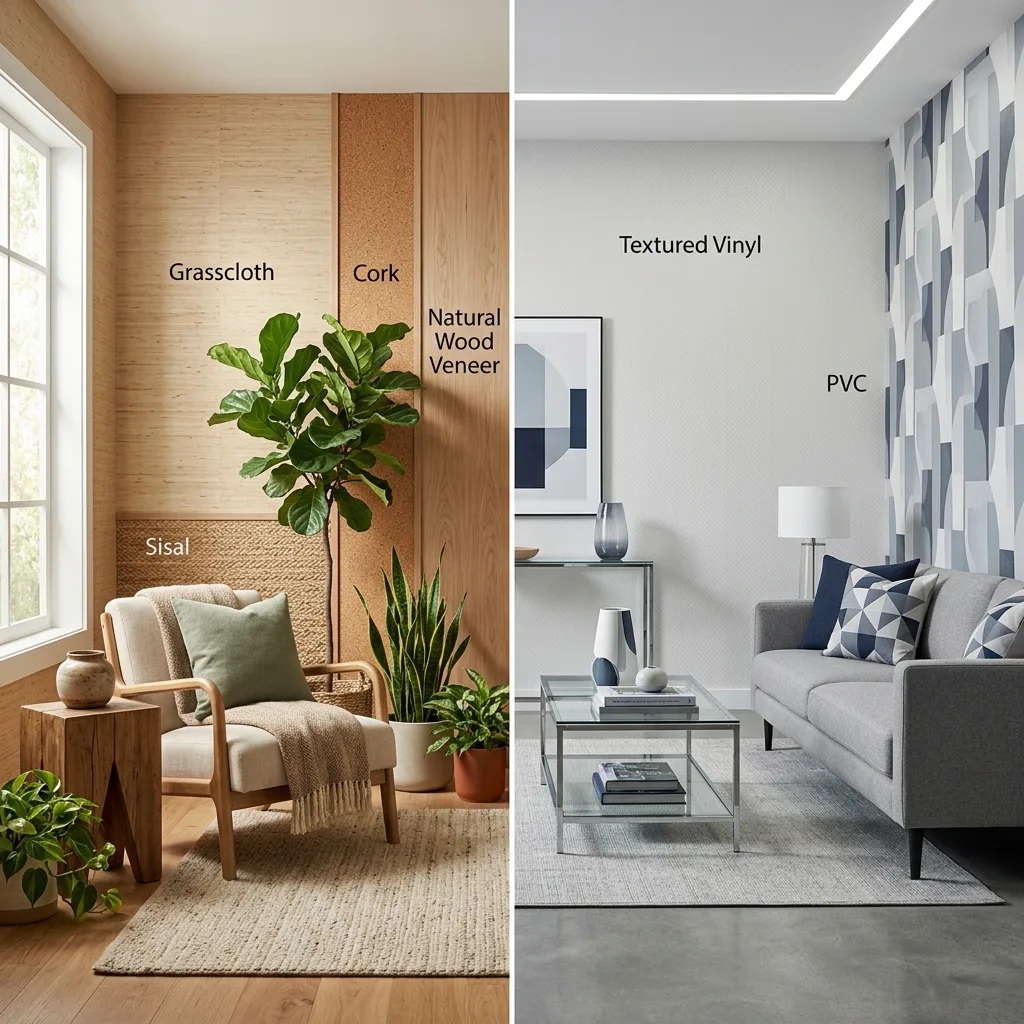
Natural wallcoverings (grasscloth, sisal) typically fall into Type I or II depending on the backing and construction. See specification guide.
Where Does Natural Wallcovering Fit?
- Technically: Natural wallcovering — a subset of wallcovering made from plant fiber, mineral or cork
- In specifications: Call it "natural wallcovering" to distinguish from vinyl (PVC) wallcovering
- In conversation: "Grasscloth" is the most recognized consumer term, even when the fiber is sisal, jute or seagrass
- Commercial projects: Specify by ASTM type + material + fire class — not just "wallpaper"
Frequently Asked Questions
Are wallpaper and wallcovering the same thing?
Colloquially yes, but technically no. Wallpaper typically refers to printed, decorative paper for residential use. Wallcovering is the broader industry term encompassing all wall-applied materials including vinyl, textile, natural fiber and specialty products — especially in commercial contexts.
Which term should I use in specifications?
Use wallcovering for commercial and professional specifications. Use wallpaper in residential and consumer contexts. When specifying natural grasscloth, call it natural wallcovering to distinguish from vinyl.
Does the terminology affect pricing or ordering?
Not directly, but using the correct terminology signals professionalism to suppliers and ensures you receive the right product category — especially when sourcing commercially rated materials.