Material Comparison
Mica vs Glass Bead Wallcovering: Shimmer or Sparkle?
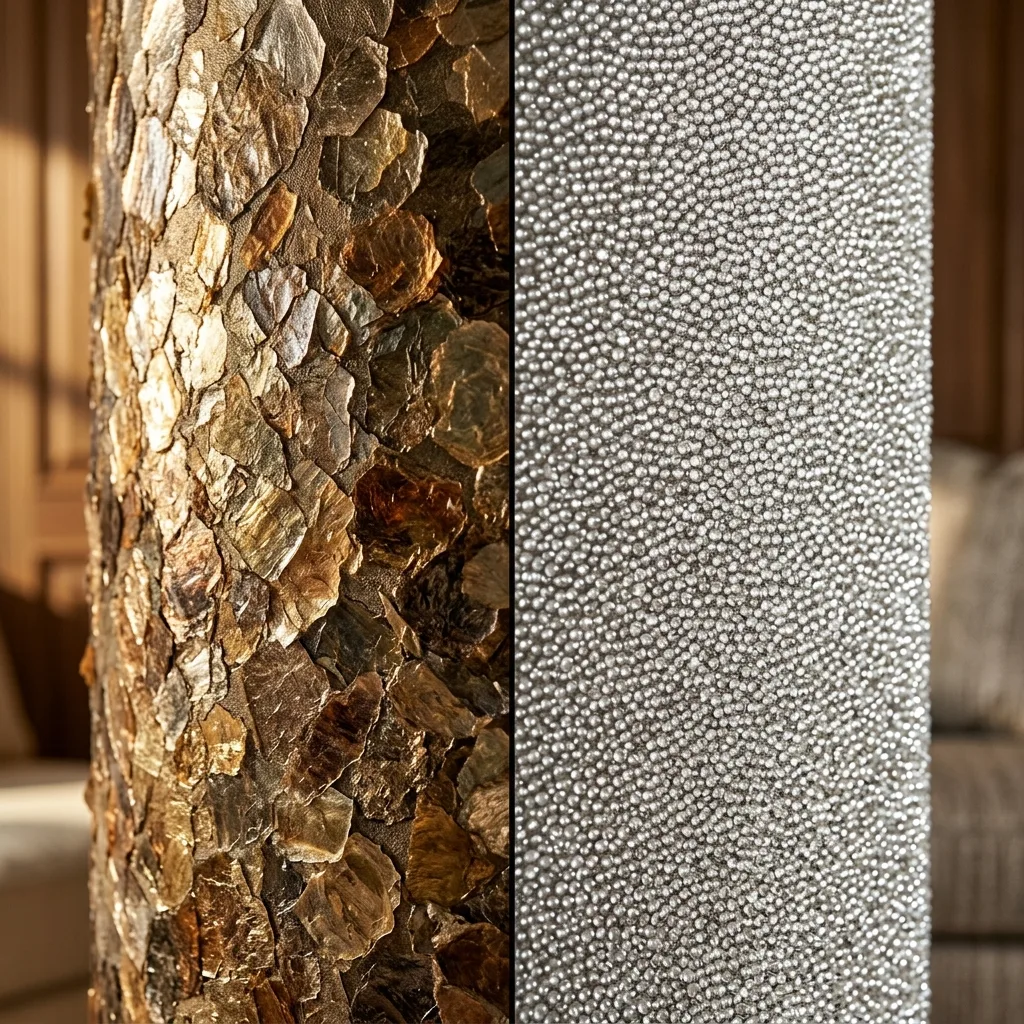
Mica produces a soft, pearlescent shimmer from natural mineral flakes. Glass bead wallpaper delivers intense, faceted sparkle from tiny embedded spheres. Both create luxury — but the effect is very different. Here's how to choose.
Key Takeaways
- Mica = natural mineral flakes — soft, diffused, pearlescent shimmer that changes with viewing angle.
- Glass bead = tiny glass spheres — intense, faceted sparkle with diamond-like light refraction.
- Texture: mica is fine and smooth; glass bead is coarse and granular (like fine sand).
- Both highlight wall imperfections — perfect wall prep is essential.
- Maintenance: light dusting only; neither tolerates wet cleaning.
- Price: mica $12–22/m² vs glass bead $15–30/m² (FOB).
- Mica is sustainable (natural mineral); glass bead is manufactured.
At a Glance: Mica vs Glass Bead
| Feature | Mica Wallcovering | Glass Bead Wallpaper |
|---|---|---|
| Material | Natural mica mineral flakes on backing | Tiny glass microspheres embedded on substrate |
| Shine Type | Soft, pearlescent, diffused shimmer | Intense, faceted, sharp sparkle |
| Visual Vibe | Elegant, sophisticated, understated | Glamorous, opulent, high-impact |
| Texture Feel | Fine, smooth, mineral-like | Coarse, granular, sand-like |
| Light Interaction | Reflects with depth and mystery | Scatters with intense brilliance |
| Color Range | Champagne, gold, silver, copper, charcoal | Full spectrum (any color + metallic) |
| Installation Difficulty | Moderate (handle with care) | High (beads can dislodge) |
| Wall Prep Required | Smooth wall essential | Smooth wall essential |
| Sustainability | Natural mineral, low processing | Manufactured glass |
| Standard Width | 0.91 m (36") | 0.53–0.91 m |
| Price (FOB) | $12–22 /m² | $15–30 /m² |
| Custom color MOQ | 100 rolls | 100 rolls |
| Fire Rating | Class B1 (GB 8624) | Class B1 (GB 8624) |
| Best For | Bedrooms, living rooms, subtle luxury | Dining rooms, foyers, statement walls |
How Does Mica Create Its Shimmer?
Mica wallcovering uses real mineral flakes — mica is a naturally occurring silicate mineral formed from quartz and granite. The thin, irregular flakes are applied to a paper or non-woven backing, creating a surface that reflects light in a soft, diffused, pearlescent way.
The key to mica's appeal is its multi-dimensional depth. Because the mineral flakes have varying angles and thicknesses, light bounces off them at different intensities depending on your viewing angle and the room's lighting. The result is a subtle, mysterious glow that shifts throughout the day — warm and golden in morning light, cooler and more silvery under artificial lighting.
Mica feels fine and smooth to the touch, with a mineral quality that is distinctly natural rather than manufactured.
How Does Glass Bead Create Its Sparkle?
Glass bead wallpaper embeds thousands of tiny glass microspheres into the surface, often in patterns or as an all-over coating. Each bead acts like a miniature facet of a diamond, catching and scattering light with intense, sharp brilliance.
The effect is far more extroverted than mica. Where mica glows softly, glass bead wallpaper glitters boldly. Under spotlighting or chandelier light, a glass bead wall becomes a show-stopping focal point — almost jewelry-like in its impact.
The surface feels coarse and granular, like very fine sand. This tactile quality is part of the luxury experience — but it also means glass bead wallpaper is more delicate and harder to clean than smooth finishes.
Which Is More Durable?
Neither material is designed for high-traffic areas. Both are luxury, low-contact wallcoverings best suited for walls that won't face furniture abrasion or heavy touch.
Mica is slightly more robust — the mineral flakes are bonded flat to the backing and are less likely to dislodge. Glass bead is more fragile — individual beads can pop off during installation or from impact, leaving visible gaps. Glass bead also requires more careful handling during installation; dislodged beads can contaminate adhesive and create bumps.
Both should be cleaned with a soft, dry feather duster only. Wet cleaning or chemical solvents will damage either finish.
Why Does Wall Prep Matter So Much?
Both mica and glass bead amplify wall surface imperfections. Because they reflect light so intensely, any bump, dip, seam or crack in the underlying wall becomes dramatically visible. This is the opposite of matte wallcoverings which hide flaws.
For professional results, both materials require:
- Skim-coated walls — smooth to Level 5 finish
- Wall liner paper recommended for older or uneven walls
- Professional installation — not a DIY project
How Do Costs Compare?
| Category | Mica (FOB) | Glass Bead (FOB) |
|---|---|---|
| Standard | $12–15 /m² | $15–20 /m² |
| Mid-Range | $15–18 /m² | $20–25 /m² |
| Premium | $18–22 /m² | $25–30 /m² |
Mica is 20–30% less expensive than glass bead. Glass bead also carries higher installation labor cost due to its fragile, challenging handling requirements.
Prices are EXW Chengdu as of May 2026. Contact us for a project-specific quote.
Which Is Right for Your Project?
Choose Mica If:
- You want understated luxury — elegant without being flashy
- The space is a bedroom, living room, or spa where subtlety matters
- You prefer natural materials with sustainability credentials
- The design calls for warm, diffused light reflection
- Budget favors a more cost-effective luxury finish
Choose Glass Bead If:
- You want maximum visual impact — dramatic, head-turning sparkle
- The space is a formal dining room, foyer, or event venue
- Lighting includes spotlights or chandeliers that amplify the effect
- The wall is a single feature/accent wall (not full-room coverage)
- The client wants a glamorous, opulent aesthetic
Consider Combining Both:
For luxury hospitality projects, use glass bead on the primary feature wall (behind the bar, reception desk, or headboard wall) and mica on surrounding walls. This creates a focal-point hierarchy — the glass bead wall commands attention while mica provides a cohesive, shimmering backdrop without competing for the eye.
Frequently Asked Questions
What is the difference between mica and glass bead shimmer?
Mica produces a soft, pearlescent, diffused glow from natural mineral flakes — subtle and sophisticated. Glass bead creates an intense, faceted sparkle from tiny glass spheres — bold and glamorous. Think candlelight vs disco ball.
Is mica wallcovering natural?
Yes. Mica is a naturally occurring silicate mineral. Mica wallcovering uses real mineral flakes applied to a backing, making it one of the few genuinely natural luxury wall finishes available.
Is glass bead wallpaper hard to install?
Yes. Glass bead wallpaper requires professional installation. The beads can dislodge during handling, contaminate adhesive, and create visible defects. Walls must be perfectly smooth (Level 5 finish) because the reflective surface amplifies any imperfection.
Related Guides
Mica Guide
Complete reference on mica wallcovering.
Gold Foil Guide
Real gold leaf wallcovering reference.
Gold Foil vs Metallic
Real gold vs printed metallic compared.
Grasscloth Guide
Natural woven wallcovering reference.
Natural vs Synthetic
Plant-based vs manufactured wallcovering.
Installation Guide
How to install luxury wallcoverings.
See the Light Play
Request mica and glass bead samples to compare the shimmer under your own lighting conditions.
Request Samples