Compliance Guide
ADA Compliance & Wallcovering: Accessibility Guide
How natural wallcovering intersects with ADA requirements — wheelchair protection zones, installation height considerations, tactile contrast and inclusive design strategies.
Key Takeaways
- See detailed sections below.
Where Does ADA Affect Wallcovering Decisions?
| ADA Consideration | Impact on Wallcovering | Solution |
|---|---|---|
| Wheelchair traffic zones | Lower walls need impact protection | Wainscoting + grasscloth above |
| Visual contrast / wayfinding | Wall-to-door frame contrast required | Choose wallcovering color with adequate contrast to trim |
| Maintenance access | Walls must be cleanable in public areas | Stain-resistant finish or cork in high-contact zones |
| Protruding objects | Wall-mounted elements must not protrude >4 inches | Flat wallcovering installs flush — not an issue |
How Do You Design for Accessibility?
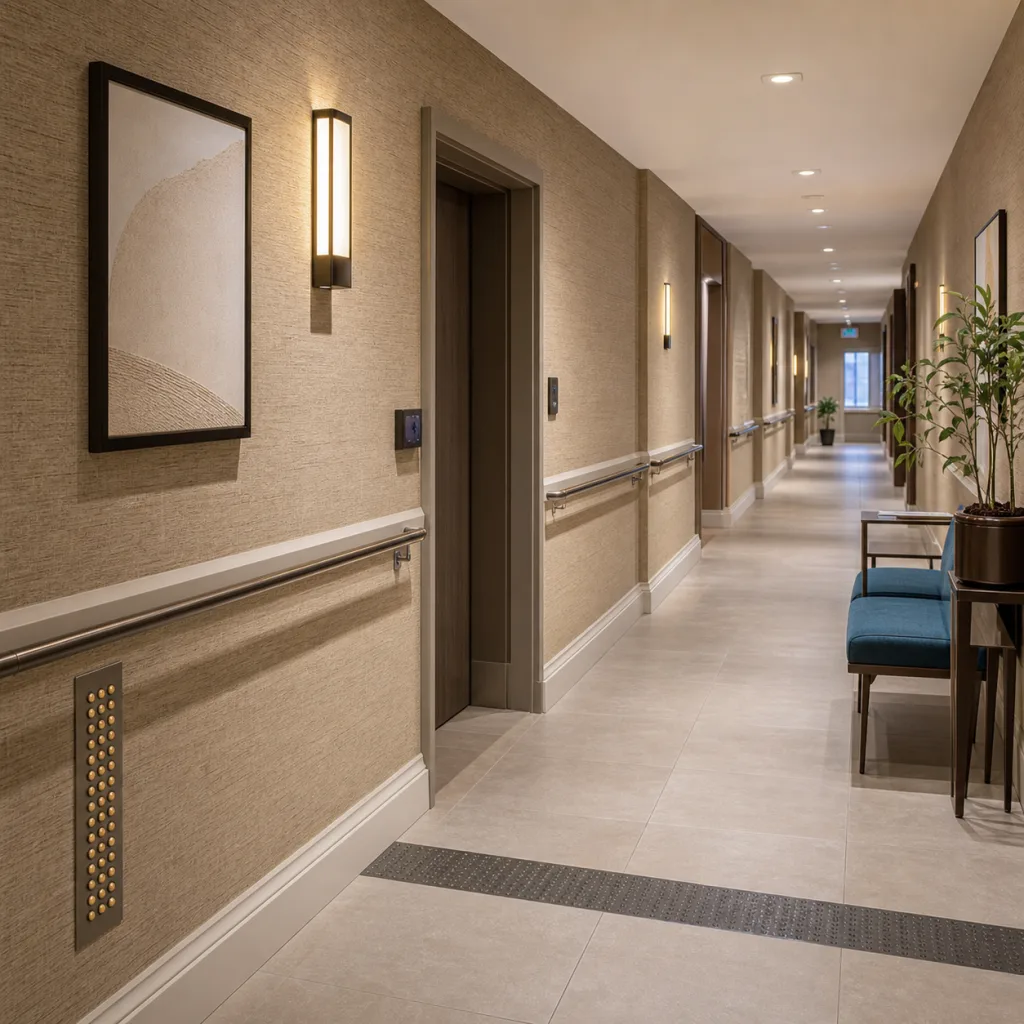
- Zone the wall: 0-36" = impact-resistant surface (wainscoting, wall guards). 36"+ = natural wallcovering
- Ensure contrast: Wallcovering should contrast with door frames, baseboards and wayfinding elements
- Choose durable materials for corridors: Sisal (Type II rated) handles wheelchair contact better
- Plan for maintenance: Cork and sisal are easier to spot-clean than grasscloth in public areas
- Document compliance: Include ADA considerations in your specification notes
Which Materials Work Best in Accessible Spaces?
| Material | ADA Suitability | Why |
|---|---|---|
| Cork | Excellent | Impact-resistant, resilient, acoustic, easy maintenance |
| Sisal | Excellent | Durable, commercial-grade, Type II rated |
| Grasscloth | Good — above impact zone | Install above wainscoting in wheelchair areas |
Frequently Asked Questions
Does ADA directly regulate wallcovering?
ADA does not specifically regulate wall finish materials. However, it requires wall protection in wheelchair traffic areas, minimum contrast for wayfinding, and accessible maintenance. Wallcovering specification must account for these requirements in public and commercial spaces.
Can I use grasscloth in ADA-compliant spaces?
Yes, with appropriate specification. Install above wheelchair impact zones (use wall guards or wainscoting below 36 inches), ensure color contrast meets wayfinding requirements, and choose durable materials (sisal, cork) in high-traffic corridors.
What about wheelchair damage to walls?
ADA-compliant spaces need wall protection at wheelchair height (typically 6-36 inches above finished floor). Use corner guards, chair rails, or wainscoting below grasscloth installation. This actually creates a beautiful design opportunity — see our wainscoting guide.